THE ASIAN INDEPENDENT UK

Bal Ram Sampla
Geopolitics
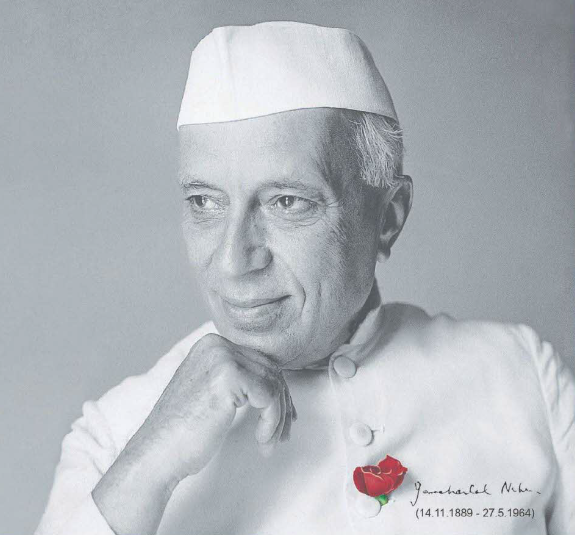
In 1937, Nehru wrote a magazine article about himself but he didn’t sign his real name. He called himself “Chanakya” and wrote about Nehru as if he were someone else. In it, he compared himself to Julius Caesar and warned that he might become a dictator. The line everyone remembers is: “We want no Caesars.”
People love this story. They call it proof that Nehru was humble and self-aware. The truth is uglier.
The Trick
Think about what he actually did. He didn’t just say “I could be dangerous.” He described himself as tireless, brilliant, and loved by huge crowds wherever he went. He used the word “glory.” Then he added a warning on top, like sugar coating on a boast. This is not modesty. It is bragging, wrapped in fake worry so nobody can call it bragging.
A truly humble man does not write an anonymous magazine article comparing himself to one of the most famous rulers in history. He just stays humble. Nehru instead built his own legend with one hand while pretending to tear it down with the other.
Why He Did It
This was control. By criticizing himself first, and more dramatically than any rival would dare, Nehru made sure no one else got to say it about him. He got to define his own myth — popular, powerful, but supposedly self-aware — instead of letting critics define it for him. And because he hid his name, nobody could accuse him of vanity. The trick only worked because it was anonymous.
Years later, when people learned Nehru wrote it himself, it made him look even better: not just powerful, but wise enough to question his own power. That is not an accident. That is a man who understood propaganda and used it on himself.
What It Really Says
Look closely at the essay’s logic. Nehru never said he lacked the instincts of a dictator. He said he had all of them — popularity, ambition, impatience, a temper — and that only he could be trusted to control them. That is not a man giving up power. That is a man telling the country, “I am dangerous, but I am also the only one wise enough to handle it.” It is arrogance disguised as a warning.
Conclusion
The Caesar essay is taught as a lesson in democratic humility. It is really a lesson in image-making. Nehru did not write it to warn India about Caesar. He wrote it so that whenever people thought of Caesar, they would think of him too — and admire him more for noticing the comparison first.
Source:
https://nehruarchive.in/documents/the-rashtrapati-by-chanakya-5-october-1937-1ggz1l?__cf_chl_f_tk=noHzS_Taqx0o28F4MLeQqpapQp2F5QTqljDNCk9Wr5k-1782861819-1.0.1.1-LfHVQ8CyOmO2pHKSaqJB0xXk1feTGQGBMJ51z_T5qwE