

SAMAJ WEEKLY UK

Bal Ram Sampla
Geopolitics
The fiery rhetoric from Pakistani ministers, including Climate Change Minister Musadik Malik’s recent warning that they would “cut off the hands” of anyone touching their waters is heavily aimed for a domestic audience.
Pakistan is currently grappling with a severe internal water crisis. Major agricultural provinces like Sindh are facing massive water deficits (with some key canals reporting shortages up to 82%). While much of this stems from poor internal water management, crumbling infrastructure, and climate stress, it is highly effective politics for Islamabad to channel public anxiety and anger outward toward India’s actions upstream.
Ultimately, the conflict right now is a war of positions and legal structures rather than a physical stoppage of water. India is asserting its strategic right to ignore a treaty it views as compromised by security threats.
The ongoing water dispute between India and Pakistan is a classic masterclass in geopolitical theater and duplicitous diplomacy. For decades, Islamabad has used international forums to paint itself as a vulnerable victim of Indian “hydro-hegemony,” weeping over the theoretical threat of its water supply being cut off. Yet, this high-pitched rhetoric is a textbook case of crying over spilled milk. In reality, India has not stopped a single drop of water from flowing into Pakistan, making Islamabad’s aggressive outcry entirely detached from physical facts on the ground.
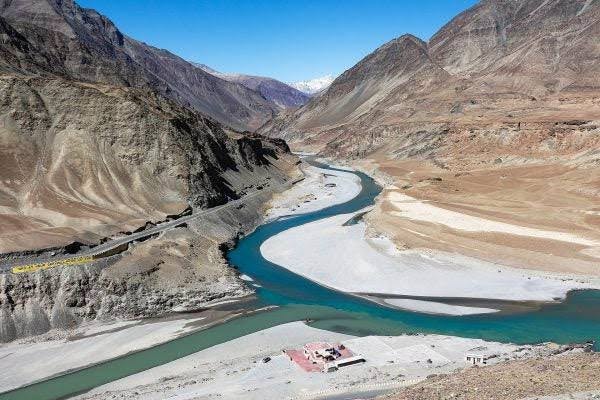
To understand the absurdity of the current panic, one only needs to look at the harsh geographical reality of the region. The headwaters of the Indus, Jhelum, and Chenab rivers sit in the rugged, high-altitude, and seismically active terrain of the Himalayas. As any engineer knows, completely halting or redirecting these massive, roaring rivers is not a matter of turning a valve. Building the infrastructure required to store or permanently divert these waters takes at least a decade of complex tunneling and dam construction. India’s recently proposed Chenab-Beas link project, for instance, is in its infancy and years away from operational reality. Pakistan’s dramatic warnings of immediate catastrophe are architected entirely for political effect.
The true irony lies in Pakistan’s deeply hypocritical relationship with international treaties. Islamabad aggressively demands that India respect the strict letter of the 1960 Indus Waters Treaty (IWT), framing it as an unbreakable, sacred document. Yet, at the exact same time, Pakistan treats virtually every other bilateral agreement with India as entirely disposable.
The 1972 Shimla Agreement which explicitly mandates that all bilateral disputes between the two nations must be resolved directly without third-party intervention is routinely violated by Pakistan whenever it runs to international courts at The Hague or tries to internationalize regional matters at the United Nations. Furthermore, Pakistan continues to enforce rigid, hostile blockades by denying airspace to Indian commercial flights and stubbornly refusing direct overland trade transit from India to Afghanistan.
Pakistan wants to pick and choose which laws apply to it. It weaponizes geography to block trade and airspace where it holds an advantage, but screams for international intervention when it feels downstream and physically vulnerable.
Ultimately, India’s decision to place the IWT in abeyance is a direct response to this double standard. New Delhi has made its boundary clear: responsibility is a two-way street. A nation cannot systematically sponsor cross-border terrorism, violate bilateral peace treaties, and choke regional trade, while simultaneously expecting its neighbor to dutifully guarantee its water supply. Until Islamabad realizes that it cannot selectively follow international law only when it suits them, its frantic cries over “stolen water” will remain nothing more than empty political theatre .
Refetences
1.https://www.thehindu.com/news/national/pakistan-accuses-india-of-weaponising-water-after-treaty-suspension/article71061151.ece?hl=en
2.https://asianews.network/pakistan-info-minister-says-indus-waters-treaty-with-india-cannot-be-unilaterally-revoked-or-amended/?hl=en
3.https://timesofindia.indiatimes.com/world/pakistan/will-cut-off-those-hands-pakistan-ministers-stark-warning-to-india-over-indus-waters-treaty/articleshow/132082614.cms?hl=en