SAMAJ WEEKLY UK

Bal Ram Sampla
Geopolitics
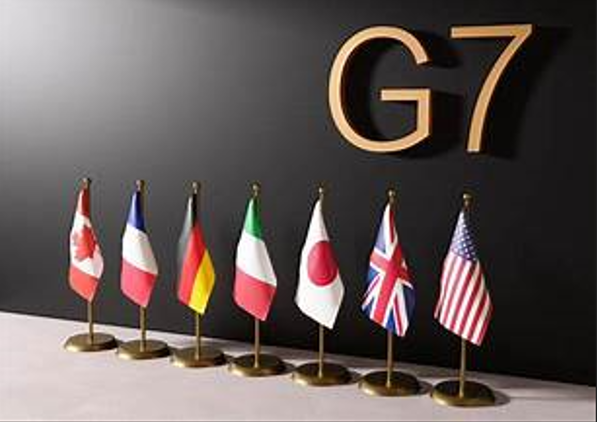
The Group of Seven (G7) is a small club of the world’s richest Western democracies. For a long time, when outside countries like India were invited, they were just “guests.” They would show up for a quick photo, attend one short meeting, and go home.
But at the summit in Évian, France, India broke this old rule. Prime Minister Narendra Modi and his team were given full access to the most important, private meetings. It was a historic moment.
India managed to pull this off for three simple reasons:
1. Huge Economic Power
You cannot solve world problems without the world’s biggest population and fastest-growing economy. Western countries are growing slowly, but India is booming. The G7 realized that any big decisions about global trade or money would fail without India’s backing.
2. The Tech and Supply Chain Race
Right now, Western countries want to rely less on China for tech manufacturing, smartphone parts, and electric car batteries. They need a safe alternative, and India is the perfect match. Because India has a massive tech industry and a huge workforce, the G7 needed India at the table to plan the future of global technology and Artificial Intelligence (AI).
3. A Bridge to the Rest of the World
The world is dividing into different political sides. Many developing nations feel ignored by the West. India is seen as the leader of these developing countries (often called the Global South). By giving India full access, Western leaders are trying to build a bridge. They know that if they ignore India, the developing world will walk away and form its own powerful groups.
In short, India did not get full access by asking for a favor. It got access because it became too big and too important to be left outside the room.
Reference
1.https://www.nextias.com/ca/current-affairs/17-06-2026/g7-summit-2026-india?hl=en
2.https://en.wikipedia.org/wiki/52nd_G7_summit?hl=en