THE ASIAN INDEPENDENT UK
 ~ Rupinder Kaur
8699353764 | @[email protected]
India’s relationship with sport is intense, highly emotional, and dangerously short-lived. Every major international tournament follows an identical, rhythmic cycle: hyper-anticipation before the event, ecstatic nationalistic fervor following a win, and an immediate, heavy silence the moment the spotlight shifts. Athletes are hoisted to extraordinary heights in victory, only to be quietly lowered back into obscurity once the national appetite for celebration is satisfied.
This persistent pattern forces an uncomfortable question: does India truly value its athletes, or does it merely value its own reflection in their medals?
Behind every podium finish, national record, or international appearance lies a grueling, lonely trajectory shaped by profound personal sacrifice and economic precarity. Yet, within the Indian sports ecosystem, visibility rarely translates into vulnerability protection. The applause is deafeningly real, but the structural scaffolding behind it is practically nonexistent.
The trajectory of Sita Sahu exposes this systemic hypocrisy with brutal clarity. As a teenage Special Olympics medalist, she brought global honor to India on the tracks of Athens. Yet, the subsequent reports of her family rolling *gol gappas* at a roadside stall to survive revealed a damning truth: public adoration evaporates the moment an athlete stops competing. Her journey remains deeply symbolic of a wider national malaise—celebration entirely uncoupled from continuity.
Similarly, competitors like Pushpa Minj and Yamuna Kumar Paswan represent a vast, invisible cohort of athletes who conquer national and continental platforms yet remain locked outside the mainstream public imagination. Reaching these international arenas requires a lifetime of discipline and resilience, yet their names are routinely omitted from the country’s sporting lore. In India, the mere act of representing 1.4 billion people on Earth is treated as a final, sufficient reward rather than the baseline trigger for lifelong institutional support.
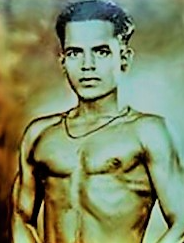
Crucially, India’s sporting history proves that this is an ancestral defect, not a contemporary anomaly.
• Khashaba Dadasaheb Jadhav
1952
Secured independent India’s first individual Olympic medal (Bronze, Wrestling) in Helsinki. Despite this pioneer milestone, he spent his later years in bureaucratic obscurity, fighting for a rightful pension, and died penniless.
• Murlikant Petkar
1972
Overcame severe wartime bullet injuries to win India’s first-ever Paralympic Gold (Swimming) with a world-record time. His historic feat was largely ignored by the mainstream, with official state recognition trickling in decades late.
• Karnam Malleswari
2000
Shattered the ultimate glass ceiling as the first Indian woman to win an Olympic medal (Bronze, Weightlifting). Yet, her monumental contribution to the national sporting psyche is rarely sustained in public discourse outside of four-year Olympic cycles.
These examples form a tragic, unbroken thread across generations and disciplines. India has never suffered from a scarcity of raw talent; it suffers from an inability to sustain that talent when it is no longer standing on a podium.
In stark contrast, global sporting powerhouses treat athletic development as a long-term sovereign investment. In those ecosystems, support does not retroactively begin at the finish line; it is embedded at the grassroots and extends deep into post-retirement life. Champions are provided with structural financial security, comprehensive healthcare, corporate career transition pathways, and institutional respect that operates independently of their medal count.
In India, however, sports administration operates within a reactionary framework. Public funding and corporate sponsorships rain down on elite, hyper-visible athletes during major tournaments, while the structural baseline for rural and economically vulnerable athletes remains fragile and inconsistent.
For para-athletes, this vulnerability is doubled. They must navigate a landscape already defined by inaccessible infrastructure, physical barriers, and deep social apathy. When institutional recognition dries up after a closing ceremony, their descent back into economic hardship is uniquely severe.
The fundamental crisis, therefore, is not a lack of capability. India has repeatedly proven that its citizens can outcompete the absolute best on Earth—be it Neeraj Chopra in athletics, P.V. Sindhu in badminton, Mary Kom in boxing, Abhinav Bindra in shooting, or Mirabai Chanu in weightlifting. The real failure lies in scalability and sustainability. India has mastered the art of celebrating the exceptional individual who survives the system, but it has failed to build an ecosystem that produces consistent national outcomes.
If India genuinely aspires to become a global sporting powerhouse, it must radically expand its metric of success. Winning medals is a symptom of a healthy sports culture, not the cause. True excellence requires building systems that protect, employ, and dignify athletes before, during, and long after their competitive prime. Sport must be treated not as a fleeting vehicle for national pride, but as a permanent infrastructure requiring fiscal accountability and human dignity.
Ultimately, a nation’s sporting character is not defined by how loudly it roars during a victory lap, but by how faithfully it stands by its flag-bearers when the stadiums are empty and the cameras are gone. Until India bridges the cavernous gap between immediate applause and systemic assurance, its greatest heroes will continue to live two tragic, alternating lives—one in the blinding glare of transient national pride, and another in the long, cold shadow of forgotten recognition.