THE ASIAN INDEPENDENT UK
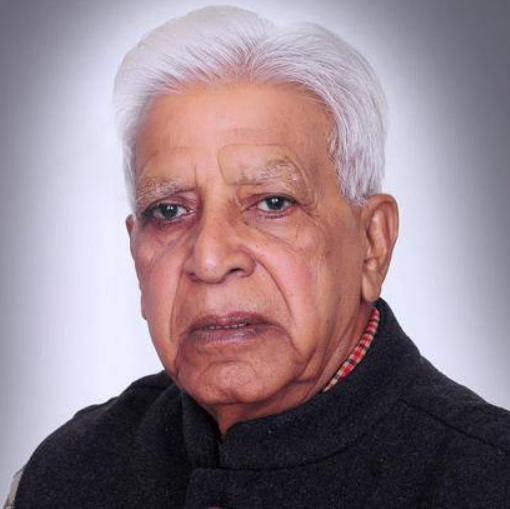
Dr Ramjilal, Social Scientist and Former Principal,
Dyal Singh College, Karnal (Haryana, India)
Email ID: [email protected]
Abstract:
Migrant workers are individuals who leave their permanent residence—be it a village, state, or country—in search of better employment or livelihoods but do not settle permanently in their new locations. They play a vital role in India’s development, contributing to many aspects of urban life: from construction in metropolitan cities to working in five-star malls; from agriculture in states like Punjab and Haryana to supporting factories and industries in regions such as Maharashtra and Gujarat. Additionally, they are essential for road construction and infrastructure projects across the country, from Kerala to Kashmir. The COVID-19 pandemic underscored their importance, as their absence greatly reduced industrial productivity.
Details:
According to the 2011 census, India has approximately 456 million migrant workers, accounting for around 40% of the total population. Of these, over 139 million are classified as seasonal workers (such as agricultural labourers), primarily from disadvantaged communities, including Scheduled Castes, Scheduled Tribes, and landless individuals, with varying levels of education. Despite being the backbone of the country’s workforce and development, these individuals often face a severe lack of basic amenities. To build a developed India, we must not consider migrant workers invisible. They deserve rights, as the dream of a developed India cannot be realised unless migrants are safe.
The Key Problems:
Migrant workers encounter numerous challenges that severely impact their quality of life and working conditions:
1. Economic Insecurity:
According to government data for 2021-22, approximately 80% of the workforce is informal. The e-Shram portal shows 414.8 million informal workers registered as of January 26, 2026. The situation of informal workers is extremely concerning, as India’s informal sector holds the largest number of migrant workers. These individuals often work in temporary and low-paying jobs—such as in construction, kilns, and domestic work—yet lack contracts or job security, affecting their economic stability. They face instability due to irregular income and financial insecurity. For example, during the COVID-19 pandemic, 64% of workers did not receive their full wages, further deteriorating their economic conditions. An overwhelming 98.5% of migrant workers come from marginalised lower classes, which compounds their struggles. This working class, often trapped in a cycle of poverty and deprivation, is frequently denied their rights and opportunities.
2. Caste Discrimination:
Caste discrimination persists, following individuals like a shadow. Among interstate migrant workers, Scheduled Castes make up 16% and Scheduled Tribes 8%. They experience caste discrimination in housing and employment even in cities, often being labelled as “Dalits” and “outsiders.” Dr. Bhimrao Ambedkar identified casteism as a principal factor in societal division. He believed that casteism fosters inequality among workers, weakening their unity and ability to fight for their rights. He argued that if the working class could overcome casteism, they could unite as a formidable force essential for achieving social and economic justice. Therefore, he stressed the importance of combating casteism and embracing principles of equality so the working class can rally for their rights and effect real change in society.
3. COVID-19 Lockdown: Challenges Faced by Migrant Workers:
(Indian migrant workers during COVID-19 coronavirus nationwide – Indian police on duty)
The COVID-19 lockdown significantly worsened the challenges for migrant workers in India. Workers in the informal sector lost their jobs overnight. Sixty-four percent did not receive their full wages, further worsening their economic conditions. They struggled to afford essentials like food and shelter and lacked health insurance or unemployment assistance. Crowded living conditions made social distancing and access to clean water nearly impossible, increasing their risk of infection. Transportation halts left many migrants stranded in cities, forcing them to undertake perilous journeys of hundreds of kilometres on foot in scorching heat to return to their villages, often facing hunger and violence from authorities and civilians. Upon their return, they encountered discrimination, being viewed as carriers of the virus. This situation echoes the poignant lyrics from the famous song “Bharosa” from the 1963 film, composed by Rajendra Krishan and sung by the legendary Mohammed Rafi:
इस भरी दुनिया में, कोई भी हमारा ना हुआ,
गैर तो गै़र थे, अपनों का सहारा ना हुआ.
(In this crowded world, no one was ours.
Strangers were strangers, but our own people were not our support.)
4. Problems of Migrant Women Workers and Children: Double and Triple Exploitation:
Migrant women workers face a significant burden of responsibilities. Many of these workers are engaged in domestic work, which is often deemed “unseen” or “invisible”. Despite putting in long hours, they earn 20% to 30% less than their male counterparts, often in violation of existing laws and regulations. Gender-based violence and abuse in the workplace pose additional risks for these women. Being away from their homes leaves them without a social security system, and voicing complaints about sexual harassment often results in job loss.
Legislation mandates that crèches be established at construction sites with more than 50 women workers. However, this requirement is ignored in nearly 95% of the workplaces across India. Consequently, young children, sometimes as young as two years old, are left to play in unsafe conditions, like cement and mud. Funds from the PM Matri Yojana scheme are often inaccessible due to a lack of bank accounts or Aadhaar linkage.
The high cost of children’s education severely impacts families. Seasonal migration leads to more than 80% of migrant children dropping out of school, as they struggle to obtain transfer certificates (TC) in their village and often cannot understand the local language in cities. Without a local identity or ration card, these children cannot benefit from welfare schemes such as the public distribution system and health insurance. Furthermore, there exists a substantial gap between their skills and the wages offered, compelling many migrant women to accept jobs that are labelled “unskilled”, despite being overqualified for such positions.
5. Data Darkness: The Issue of Hidden Migrants:
The Economic Survey of 2016-2017 was the first to acknowledge that approximately 139 million seasonal migrants are missing from government data. The short-term migration captured by the Periodic Labour Force Survey (PLFS) is not adequately recorded. Employers avoid registration to bypass labour laws. Although 300 million registrations have been made on the e-Shram portal, this data remains incomplete due to issues with skill and location updates. Without accurate information on the number of migrants and where they reside, budgeting for essential services like hospitals, schools, and housing becomes exceedingly difficult.
6. Welfare Schemes Entangled in Residence Certificates:
The National Food Security Act of 2013 aims to support over 200 million underprivileged individuals, many of whom are migrants. However, a ration card issued in states like Bihar or Uttar Pradesh may not be accepted at ration shops in cities such as Mumbai. The ‘One Nation, One Ration Card’ scheme was implemented in 2020, but by 2023, not all Fair Price Shops (FPS) were connected to it, and awareness among migrants remains lower than 40%. Even if a migrant holds an Ayushman Bharat Golden Card, hospitals in major cities like Delhi may refuse to accept it if it was issued in another state. If a child’s Aadhaar information is not updated during school admission, a year of education may be lost. Thus, while welfare schemes exist, they often fail at state borders for migrants.
7. Urban Housing: Slums in the Shadow of Development:
Slum Area; According to the official 2011 Indian Census, approximately 65.49 million people live in slums across the country, with recent estimates suggesting this number could be as high as 93 million—exceeding the populations of Germany and England. Most migrant workers reside in makeshift huts made of tin and tarpaulin, often located along rivers, near railway tracks, or under flyovers. It is common for six to seven workers to share a single room. Access to drinking water often requires purchasing from private suppliers, known as the “tanker mafia”.
Addressing the issues faced by these slums seems nearly impossible, as residents often lack representation; they do not have a councillor or Member of Legislative Assembly (MLA) due to challenges in transferring voter IDs. These slums are frequently labelled as “smart city encroachments”, and when development occurs, the first victims are often the migrant workers, who are left homeless and destitute.
8. Lack of Legal Protection:
Migrant workers are often unaware of their rights and legal protections. This lack of information can make them vulnerable to exploitation and abuse, preventing them from seeking justice for their issues. They may hesitate to speak out for fear of repercussions or simply don’t know where to turn for help. This shocking reality traps them in a situation where raising their voices for their rights seems impossible, and they are often left without the necessary support as they navigate the complexities of an unfamiliar legal environment. This alarming lack of information not only increases their vulnerability to various forms of exploitation—including low wages, unsafe workplaces, and abusive behaviour by employers—but also significantly weakens their ability to seek justice when faced with complaints. In other words, migrant workers are unaware of their rights and legal protections. This can leave them vulnerable to exploitation and abuse and prevent them from seeking justice for their problems.
Suggestions—From Policy to Intention, From Paper to Ground:
The main suggestions are as follows:
1. Portable Rights: The citizens must have the ability to carry their rights with them wherever they go. As enshrined in Articles 19(1)(d) and (e) of the Constitution, every citizen has the undeniable right to move and settle anywhere in the country, and yet, existing schemes often infringe upon this right. The ‘One Nation, One Ration Card’ policy must be rigorously implemented, ensuring that all 5.45 lakh Fair Price Shops (FPS) are 100% biometrically linked. These shops provide essential subsidised and free rations to 81.35 crore Indians, representing 57%-60% of the total population. Furthermore, this vital information should be accessible via helpline 14445 specifically for migrant workers. The Ayushman Bharat card must be fully portable; hospitals cannot refuse services based on a card issued by another state, as this violates the law. Immediate action must be taken to revoke the licenses of such non-compliant hospitals. Moreover, a Bharat Worker Card, based on the Aadhaar card, must be established to encapsulate workers’ skills, bank account details, health records, and family information, ensuring it is valid across India. To fulfil the right to education, local Panchayats should issue migration certificates, allowing children of migrant workers to enrol in schools within seven days at their destination, free from Transfer Certificate requirements.
2. Enforce the Law, or Face Consequences: The contractors must be registered and are mandated to provide adequate housing, travel allowances, and displacement allowances, as outlined in the Inter-State Migrant Workers Act of 1979. This law, although nearly 47 years old, is often overlooked due to a corrupt alliance of contractors, officials, bureaucrats, and politicians, resulting in 90% of migrant workers and ordinary citizens remaining unaware of it. A Migrant Workers Cell must be established in every district, consisting of a labour inspector, police representatives, a member of the migrant workers’ union, and a local opposition party leader. Employers are required to provide quarterly updates on e-Shram; failure to comply will lead to cancellation of their GST registration and substantial financial penalties. Government contracts must only be awarded to contractors who deposit 100% of workers’ Employees’ Provident Fund (EPF). Any contractor who fails to comply after receiving a contract must face severe penalties. Disputes involving migrant workers must be resolved by labour courts within 90 days; any delays should incur fines for the relevant officials.
3. Cities for All: Housing and Respect: A full ten percent of the budget under Amrit Kaal 2.0 and PMAY-Urban must be earmarked for affordable rental housing. Workers’ hostels should be established in all smart cities, without exception. Municipal corporations must issue City Service Cards to migrant workers who reside for more than three months, ensuring they can access water connections, bank accounts, and labour cards upon establishing permanent residence. The “House Wherever the Slum, Wherever the House” policy must be implemented, and a legal model of rent-to-own should be established to shield workers from the detrimental effects of demolitions.
Conclusion: The Role of Migrant Workers in India’s Economic Growth
To strengthen India’s economic foundation, it is crucial to transform patterns of distressed migration into opportunities for sustainable development. This transformation requires a shift towards state-socialist policies that emphasise the nationalisation of production resources, moving away from current neoliberal and exploitative capitalist models. Enhancing the conditions for migrant workers involves increasing awareness and understanding of their challenges. Key areas for improvement include access to education, healthcare, and stable employment opportunities, all of which are essential for uplifting this demographic. In addition to financial assistance, social and political support play a pivotal role, empowering workers to advocate for their rights effectively. Improvements in social security, living conditions, and the reduction of the rural-urban divide are critical steps in this process. By addressing these issues, we can empower migrant workers to become active contributors to societal development.
References For Further Study:
1. Office of the Registrar General and Census Commissioner of India, 2011 Census of India, 2011. D-series migration: 45.6 crore internal migrants.
2.https://www.worldometers.info/world-population/population-by-country/
3. Shram.org. (n.d.). Sessional Migrants in India: Magnitude, Vulnerability, and Policy. About 3 crore are seasonal migrants.
4. NJCM India. (n.d.) Socio-Economic Profile of In-Migrant Population. 98.51% Migrant population lower class 111, 1V and V
5. The Business Standard (n.d.). How, despite migration, caste Discrimination follows India’s disadvantaged in the migration. SC, 16 % cent; ST, 8 %, of the interstate migrants
6.Acharya, A. K. (2021). Caste-based migration and exposure to abuse and exploitation: Dadan labour migration in India. Contemporary Social Science, 16(3), 371–383. https://doi.org/10.1080/21582041.2020.1855467
7. Ministry of Statistics and Program Implementation, (2022) Periodic Labour Force Survey 2021-22. 80% of the workforce is informal
8. Super Kalam (n.d.). India’s Migrant Workers: Challenges, Legal Frameworks, and Policy Gaps in Covid-19. In Covid-19, 64% of migrant workers did not receive full salary
9. Business Standard (n.d.), op. cited.
10. IILED. (n.d.). Working Paper: India’s Urban Population and Food Security 2013. –20 crore deprived eligible.
11. Living and Struggling During the Covid Pandemic. Indian Journal of Labour Economics, 65(2), 425–443. https://doi.org/10.1007/s41027-022-00374-w
12. Super Kalam (n.d.), op. cited –23.6 crore urban slum dwellers