THE ASIAN INDEPENDENT UK

Bal Ram Sampla
Geopolitics
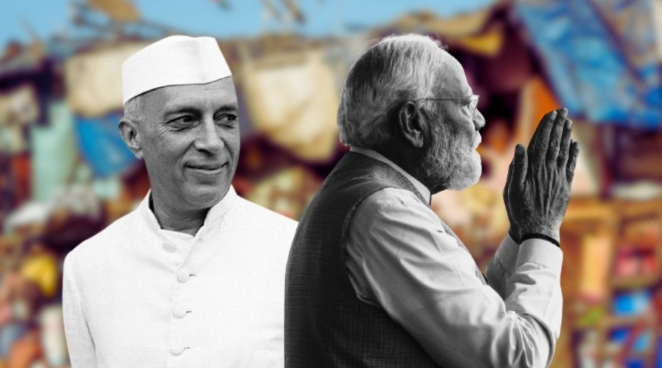
June 2026 marks a major milestone in Indian political history. Narendra Modi has completed 4,399 consecutive days in office, surpassing the record for the longest unbroken tenure by an elected Prime Minister, previously held by India’s first leader, Jawaharlal Nehru. Nehru still holds the record for total cumulative days—16 years, 286 days—because he also served as Prime Minister from Independence in 1947 until the first official elections.
For supporters, this is proof of an unshakeable political mandate. But for critics, this numerical milestone forces a much darker question: Has over a decade of continuous power truly cured India’s deepest structural ills, or has it simply replaced old problems with new, high-tech ones?
When we look beyond the political celebration, the reality of India today reveals a stark gap between government promises and the actual experience of its citizens.
The Zero Press Conference Legacy: A Decline in Public Accountability
The most biting criticism highlights a structural shift in how India is governed:
Nehru Press Conferences 75
Modi Press Conferences 0
This statistic is a direct challenge to democratic norms. By completely avoiding open-floor, unscripted press conferences for over 4,300 days, the administration has fundamentally re-engineered how power communicates.
Traditional democratic accountability has been replaced by one-way communication tools like the Mann Ki Baat radio broadcasts and heavily managed, highly structured individual interviews.
While supporters view this as a clever strategy to bypass media bias, critical observers see it as a deliberate insulation from tough questioning. When leadership chooses exactly which questions it will answer, democratic transparency suffers.
The Illusion of “Eliminated” Problems
The claim that the current administration has cleanly solved foundational problems like corruption, crime, paper leaks, or pollution does not hold up under critical analysis.
(1) The Reality of Corruption: The government has successfully scaled down grand, multi-billion-dollar bureaucratic scams by using digital payment infrastructures (UPI) and direct-to-bank welfare transfers. However, this has not destroyed corruption; it has simply shifted its shape. Everyday, low-level corruption still plagues local government offices, and critics frequently point to a rising concentration of economic power among a select few corporate conglomerates as a new form of systemic favoritism.
(2) The Vulnerability of the Youth: Institutional structural failures continue to disrupt the lives of ordinary citizens. Regular examination paper leaks frequently derail the future of millions of students, exposing massive loopholes in the state’s testing infrastructure. Similarly, food adulteration and weak supply-chain oversight remain active public health crises.
(3) The Pollution Crisis: Despite public clean-up campaigns, India’s major metropolitan regions still dominate global lists for the worst air quality on earth, representing a severe environmental and healthcare policy failure.
Institutional Safety and the Politicization of Women’s Security
The question of “in whose government do atrocities happen the most” touches the most sensitive nerve in Indian public life. A critical look at the data shows that systemic violence against women remains an ongoing national crisis that defies partisan labels.
National Crime Records Bureau (NCRB) data reveals that high rates of violence exist under all state-level and central administrations, regardless of who is in power. While defenders point to higher crime numbers as a sign that more victims feel empowered to come forward to the police, the underlying reality is grim:
India’s local policing models, massive court backlogs, and deep-seated societal norms mean that institutional justice remains slow and painfully difficult to achieve. The safety of citizens continues to be treated as a political talking point rather than a national emergency requiring deep institutional overhaul.
Conclusion
A continuous 4,399-day tenure is a massive feat of political engineering and electoral dominance. The Modi administration has undeniably built a modern digital infrastructure and an efficient, direct welfare network.
However, a truly critical assessment shows that longevity does not automatically equal structural reform. By pulling back from open media scrutiny and failing to solve persistent crises like youth unemployment, systemic safety issues, and environmental decay, the milestone stands as a stark reminder: a government can easily modernize a country’s digital systems while leaving its oldest, deepest institutional cracks completely unaddressed.
References
1.https://gulfnews.com/world/asia/india/a-record-4399-days-modi-enters-indias-political-history-books-1.500569466
2.https://youtu.be/c463F3ZTJZw?si=5lJabFGa21eBvcKu