THE ASIAN INDEPENDENT UK
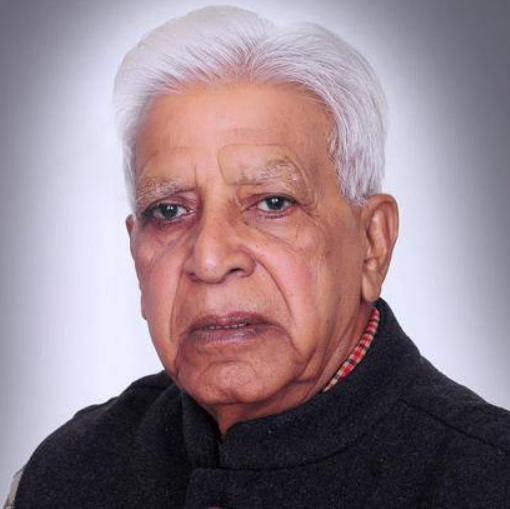
DR.Ramjilal, Social Scientist,
Former Principal, Dyal Singh College,
Karnal (Haryana, India)
Email: [email protected]
The Karnal district of Haryana is often referred to as the rice bowl of India. On June 4, 2026, the city of Karnal, rich in history, witnessed a stark contrast between two eras. On one side, the 21st century showcased its splendour with modern glass buildings, flyovers, air-conditioned shops, and bustling malls, while dreams of space exploration filled the air. On the other side, reminiscent of ancient times, a slow-moving convoy of bullock carts carried families who measured distance by how far their bullocks could travel before sunset. This caravan briefly interrupted the city’s rhythm. Each bullock cart served as a mobile home, with cots secured overhead and water drums tied to them. Children peeked out, captivated by the urban spectacle. A cage hung from bamboo, possibly holding a bird, while clothes dried on a rope strung across the cart. The Mavesis walked behind, their jingling bells creating a soothing sound. Fierce hunting dogs accompanied the caravan, displaying loyalty and vigilance that surpassed even that of police or commandos. These marginalised Individuals never locked their doors, embodying a sense of trust and community.
This population represents the most marginalised segment of modern India, comprising nomadic tribes, freed communities, and pastoral groups. Their addresses shift with the seasons, and although they possess Aadhaar cards, they lack a permanent place to call home. When asked about their origins, they often respond, “The sun is too hot to speak.” Perhaps they wish to express, “Our Hindustan is better than the whole world, yet we roam the world without a home.” Their journey continues, revealing the stark divide between rich and poor India, exposing the complexities of the Indian economy, the illusion of prosperity, and the deep-rooted ties between corporations and power. Without a stable foundation, the essentials of life remain out of reach. The vision of a developed India feels like a distant dream, a colourful illusion. The notion of a permanent shelter seems to have been forsaken long ago. They live under the open sky, unbothered by storms or monsoon rains, setting up tents wherever they find water, using the sky as their roof. Their children are born, grow, and live on the streets.
Due to their nomadic lifestyle, these children miss out on education, as schooling requires a stable location to complete academic sessions. Politicians may passionately discuss educational initiatives and welfare policies for these marginalised children, but such schemes rarely reach the nomadic tribes. The system appears indifferent to their plight. In independent India, mobility should symbolize freedom, yet for nomads, it signifies invisibility. They occupy the lowest tier of society, lacking a permanent residence. While they can obtain ration cards, the state views individuals without a fixed address as having no past, present, or future.
Sociologists argue that this situation severely impedes social, economic, and educational development, constituting a blatant violation of rights.
The Path to Inclusion:
The solution lies not in forcing them to abandon their culture but in providing a foundation to which they can return:
First, Permanent Residence: Establishing permanent residences is crucial. While a plot of land, a small house, and a fixed village address do not eliminate migration, they offer a semblance of stability. Seasonal pastoralists will continue to move with their cattle, but providing them with a langar (rest house), a school for their children, and a ration card and voter ID (postal address) creates a reliable point for receiving mail.
Second, Mobility in Education: Education must be reimagined to accommodate mobility. This includes establishing residential schools for nomadic children, implementing mobile classes along migration routes during peak seasons, and creating digital records that accompany children. Such measures can significantly reduce dropout rates. If even one child is left behind, the entire system of universal education is at risk of collapse.
Third, livelihood support: Livelihood support must be accessible to individuals in their own environments. Traditional skills such as metal working, animal husbandry, herbal medicine, and folk arts hold significant market potential. However, without access to credit, training, and markets, these skills remain underutilised and trapped in poverty. By linking artisans to government committees, issuing identity cards, and ensuring government procurement, we can turn mobility into a valuable asset.
A question for the mainstream:
On that day in Karnal, the Canal Market lost its vibrancy. The city observed the convoy, and the convoy observed the city in return. It was a convergence of two Indias, perhaps beginning to acknowledge one another. A straightforward question for our readers and policymakers in India: Are we capable of seeing clearly enough to take action? Welfare is not merely charity; it embodies inclusion. When the children of these vendors are found in classrooms, when their youth secure employment in both government and private sectors, and when their elders receive fair pensions and benefits, only then can we claim that development has truly reached them.
In essence, the most marginalised migrant population does not suffer deprivation by choice; they are deprived because the system has yet to adapt to their movement. Until we construct that bridge, the convoy will persist in passing by, and our chandeliers will continue to cast their shadows in ignorance. The political system must now evolve to keep pace with them. Once this nomadic, marginalised community is adequately supported, it will be integrated into the mainstream and proudly assert, “We too are Indians.”