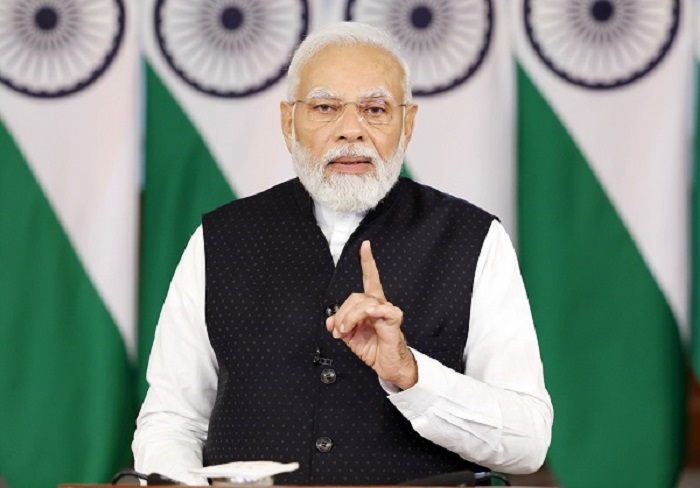
(Asian independent) Narendra Modi has suggested buying less gold, avoiding foreign travel, reducing the use of petrol and diesel, using less fertilizer, consuming less edible oil, using the metro, and working from home. These suggestions have created a stir in Indian society. Political opponents are alleging that this amounts to an admission of the failure of Modi’s policies, while economists are saying that such measures would adversely affect the Indian economy.
Most people now recognize carbon emissions and the resulting climate change as a challenge to the very existence of humanity. Most countries in the world are pledging to reduce carbon emissions and become carbon neutral. The increase in carbon emissions is a result of our consumerist lifestyle. If private vehicles run on fossil fuels — including petrol, diesel, coal-based electricity, and even batteries charged with such electricity — are restricted, and public transport is promoted, then carbon emissions will certainly decline. Taxis could still be available for emergencies, the elderly, disabled, and sick people. Even taxis should increasingly shift toward animal-drawn transport. Except for the health and police departments, other government departments should not need vehicles. Ministers, people’s representatives, officers, and employees can all use public transport or bicycles.
Air travel causes the greatest pollution. Greta Thunberg of Sweden, who has prominently raised the issue of climate change worldwide, has resolved not to travel by airplane. Therefore, not only foreign trips but even domestic air travel should be restricted. Air travel under 1,000 kilometers should be completely banned. Air travel should be allowed only in emergency situations.
The rich and upper middle classes have become accustomed to air-conditioned lifestyles, yet the Prime Minister said nothing about this. Air conditioners are a major cause of pollution. Sooner or later, we will have to stop using them. Trains should have only one class — non-air-conditioned coaches. Making someone’s journey more comfortable merely because they have more money goes against the Constitutional principle of equality. All passengers should have equally comfortable facilities. If the number of passengers exceeds the train’s capacity, then additional trains or coaches should immediately be arranged. Computer technology can help in this. Human beings should not travel like animals.
It is now understood by everyone that the use of chemical fertilizers and pesticides in farming is harmful to the health of humans, animals, and nature. Therefore, their use should be stopped immediately. Those employed in producing chemical fertilizers and pesticides should instead engage in producing organic manure, organic pesticides, or natural farming.
If one visits the homes of indigenous tribal Adi community in Arunachal Pradesh, one gets only boiled food there, without spices or even salt. Using less oil in food is anyways healthier.
Narendra Modi spoke about buying less gold. In reality, he should have said that we should abandon our consumerist lifestyle. Limits should be set on the number of guests and expenditures at wedding ceremonies, just as there are spending limits during elections. However, while there are limits on the spending of individual candidates during elections, there is no limit on the spending by political parties. This is dishonest policy. Candidates escape expenditure limits by adding helicopter expenses to the party’s account. The use of airplanes and helicopters in elections should also be banned.
To give up a consumerist lifestyle, natural and human-made resources must be used wisely. The production of disposable items such as plastic should itself be banned. Reusable and recyclable products should be encouraged. The use of cement in construction should also be restricted because its production causes significant pollution. Local alternatives that are more nature friendly should be explored instead of cement.
Work that can be done from home should indeed be done from home. Classes and meetings that can be conducted online should remain online. This would save travel expenses and reduce pollution associated with commuting to schools and meetings. Wherever food is prepared on a large scale, there is also wastage. This too would be reduced. The only thing to ensure is that people who cannot afford better technology should be provided facilities by the government so that everyone can fully participate in online meetings and education.
Therefore, what Narendra Modi is saying should indeed be implemented, but not merely as a temporary response to the current oil crisis. These measures should be adopted as part of a thoughtful long-term policy. The COVID period demonstrated that many of these things are possible. In fact, we should have learned these lessons during the pandemic itself. But our consumerist culture and mindset pushed us back toward the same ways to which we had become accustomed, or which suit the market economy. We should now free ourselves from worrying about the impact of these decisions on the market and the economy, and instead adopt the measures described in this article, because the market works for short-term profit, whereas the challenge before us is to save the existence of humanity. The question is one of choosing between long-term policies and short-term gains.
Author: Sandeep Pandey
About the Author: Sandeep Pandey is with Green Party associated with the Socialist Party (India).