THE ASIAN INDEPENDENT UK

Bal Ram Sampla
Geopolitics
Something significant is happening in higher education. For the first time, British universities are not waiting for Indian students to come to them — they are going to India instead. Nine UK universities, including Southampton, Bristol, York, and Liverpool, have received approval to open campuses on Indian soil. It is an exciting development, but also a complicated one.
India is a vast country with an enormous demand for high-quality education. According to some estimates, by 2035, it will need 70 million university places — but currently has room for only 40 million students. The opportunity is obvious. Yet opportunity and success are not the same thing. UK universities face a long list of challenges as they attempt to transplant their brand, their values, and their academic culture into one of the world’s most complex societies.
This article explores those challenges — including one that is rarely discussed openly: caste discrimination, and whether Dalit students will face the same barriers at UK branch campuses as they do across Indian higher education.
The Challenges UK Universities Face
1. Cost and Who Can Afford to Attend
UK branch campuses in India are cheaper than studying in Britain. Campuses will serve students from relatively wealthy, urban backgrounds. The students who most need access to high-quality education — those from rural areas, lower-income families, or marginalised communities — are unlikely to benefit in any significant way. A prestigious British degree, even at a reduced price, is still out of reach for tens of millions of Indians.
2. Where the Campuses Are Located
UK universities are being strategic about where they set up. Southampton opened its campus in Gurugram’s International Tech Park. Surrey is heading to GIFT City, a financial hub in Gujarat. These are premium zones in wealthy urban areas — exactly the kind of place that already has good infrastructure and a student base ready to pay.
This makes business sense. But it also means UK universities are largely reproducing existing privilege rather than challenging it. They are setting up in places where success is more likely — not necessarily where need is greatest.
3. Infrastructure That Is Not Ready
India’s university infrastructure is growing fast — the number of universities has jumped from 760 in 2015 to over 1,300 today — but the quality is deeply uneven. Many institutions lack proper laboratories, libraries, and digital equipment. Faculty shortages are severe. Outside the major cities, higher education is often underfunded and understaffed.
4. Faculty: Who Will Teach?
A UK degree is only as good as the people delivering it. Recruiting experienced, research-active academics to teach in India is a serious challenge. Salaries competitive enough to attract top faculty represent a significant cost. And faculty willing to relocate permanently — rather than fly in occasionally — are rare.
If UK campuses rely too heavily on visiting lecturers or locally hired staff without the same training and standards, the quality of the degree will suffer. Students paying for a British education expect British academic rigour. Delivering that consistently, thousands of miles from the home campus, is genuinely difficult.
5. Navigating Indian Regulation
Foreign universities in India must operate under the University Grants Commission — India’s higher education regulator. The rules are complex, shifting, and sometimes contradictory. In early 2026, the UGC introduced new anti-discrimination regulations for universities — only for India’s Supreme Court to suspend them almost immediately following a political backlash.
UK universities are used to operating within a single regulatory framework. In India, they must balance UGC rules, state government rules, and in special economic zones like GIFT City, a separate financial regulator too. Getting this wrong — a mishandled accreditation, a regulatory breach — could threaten the entire venture.
6. Reputation Risk
UK universities are global brands. Their reputations have been built over centuries. If something goes wrong at an Indian campus — a scandal, a discrimination case, a quality failure — the damage is not contained to India. It reflects on the parent institution at home.
Caste Discrimination and What It Means for UK Campuses
- The Reality of Caste in Indian Higher Education
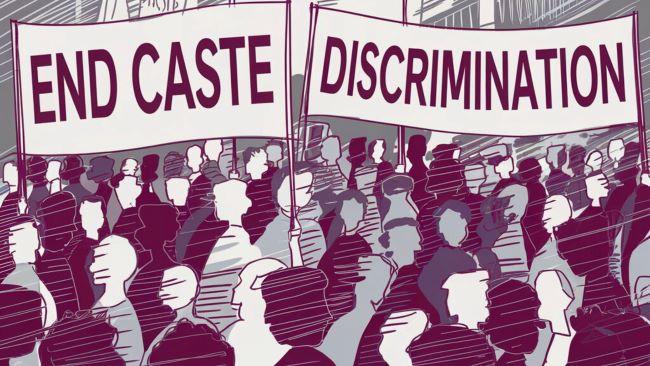
Caste is not a relic of India’s past. It is a living, active force in its universities — including its most prestigious ones. The scale of caste-based discrimination in Indian higher education is deeply troubling.
Reports submitted to India’s Supreme Court show that complaints of caste discrimination in universities rose by 118% over five years, reaching 378 reported incidents in 2023-24. These are only the reported cases — the actual number is almost certainly much higher, since many students fear the consequences of speaking up.
The human cost has been devastating. From 2004 to 2024, 115 Dalit student suicides were reported, many directly linked to caste harassment. High-profile cases — like PhD student Rohith Vemula and postgraduate doctor Payal Tadvi — shocked India and triggered nationwide protests. Yet systemic change has been slow and contested.
Discrimination does not only come from fellow students. There are documented cases of professors using casteist slurs and Dalit students being excluded from classrooms. So-called ‘merit’ in many institutions carries deeply Brahmanical assumptions — upper-caste students are assumed to be naturally more capable, while Dalit students are stereotyped as being present only because of reservation policies.
2. Will Dalits Face the Same Discrimination at UK Campuses?
This is the most uncomfortable question of this entire expansion — and it does not have a reassuring answer
The honest response is: yes, unless UK universities take deliberate, specific steps to prevent it. And so far, there is very little evidence that they are doing so.
Here is why the risk is real:
(1) Caste does not disappear at the campus gates. Students bring their social worlds with them. In a campus dominated by upper-caste, wealthy, urban students — which is exactly what these branch campuses will initially attract — Dalit students who do enrol may face the same social exclusion, stereotyping, and hostility they experience elsewhere. Prestige does not dissolve prejudice.
(2) UK universities do not have a clean record on caste themselves. Research has found that there is very little institutional understanding of caste discrimination on British campuses. When South Asian students from Dalit backgrounds raise caste issues in the UK, they often find that staff have no framework for understanding or addressing them. Upper-caste students and faculty from South Asian backgrounds sometimes actively work to suppress caste from being discussed at all.
(3) The UK itself does not legally recognise caste as a protected characteristic. In 2018, the government chose not to add caste to the Equality Act. This means UK universities do not have explicit caste equality policies, because they are not legally required to. They cannot simply ‘export’ a framework they do not have.
(4) India’s own regulatory protections are in chaos. The UGC’s new anti-discrimination regulations — which included direct accountability for university heads — were stayed by the Supreme Court almost immediately after being introduced in January 2026. The complaint mechanisms that do exist, the SC/ST Cells required in Indian universities, are widely seen as ineffective and more interested in protecting institutional reputation than helping students.
3. What Would Actually Help?
If UK universities are serious about not replicating India’s caste hierarchies on their campuses, they need to take concrete steps — not just issue statements about inclusion.
That means actively recruiting Dalit, OBC, and Adivasi students through targeted scholarships, not just waiting to see who applies. It means hiring faculty from marginalised caste backgrounds — not just importing a predominantly upper-caste teaching staff. It means creating independent grievance mechanisms that Dalit students can trust, entirely separate from management. And it means training staff — British and Indian — in what caste discrimination actually looks like and how to address it.
Oxford’s India Centre for Sustainable Development recently created what it describes as the first UK scholarship specifically targeting SC, ST, and OBC students. Somerville College has launched Savitribai Phule Scholarship. This is a start. But it is one scholarship at one institution.
Conclusion
UK universities arriving in India carry genuine strengths: strong academic traditions, global reputations, and a sincere belief in the value of international education. The demand is real, the policy window is open, and the early signs from Southampton’s campus in Gurugram are cautiously positive.
But the challenges are not minor. Affordability, location, faculty quality, regulatory complexity, and infrastructure all present serious obstacles. Any one of them could undermine an otherwise promising venture.
The caste question is the most serious of all — not because it is the most likely to cause a financial problem, but because it goes to the heart of what UK universities claim to stand for. They present themselves as institutions built on meritocracy, inclusion, and equal opportunity. If their Indian campuses become spaces where Dalit students face the same discrimination, exclusion, and prejudice they experience everywhere else in Indian higher education, that claim will ring very hollow indeed.
The expansion is worth pursuing. But it needs to be pursued honestly — with clear eyes about what it will take to succeed, and with genuine commitment to the students who have historically been left behind.
References
1.https://www.fecworld.lk/uk-universities-open-campuses-in-india/
2.https://www.commercialdesignindia.com/insights/future-of-education-spaces-campus-design-trends-and-innovations-for-2025
3.https://www.universityherald.com/articles/80247/20260324/britain-goes-east-how-uk-universities-are-rewriting-rules-global-higher-education.htm
4.https://www.21kschool.com/us/blog/problems-of-higher-education-in-india/
5.https://www.business-standard.com/industry/news/india-academic-infrastructure-demand-2035-anarock-report-126020501737_1.html
6.https://m.thewire.in/article/caste/caste-based-discrimination-up-by-118-in-universities-ugc-data-shows
7.https://www.timeshighereducation.com/opinion/indias-new-caste-bias-regulations-have-resulted-turmoil
8.https://www.ids.ac.uk/opinions/anti-caste-commitments-in-uk-higher-education-a-call-to-action/
9.https://iasscore.in/current-affairs/caste-discrimination-in-higher-education