THE ASIAN INDEPENDENT UK

Bal Ram Sampla
Geopolitics
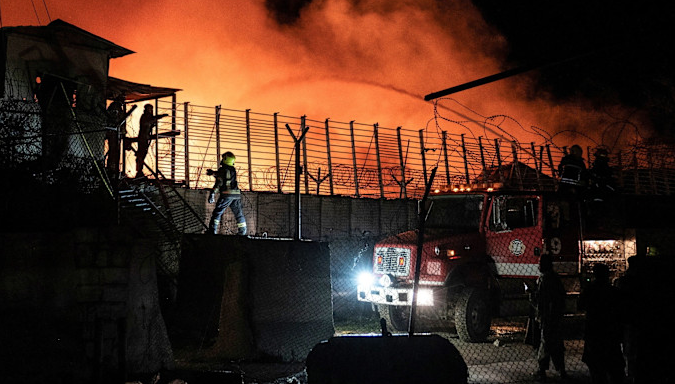
In March 2026, Pakistani airstrikes hit the Omid Addiction Treatment Hospital in Kabul, Afghanistan. The hospital was a well-known rehabilitation centre run by the Afghan Taliban’s interior ministry, treating patients suffering from drug addiction — including adolescents. The United Nations confirmed that at least 143 people were killed, though Afghanistan claimed the death toll exceeded 400. Either figure represents a devastating loss of civilian life.
Pakistan denied deliberately targeting the hospital, insisting its strikes were aimed solely at militant camps and terrorist infrastructure. Afghanistan called the attack a “crime against humanity.” The international community watched in horror as images of a destroyed medical facility — including a wing that housed young patients — circulated around the world.
International Law
Wars have rules. This may seem strange to many people, but international humanitarian law — built over more than a century — exists precisely to protect civilians during armed conflict. The Geneva Conventions, which almost every country in the world has signed, are the foundation of these rules.
Under these laws, hospitals are given special protected status. They cannot be targeted, even in war. Attacking a hospital — especially one filled with patients — is not just morally wrong. It is illegal. If done deliberately or recklessly, it constitutes a war crime.
The United Nations Assistance Mission in Afghanistan (UNAMA) made this point clearly, stating that attacks on hospitals and civilian facilities are strictly prohibited under international law.
The UN human rights office went a step further, calling for an independent investigation — the first formal step on the road to accountability.
Could Pakistan Face War Crimes Charges?
To prove a war crime, it is not enough to show that a hospital was destroyed. Prosecutors would need to prove that Pakistan knew it was attacking a hospital, or acted with such reckless disregard that it did not matter. Pakistan’s defence — that it was targeting militants — creates a factual dispute that only a proper independent investigation can resolve.
The International Criminal Court (ICC) is the world’s primary court for prosecuting war crimes. However, neither Pakistan nor Afghanistan is a member of the ICC, which severely limits its ability to intervene. Without that jurisdiction, formal legal prosecution becomes extremely difficult.
Other options exist but are equally challenging. A UN-mandated independent investigation could gather and preserve evidence. Certain countries can prosecute war crimes committed anywhere in the world under a principle called universal jurisdiction. International pressure and sanctions are also tools available to the global community. But none of these paths are quick or guaranteed.
The Broader Consequences
Even if formal prosecution proves difficult, the consequences of this attack are already unfolding on several levels.
Diplomatically, Pakistan faces growing international isolation. Attacking a hospital, regardless of the justification offered, damages a country’s reputation profoundly and for a long time. Relations with Afghanistan, already deeply strained, may take a generation to repair.
Humanitarily, the strike is part of a broader pattern. Reports indicate that at least 20 healthcare facilities across Afghanistan were damaged or destroyed during this conflict. In a country already suffering from decades of war and poverty, the destruction of medical infrastructure pushes millions of people closer to catastrophe.
Politically, the attack has hardened positions on both sides. Afghanistan’s outrage, and the Taliban’s framing of Pakistan as an aggressor killing Muslim civilians, makes any peaceful resolution harder to achieve.
For international law itself, the case is a test. If a strike on a hospital full of patients passes without serious accountability, it sends a dangerous message to other nations — that the rules of war can be ignored with impunity.
Conclusion
The destruction of the Omid Hospital in Kabul is not simply a tragedy of war. It is a potential war crime that demands a serious international response. The United Nations has already spoken clearly. An independent investigation must follow. Evidence must be gathered and preserved. And the global community must insist — loudly and persistently — that attacking hospitals is never acceptable, whoever does it and whatever the justification offered.
Wars may be unavoidable at times. But the deliberate or reckless killing of civilians in a hospital is not an act of war. It is a crime. And crimes must have consequences.
References
1. https://www.aljazeera.com/news/2026/3/17/families-search-for-loved-ones-after-deadly-pakistan-strikes-on-kabul-rehab
2.https://thediplomat.com/2026/03/the-kabul-hospital-strike-and-the-escalation-logic-driving-afghanistan-pakistan-conflict/
3.Based on reporting by UNAMA, Amnesty International, 29th March 2026.