Prem Singh

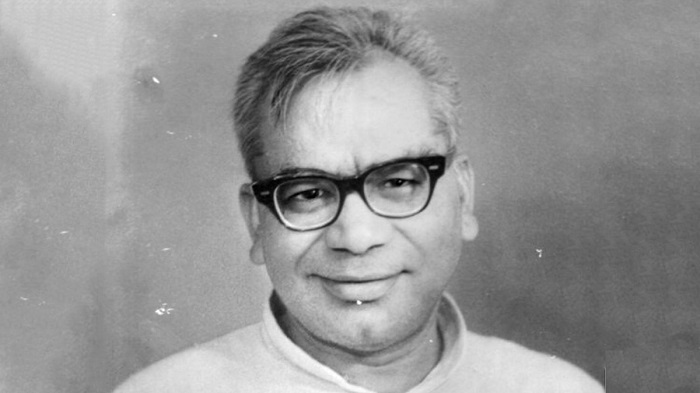
(Asian independent) Dr Ram Manohar Lohia (23 March 1910 – 12 October 1967), identifies the two segregations, in terms of caste and sex, as primarily responsible for the decline of the spirit, and the ending of “all capacity for adventure and joy” in Indian people. While exploring the cultural sociology of India, Lohia finds that these two segregations are deeply rooted in the Indian social structure. He believes that the people of India are “the saddest people on the earth” due to the prolonged existence of these two segregations. The true spirit of Indians can be unleashed only by dismantling them.
Throughout his integrated philosophical-political venture, Lohia was driven solely by the will to achieve the maximum possible equality in all the aspects of human life and the world order. He views the inequality between man and woman as basic and most challenging: “The inequality between man and woman is, perhaps, the bedrock for all other forms of inequality. Or, if not the sole foundation, then among all the bedrock pillars of inequality and injustice within society, the rock of gender inequality stands as the strongest of them all.”
Lohia states, “All those who think that with the removal of poverty through a modern economy, these segregations will automatically disappear, make a big mistake. Poverty and these two segregations thrive on each other’s worms.” Hence, Lohia suggests that the struggle against these segregations, particularly the segregation made on the basis of gender, should not only incorporate economic-political-legal spheres but also be extended to the cultural sphere.
He advocates open debate, particularly amongst youth, on this topic so that the patriarchal mind-set should be restructured through demolishment of those myths and legends which construct and propagate the narratives regarding an “ideal” woman. These myths which create arbitrary images of woman in the interest of man, have been constructed and glorified in the patriarchal society. Liberation from such myths can be achieved only through a restructuring of the male mind through an open debate.
Lohia extracts an innovative insights by deconstructing traditional myths that have held relevance and significance for modern life. No other modern thinker placed as much emphasis as Lohia did on the need to transform the deeply entrenched socio-cultural psychology of Indians in order to combat every form of inequality. This emphasis was directed, above all, toward the objective of eradicating the deeply rooted inequalities inherent in gender relations. Indeed, a revolution in gender relations can be regarded as the most significant dimension of the ‘Saptakranti’ (Seven Revolutions) propounded by Lohia in his quest of establishing a modern socialist society. He does not mind to assign more space and resources to woman than man in order to achieve this goal.
In Lohia’s ‘unique woman’ discourse we find an interesting analysis of the status of all the women across a vast cross-section, ranging from the lower to the upper class and from Asia to Europe-America. He finds the Asian woman to be traditionally more a victim of inequality as compared to European or American woman citing an example of the practice of polygamy prevalent only in Asia.
The main sphere of Lohia’s woman discourse has been Hindu society. However, he touches the life of Muslim women in a passing manner while disapproving the provision and practice of having more than one wife by Muslim men. He argues: one, that a man can never treat all four wives equally as has been ruled in the ‘Sharia’; second, that Islam does not give a woman the permission to have four husbands. If, according to the logic given, it was a system devised by the prophet to deal with the surplus of women in the society at that time then this system should be disbanded in the present scenario.
Lohia raises the famous debate as to who should be the ideal for the modern Indian woman – Draupadi or Savitri? He says, “When I say that Draupadi is the true symbol of the Hindustani woman and not so much Savitri, I say so because of her qualities. She was knowledgeable, mature, brave and courageous and had her wits. I have not come across any woman like Draupadi, not only in India but in the whole world. … It is absolutely wrong to glorify Savitri solely because of her devotion to her husband.”
In his view, “Perhaps that would be a good world in which there is one husband and one wife.” However, he is not in favour of constructing an ideal archetype of womanhood based solely on the one-dimensional virtue of wifely devotion: “I do not denounce the fable about Savitri as a bad one nor do I disrespect Savitri. I have a lot of respect for Savitri based on her one highlighted quality. However, woman does not have just one quality. She has multiple qualities. If, in order to nurture one quality the other nineteen out of twenty qualities are destroyed or endangered, then it is difficult to idealize this one quality.”
In India, five of her daughters – Sita, Savitri, Draupadi, Tara, Mandodari – are held in high esteem. Yet, the axis amongst them seems to be Savitri. Draupadi is not viewed even with reverence. Lohia wants to change this axis of Savitri and replace it with Draupadi.
The ‘value’ attached to virginity has been a sensitive as well as problematic issue in societies. The notion of virginity, established and recognized as a virtue by man, has probably affected the freedom of women most profoundly. It is because of this notion that a woman either remains sexually repressed all her life or commits suicide or becomes a ‘Sati’ by sacrificing herself on her husband’s funeral pyre or leads her entire life as a widow or is forced to become a prostitute.
Lohia lambasts: “Hindustan today has become a deformed society. Peoples’ thoughts regarding marriage and sexual relations are extremely degenerated. Throughout the world at some time or the other man has created rigorous standards or ideals about woman’s chastity, purity, sanctity. Indirectly all these ideals narrow down to and are concentrated only around the body of the woman and that too a very small part of the body.”
In Lohia’s woman discourse a powerful critique is assembled to challenge very notion of chastity.
Lohia addresses various facets, including the relationship between man and woman as friend or husband, divorce, and procreation of womanhood from an innovative moral ground. The bold steps he advocates for liberating woman from both feudal and capitalist shackles remain striking even today. In the present revivalist and consumerist ecosystem such ideas appear almost unimaginable.
When the status of the Indian woman in the era of neoliberal or corporate politics is juxtaposed with Lohia’s ideas, it evokes a profound sense of concern. She has been reduced to a mere vote – one that can be manipulated or purchased before an election.
(Associated with socialist movement the author is a former teacher of Delhi University and a fellow of Indian Institute of Advanced Study, Shimla)