

THE ASIAN INDEPENDENT UK

Dr. Ramjilal, Social Scientist,
Former Principal, Dyal Singh College,
Karnal (Haryana, India).
Email: [email protected]
Brief:
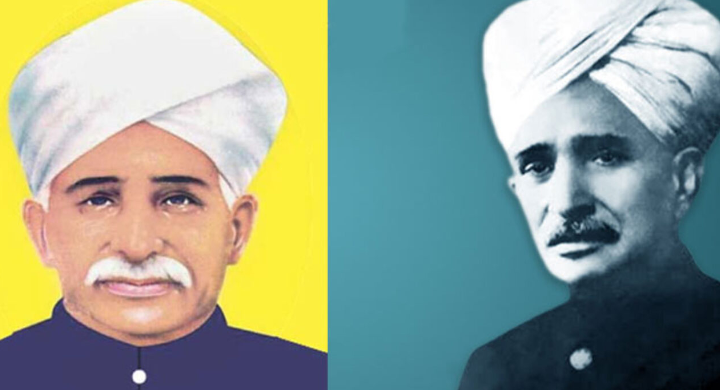
Sir Chhotu Ram (Richhpal, Garhi Sampla, Rohtak, November 24, 1881 – January 9, 1945) is recognised as a significant political figure in north-western India during the early to mid-20th century. His impactful presence and leadership played a crucial role in shaping the socio-political environment of the region, which extended from Peshawar to Gurugram. Coming from a modest background in a poor peasant (Jat) family, Sir Chhotu Ram demonstrated unwavering determination in his pursuit of education, ultimately graduating from St. Stephen’s College in Delhi and obtaining a law degree from Agra.
Beyond his prominent political role, Sir Chhotu Ram was a dedicated advocate for the unity of Hindus, Muslims, and Sikhs, reflecting his commitment to fostering communal harmony during challenging times. He was also a prolific writer, poet, journalist, and columnist. As a devoted Arya Samajist and social reformer, he actively addressed the issues facing farmers and Dalits, inspiring change through his speeches and initiatives. His humanistic perspective and analytical reasoning distinguished him as a visionary leader.
Expansion:
Law Degree: in 1911
After completing his education at St. Stephen’s College, Sir Chhotu Ram embarked on his legal journey by enrolling in the Law College in Lahore (Evening Shift) in 1906. During this period, he also taught at the Rang Mahal Mission High School in Lahore, which highlighted his dedication to education and his emerging societal influence. He later transferred to the Law College in Agra in 1908, where he excelled in his studies, passing the law examination with first-class in 1911. These formative experiences laid a solid foundation for his successful legal career, igniting his commitment to justice and equality as he began practising in the District Court of Agra under the Allahabad High Court. Despite initial uncertainties in Rohtak, his perseverance led him to Meerut, where he aimed to advance his legal career.
Legal Practice in Rohtak: April 13, 1912
Sir Chhotu Ram’s initiation into the legal profession in Rohtak was inspired by a verse from “Hitopadesha,” emphasizing the importance of those who uplift humanity. His dedication to social justice, cultivated since his youth, drove him to leverage legal advocacy and political engagement for the empowerment of ordinary people, prioritizing their needs over personal gain.
During his early experiences in Agra and Rohtak, he was disturbed by the unethical practices prevalent in courtrooms. He observed that many lawyers exploited economically disadvantaged clients. In his notable work “Bazaar-e-Thugi Ki Sair,” Sir Chhotu Ram critiques the unethical behavior of court officials, dishonest lawyers, agents, clerks, and petition writers, condemning their indifference toward vulnerable clients in what he controversially termed the “shaving ceremony” of rural individuals.
When he established his legal practice in Rohtak in 1912, in partnership with the esteemed lawyer Choudhary Lalchand, Sir Chhotu Ram emerged as a dedicated humanitarian in the legal field. His proficiency in English, coupled with his analytical skills and effective communication, enabled him to present arguments clearly and convincingly, resonating with judges and clients alike. His legal strategies were methodically developed, underpinned by comprehensive documentation and legal precedents from higher court decisions, solidifying a robust foundation for his cases.
Key Characteristics of Sir Chhotu Ram’s Legal Practice:
Key Characteristics of Sir Chhotu Ram’s Legal Practice are discussed as under:
First, Compassionate Engagement: Sir Chhotu Ram prioritised kindness and empathy in his client interactions, making it his mission to support economically vulnerable individuals, often providing his services pro Bono.
Second, Thorough Preparation: He diligently prepared for every case, emphasising the importance of relevant legal precedents and principles as integral components of his strategies.
Third, Focus on Settlements: Recognising the complexities of the legal system, he advocated for resolutions through settlements, which saved time and resources for all parties involved and fostered societal harmony.
Fourth, Commitment to Justice: The central tenet of Sir Chhotu Ram’s legal practice was an unwavering pursuit of social justice. He worked tirelessly to amplify marginalised voices and defend their rights, demonstrating his deep commitment to ensuring the legal system remained accessible and fair for all. Through his formidable efforts, Sir Chhotu Ram exemplified the true essence of a lawyer—not merely a legal representative but a resilient social advocate dedicated to the upliftment of the community. His legacy as an advocate with a difference continues to resonate powerfully today
Fifth, local disputes should be resolved by the Panchayat: Sir Chhotu Ram was a prominent figure known for his innovative approaches to legal advocacy and rural reform in India. He strongly believed that local disputes should be resolved by the Panchayat—a village council—because local members had a better understanding of the issues at hand. This approach not only spared individuals from the burdens of court visits, high legal fees, and other expenses but also ensured quicker and more affordable access to justice, minimizing the need for often unreliable witnesses.
Sixth, The appointment of Indian judges in Indian courts: Sir Chhotu Ram advocated for the appointment of Indian judges in Indian courts instead of English judges. He argued that foreign judges lacked insight into India’s socio-economic conditions and were unfamiliar with local languages. Moreover, he pointed out that Indian judges would generally be less cost-effective than their English counterparts.
Seventh, Sympathetic and Humane Demeanour: His treatment of clients was characterised by a sympathetic and humane demeanour. He would often invite them to his residence, offering free meals and engaging in discussions about their families and various social, economic, and political issues affecting rural life. This practice extended to both his home in Rohtak and Lahore, where clients who had travelled long distances found a welcoming environment, leading to his residence being affectionately dubbed ‘Chhotu Ram’s Dhaba.’ This unique approach to client interaction not not only enhanced his legal practice but also significantly boosted his popularity within the community.
Eighth, the initiative to visit villages : In addition to his legal work, Sir Chhotu Ram took the initiative to visit villages to better understand the socio-economic challenges faced by the rural population. His direct engagement with the peasantry informed his understanding outilisingf the exploitation stemming from imperial policies, oppressive landlord practices, excessive land revenue collections, and various forms of coercion from moneylenders. To counter these issues, he worked tirelessly to raise awareness among rural communities, utilizing platforms such as Jat organisations, the Arya Samaj, and the “Jat Gazette,” which effectively disseminated information at no cost to villagers.
In brief, Sir Chhotu Ram adopted a client-centric philosophy in his practice, viewing his clients as customers and positioning himself as a shopkeeper committed to serving them. This perspective led him to reduce his fees significantly for civil and criminal cases, and provide legal aid at no cost to those unable to pay. His client-friendly approach led to controversy within the Rohtak Bar Council, which claimed that his methods undermined the dignity of legal practice by blurring the lines between lawyer and client. In In response, he articulated his belief that clients held a higher status than lawyers, ultimately persuading the Bar Council chairman to acknowledge this perspective.
Close Ties Between Advocacy and Politics:
The strong connection between politics and advocacy in the context of Sir Chhotu Ram is outlined below:
His growing reputation as a dedicated advocate for farmers and marginalised rural communities became a crucial stepping stone in his political journey. He understood that political power was essential for promoting public welfare. This realisation led him to join the Congress Party in 1916, where he served as president of the Rohtak District Congress from 1917 to 1920. However, he resigned from the Congress Party in 1920, citing the neglect of farmers’ issues during the Non-Cooperation Movement, which was spearheaded by Mahatma Gandhi.
Co-Founder of the National Unionist Party (1923-1947):
After leaving the Congress Party, Sir Chhotu Ram, alongside Fazl-e-Hussain and Sir Sikandar Hayat Khan, established the Zamindara Party. In 1923, they founded the National Unionist Party (commonly known as the Unionist Party), comprising leaders from various communities: Chhotu Ram (Hindu Jat), Fazl-e-Hussain (Bhati Rajput), Sir Sikandar Hayat Khan (Khattar), and Sir Malik Khizar Hayat Tiwana (Jat Muslim). The Unionist Party was founded in response to the social and religious structure of Punjab at that time ,and was distinctly secular, aimed at countering the Muslim League.
Through social and political engineering, the party gained significant support from the majority of peasant communities in the Haryana region too. The Unionist Party’s farmer-friendly policies attracted backing not just from Jats (Hindus, Muslims, and Sikhs in Haryana and Punjab), but also from Rajputs, Ahirs, Kambojas (Muslims, Hindus and Sikhs), and Rods (Rors—Old Karnal District) castes. According to the 1941 census, British Punjab’s population comprised 53.2% Muslims, 29.1% Hindus, 14.5% Sikhs, 1.5% Christians, and 1.3% adherents of other religions or none.
An alternative political framework: The party’s ideology was rooted in agriculture, with a commitment to promoting rural development by liberating farmers from exploitative practices, such as those of moneylenders and usurers. Sir Chhotu Ram not only advocated for farmers’ rights but also established an alternative political framework to implement legal, economic, and social reforms. He was instrumental in dismantling the exploitative system, applying his legal expertise to draft policies and laws instead of relying solely on bureaucracy—a notable distinction between him and his cabinet colleagues.
As the Minister of Agriculture and Revenue, he successfully passed significant legislation, including the Punjab Debt Relief Act (1934), the Punjab Debtors Protection Act (1936), and the Mandi Committee Act (1940), to safeguard farmers from exploitation. Tragically, he passed away on January 9, 1945, just hours after finalising and signing the Bhakra Dam project. It is important to recognise that labelling Sir Chhotu Ram merely as the ‘’messiah of the Jats’’ downplays his broader significance and legacy.
A famous couplet by the Rerenowned Urdu poet Allama Iqbal serves as a source of inspiration, emphasising self-respect, self-confidence, hard work, and self-identity, and reflects the struggles of Sir Chhotu Ram’s life.
Make yourself so elevated that before every destiny,
Khuda himself asks the person, ‘Bata Teri Wish Kya Hai’.
(खुदी को कर बुलंद इतना कि हर तकदीर से पहले,
खुदा बंदे से खुद पूछे बता तेरी रज़ा क्या है)
CONTINUES