THE ASIAN INDEPENDENT UK

Bal Ram Sampla
Geopolitics
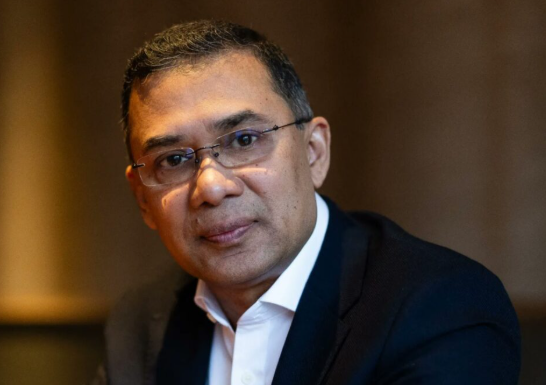
Bangladesh just experienced a huge political change. After years in exile, Tarique Rahman is set to become the country’s next Prime Minister after his party, the Bangladesh Nationalist Party (BNP), won a massive victory in the February 2026 elections.
The story starts in 2024, when students across Bangladesh began protesting against the government of Prime Minister Sheikh Hasina. She had been in power for 15 years, and many people felt her government had become too controlling and corrupt. The protests grew bigger and bigger, and eventually, Sheikh Hasina had to flee the country in August 2024. She went to India, where she still lives today.
After Hasina left, a temporary government was set up. The leader of this temporary government was Muhammad Yunus, a famous economist who won the Nobel Peace Prize for his work helping poor people through small loans. His job was to organize fair elections and bring the country back to normal after all the chaos.
Tarique Rahman’s Return
Tarique Rahman had been living in London since 2008. He left Bangladesh because he said the government was unfairly targeting him with criminal charges. For 17 years, he lived in exile, unable to return to his home country.
But when Sheikh Hasina was removed from power, things changed. The new government dropped all the cases against him.
In December 2025, Rahman finally came back to Bangladesh. Just a few days later, his mother, Khaleda Zia, who was also a former Prime Minister, passed away. Rahman then became the chairman of the BNP party.
The Big Election Win
On February 12, 2026, Bangladesh held elections. The BNP won an overwhelming victory, getting about 210 seats out of 300 in parliament. The second biggest party was Jamaat-e-Islami, an Islamic party that won around 70 seats. A new party called the National Citizen Party, which was formed by some of the student protesters, won about 6 seats.
Sheikh Hasina’s party, the Awami League, was not allowed to participate in the election. This made the results very one-sided in favor of the BNP.
What Happens to Muhammad Yunus?
Muhammad Yunus successfully completed his mission as interim leader. He organized the election and is now ready to step down. Yunus has made it very clear that he has no interest in staying in politics. He said he came from a different world and wants to go back to his regular work helping people fight poverty.
Yunus led the country for about 18 months during a very difficult time. He tried to reform the government, investigate crimes from the Hasina era, and prepare for fair elections. Some people think he did a good job keeping the country stable. Others wish he had done more to change the system. But everyone agrees he was a steady hand during troubled times.
Now that the election is over, Yunus will hand over power to the newly elected government. His legacy will be as someone who helped Bangladesh transition from dictatorship to democracy, even though he wasn’t a politician himself.
What This Means for India
For India, this change in Bangladesh creates both challenges and uncertainties:
1. The Sheikh Hasina Problem
Sheikh Hasina is currently living in India as a guest. Bangladesh’s new government wants India to send her back to face trial. She has been sentenced to death in Bangladesh (though she wasn’t there for the trial). This puts India in a very awkward position. Should they protect their old friend Hasina, or cooperate with Bangladesh’s new government?
2. Damaged Relations
Over the past 18 months, many people in Bangladesh have become angry at India. They feel India supported Hasina too much for too long. The new government needs to be careful about being too friendly with India, or their own people might get upset with them.
3. Concerns About Minorities
India is worried about Hindu and other minority communities in Bangladesh. With Jamaat-e-Islami as a strong force in parliament, there are concerns about whether minorities will be safe. However, Tarique Rahman has promised that Bangladesh will protect all religious groups. He said “religion is individual, but the state belongs to everyone.”
4. Economic Connections
Even though there are political tensions, Bangladesh and India need each other economically. India provides electricity to Bangladesh and is one of its biggest trading partners. Bangladesh can’t afford to completely turn away from India, and India can’t afford to lose such an important neighbor.
5. A More Equal Relationship
Under Sheikh Hasina, Bangladesh was very dependent on India and always agreed with India’s positions. Tarique Rahman wants a different kind of relationship – one where Bangladesh and India treat each other as equals and respect each other’s interests. This might be less comfortable for India, but it could be healthier in the long run.
What Comes Next?
The relationship between India and Bangladesh will likely be more complicated now. It won’t be as warm and close as it was under Sheikh Hasina. Both countries will need to work harder to maintain good relations.
There are many issues to resolve: river water sharing, border security, trade, and the treatment of minorities. India will be watching closely to see how the new government handles these challenges.
For Bangladesh, this is a new beginning. After years of one-party rule, people hope for more democracy and freedom. For Tarique Rahman, the challenge is huge. He needs to run the country well, keep the economy stable, manage relationships with powerful neighbors like India and China, and prove that Bangladesh can be democratic and successful.
Only time will tell whether this political change will bring the improvements that Bangladesh’s people are hoping for.
You can now copy this text directly from here and paste it wherever you need it!
References
1.https://www.businesstoday.in/world/story/bangladesh-election-results-will-muhammad-yunus-become-irrelevant-in-the-days-ahead-516022-2026-02-13
2.https://www.aljazeera.com/news/2026/2/13/bangladesh-election-results-2026-who-won-who-lost-whats-next?traffic_source=rss
3.https://www.outlookindia.com/international/bangladesh-parliamentary-elections-2026-yunus-bnp-and-jamaat-leaders-vote-as-polling-begins