

THE ASIAN INDEPENDENT UK

Bal Ram Sampla
Geopolitics
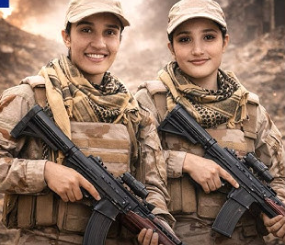
In Pakistan’s Balochistan province, something shocking is happening. Young women, many of them educated and from middle-class families, are becoming suicide bombers and fighters against the Pakistani army. This is a new development in a conflict that has been going on for decades. To understand why this is happening, we need to look at what Baloch people have been going through.
What is Balochistan?
Balochistan is Pakistan’s largest province, but also its poorest. This doesn’t make sense because the province is rich in natural resources—it has gas, minerals, and valuable land. The problem is that while these resources are taken and used by Pakistan and China, the local Baloch people remain poor and powerless.
The Main Problems Facing Baloch People
(1). Disappearances and Killings
The biggest complaint of Baloch people is what they call “enforced disappearances.” This means that Pakistani security forces take people away, and their families never see them again. In 2024 alone, 830 people disappeared and 480 were killed. Many families search for years, only to find their loved ones’ dead bodies, sometimes showing signs of torture.
These disappearances target anyone seen as against the state—students, teachers, activists, even doctors. Families live in constant fear.
(2). Economic Exploitation
Baloch people feel their resources are being stolen. Gas from Balochistan reaches other parts of Pakistan, but many Baloch villages don’t even have gas. Chinese companies build huge projects like the Gwadar Port, but local people don’t benefit. Instead, they see outsiders getting rich while they stay poor.
When Baloch people try to get justice through peaceful means, nothing happens. Courts don’t help. Protests are ignored. People who speak up often disappear or are killed.
The Death That Changed Everything
In 2020, a woman named Karima Baloch was found dead in Canada. She had fled Pakistan because of death threats. Even in Canada, she wasn’t safe. She had received threatening phone calls, and a week before she died, someone told her she would get a “Christmas surprise.”
Her body was found in Lake Ontario. While Canadian police said her death was “non-criminal,” her family and Baloch activists believe the Pakistani intelligence agency killed her.
Karima’s death shook the Baloch community deeply. She had been a peaceful activist, the first woman to lead the Baloch Students Organization. If even someone in exile in Canada wasn’t safe, Baloch women realized that peaceful protest might not protect them.
After her death, militant leaders told Baloch women: “If you don’t fight back, your fate will be the same as Karima’s.”
Why Women Are Joining the Fight
(1). Personal Loss
Many of the women who have become fighters lost family members to the conflict. For example, Hawa Baloch’s father was a fighter killed in 2021. When someone loses a father, brother, or husband to violence, the desire for revenge can be powerful.
(2). No Other Options
Young Baloch people, especially women, feel trapped. The peaceful activists disappear or are killed. Economic opportunities don’t exist. Education doesn’t lead to jobs. For some, joining the insurgency seems like the only way to have power over their own lives.
In Balochistan’s traditional society, women usually stay out of fighting. When women become suicide bombers, it sends a shocking message: things have gotten so bad that even women are willing to die fighting. It’s meant to shame men into joining the cause and to show how desperate the situation has become.
(4). A Sense of Purpose
The insurgent groups give these young women a narrative: they are freedom fighters, heroes sacrificing themselves for their people’s future. This can be appealing to young people who feel hopeless and angry.
The First Woman Suicide Bomber
In April 2022, Shari Baloch became the first Baloch woman to carry out a suicide bombing. She was 30 years old, a mother of two, a teacher with a master’s degree. She targeted Chinese instructors at Karachi University, killing four people.
After Karima’s death, Shari had told her husband: “The enemy cannot even accept peaceful methods of politics. Innocent Baloch are killed and abducted, and these brutalities will reach our families if we do nothing.”
In her final statement, she wrote: “The time for conversation, dialogue and speeches is over.”
Recent Attacks
In late January 2026, coordinated attacks across Balochistan killed nearly 50 people. Among the attackers were multiple women:
(I) Asifa Mengal, 24 years old, born in 2002. She joined the militant group’s suicide unit on her 21st birthday.
Both women were educated. Both chose death over the lives they were living.
The Cycle of Violence
The conflict creates a terrible cycle:
(I) The Pakistani army conducts operations and disappears suspected militants
(II) Families suffer and become angry
(III) Young people join insurgent groups
(IV) Insurgents attack security forces and civilians
(V) The army responds with more force and more disappearances
(VI) The cycle continues
Women are now part of this cycle, both as victims (losing family members) and as fighters.
Two Different Paths
It’s important to note that not all Baloch resistance is violent. Dr. Mahrang Baloch leads a peaceful movement called the Baloch Solidarity Committee. She and others organize marches, sit-ins, and protests to demand justice for disappeared people. She was even nominated for the Nobel Peace Prize in 2025.
But for some young women, peaceful protest seems pointless when activists like Karima Baloch end up dead anyway.
Why This Matters
The fact that educated young women are choosing to die as suicide bombers shows how desperate the situation has become. In societies where women are traditionally protected and kept out of conflict, women fighters represent a dramatic escalation.
It means:
(I) Traditional structures have broken down
(II) Peaceful options seem exhausted
(III) The conflict has reached a new level of intensity
(IV) Entire families are being drawn into the fight
The Human Cost
Behind every woman who becomes a fighter is a story of loss and pain. These are daughters, sisters, mothers who felt they had no other choice. Whether we agree with their choice or not, we should understand it comes from real suffering.
The Baloch people have faced:
(I) Decades of poverty while their resources enrich others
(II) Thousands of disappearances with no accountability
(III) Killings that go unpunished
(IV) A political system that ignores them
(V) Violence that follows them even into exile
Conclusion
Young Baloch women are taking up arms because they see it as their only option left. Peaceful activism led to death. Education led nowhere. Their fathers and brothers disappeared or were killed. Even exile didn’t bring safety.
The Pakistani government calls these women terrorists. The insurgents call them heroes. The truth is more complicated: they are human beings who have been pushed to the breaking point.
Until the underlying problems are addressed—the disappearances, the economic exploitation, the lack of political voice—the violence will likely continue. And more young women, who could have been teachers or doctors or mothers, will instead choose to die fighting for a cause that has consumed their families and their future.
The situation in Balochistan is a tragedy with no simple answers. But understanding why women are making these choices is the first step toward finding a path to peace.
References
1.https://www.aljazeera.com/news/2022/4/28/pakistan-woman-suicide-bomber-change-in-baloch-rebels-strategy
2.https://www.indianewsnetwork.com/en/balochistan-attacks-female-suicide-bombers-feature-deadly-bla-assaults-20260203
3.https://www.moretoherstory.com/stories/separatist-terror-groups-exploit-rape-and-blackmail-to-force-women-into-recruitment
4.https://swarajyamag.com/news-brief/baloch-rebels-killed-nearly-200-pakistan-personnel-using-women-suicide-bombers-and-ied-attacks-in-coordinated-assault
5.https://www.rferl.org/a/karima-baloch-sajid-hussain-balochistan-pakistan-exile/31028723.html
6.https://www.southasiamonitor.org/books/timely-focus-balochistan-situation-review
7.https://newlinesmag.com/spotlight/why-baloch-women-in-pakistan-led-an-unprecedented-march/