THE ASIAN INDEPENDENT UK

Dr. Ramjilal, Social Scientist,
Former Principal, Dyal Singh College,
Karnal (Haryana, India).
The history of journalism in India begins in 1780, when ‘The Bengal Gazette’ (29 January 1780) was published in the English language by JK Hickey from Kolkata. It was the first newspaper in India. After this, newspapers were published in different languages and from different regions of India. The first ‘Jain Prakash’ newspaper in Haryana was published in Hindi language in 1884 from Gurgaon (Gurugram). After this, newspapers in Hindi and Urdu began to be published from various cities in Haryana. The main focus of the newspapers of Haryana was to create public awareness. Although initially the focus points of all these newspapers were social reform, religion and education, with time the national movement also became their main focus point.
His interest in newspapers started during his student life. To increase his general knowledge, he first started studying a newspaper named ‘Paisa’ and writing articles for the newspaper. He believed that newspapers are the most important means to awaken, organise and mobilise farmers and labourers for the freedom struggle.
He was a student of St. Stephen’s College, Delhi. The college used to publish its magazine, in which students’ write-ups were featured. In this magazine, in the year 1907, a thought-provoking article written by him on ‘The Improvement of Indian Village Life’ was published. In this article, he described in detail how the Indian village life can be improved. He vehemently emphasised ending the isolationism among rural people in life. In his childhood, he saw his father being insulted by a moneylender. Therefore, in this article, he wrote about how the monopoly of moneylenders (Banias) could be controlled and to safeguard villagers from exploitation.
After graduating from St. Stephen’s College, Delhi, he began working in 1905 as an assistant secretary to Raja Rampal Singh of Kalakankar in the United Provinces. While there, he also worked for the Hindustan newspaper and later became its editor. In 1911, after earning a law degree from Agra, he started practising law in the Rohtak court in 1912. During his legal practice, he felt a strong need for a newspaper to educate and awaken the people, instil self-respect in them, and especially unite the villagers, the farmers and labourers. To fulfil this dream, he started publishing a weekly newspaper in Urdu, “Jat Gazette” (30 May 1916- Rohtak). Rai Bahadur Chaudhary Kanhaiya Lal had donated ₹1500 for the first publication of the Jat Gazette. The early editors of Jat Gazette included Pt. Sudarshan (first editor), Bishambhar Nath Sharma, Ch. Molad Singh, Shadiram Yatri, and Chhotu Ram Dalal (from Chhara village). It was the mouthpiece of the Zamindara League and had the highest circulation in Rohtak district, because, for some time, the newspaper was distributed free of charge to villagers. Although the newspaper ceased publication in the 1980s. However, since 2022, Jatt Gazette has been published from Rohtak as a digital media outlet (jattgazette.in) and has a circulation of 150,000 copies.
The main qualities of a successful Journalist and Editor:
The main qualities of a successful journalist and editor include honesty, impartiality, integrity, objectivity, a curious nature, strong communication skills, and excellent writing. The editors and journalists should support progressive movements, rather than reactionary ones. The main function of newspapers, editors and reporters should be to act as messengers or harbingers of social change, and the voice of the people against those in power. In other words, newspapers should be the voice of the voiceless people, exposing the shortcomings of those in power. In short, editors and journalists should be the vehicle of the voice of the people.
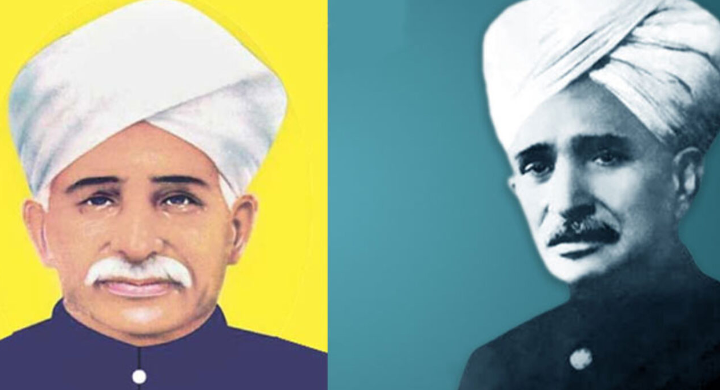
Sir Chhotu Ram: Writer and Journalist
Sir Chhotu Ram was a fearless, logical, honest, hard-working leader and visionary person in private and public life. A writer and journalist must have deep knowledge of languages. Sir Chhotu Ram was proficient in Hindi, Urdu, Sanskrit, Persian, and English. In Chhotu Ram’s time, newspapers and magazines rarely published news related to rural life. Therefore, he made a commendable effort to bring the realities of rural life to the public through journalism. He believed that newspapers are the most important means to awaken, organise and mobilise farmers and labourers for the national freedom struggle.
Sir Chhotu Ram was such a powerful writer that every word he wrote was like a spark of revolution, igniting fires and causing upheaval. His writing style was sharp, incisive, intellectually profound, logical, and based on a scientific approach.
In the Jat Gazette, Sir Chhotu Ram started a series of articles titled ‘बेचारा किसान’ (“The Poor Landlord.”) This series exposed the widespread corruption prevalent in the British administration. The British government began to suspect that Chhotu Ram might be a communist, and the administration started keeping a close watch on him. Following this, he started another series titled ‘ठग बाजार की सैर'( “A Tour of Market Deceptions. In this series, he described how moneylenders exploited the poor, which created awareness among the people and caused considerable unrest. Seventeen articles were published in these two series.
In 1916, the Jat Gazette extensively covered the lack of representation of Jats in the Sonipat judicial system, and other social problems and grievances related to the Jat community. Between 1916 and 1919, he again wrote forcefully in the newspaper about how moneylenders exploited the poor and exposed their methods. These articles described how the Brahmin-Bania alliance, in collusion with the British government, exploited the common people, the poor, and the illiterate landlords.
Because of these articles, the Deputy Commissioner of Rohtak recommended to the Punjab government that Chhotu Ram be exiled. The Punjab government refused to accept the Rohtak Deputy Commissioner’s suggestion because the government knew that Chhotu Ram was no ordinary man, but a passionate revolutionary; if he were exiled, it would lead to bloodshed. The Punjab government knew that Chhotu Ram was the most popular leader in the rural society of undivided Punjab. In other words, he himself was a ‘revolutionary’.
Other key focus points:
Apart from the problems of farmers and labourers, other focus points of his writings in newspapers were social, educational, Hindu-Muslim-Sikh unity, secularism, abolition of social evils and untouchability, Dalit liberation, women empowerment, Panchayati Raj, social and economic reforms, Life lessons for young people, Pakistan, etc.
In brief, currently, mainstream media—both print and electronic—is so heavily controlled by the capitalist class and corporations that the primary purpose of journalism, which was to protect the rights and dignity of ordinary citizens, has now become the protection of the interests of the capitalist class and corporations. Fundamental issues—poverty, inflation, unemployment, lack of education, and health care—have been relegated to the background. The sentiments of ordinary men and women are being exploited to incite people through casteism, religion, regionalism, and linguistic divisions. Consequently, the dignity, freedom, and rights of the common man are being compromised, and the political system is moving towards an elected dictatorship. We should learn from Sir Chhotu Ram’s writing, language, and philosophical ideas, as his views on journalism were relevant in the 20th century and remain so today, inspiring journalists to honestly fulfil their duty.