

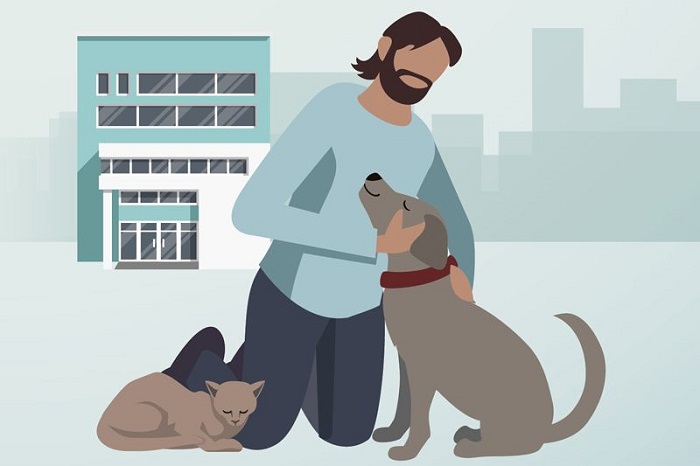

(Asian independent) The Pets provides a crucial bridge between human emotional wellbeing, societal values and ecological balance. Their presence contributes not only to mental health but also to environmental awareness and biodiversity conservation. Human–animal relationships have evolved over thousands of years, transitioning from utilitarian partnerships to deep emotional bonds. In contemporary society pets serve as companions, therapeutic partners and environmental ambassadors. Their value extends beyond affection: they shape human psychology, community engagement and ecological consciousness.
PETS AS A SCIENTIFIC ASSET FOR MENTAL HEALTH
Scientific studies across the globe has showed that interaction with companion animals stimulates the release of oxytocin, a hormone associated with trust, bonding and stress reduction. Simultaneously, levels of cortisol, the primary stress hormone are measurably reduced during pet interaction. This biochemical shift decreases symptoms of anxiety and supports emotional stability.
PETS AND BEHAVIORAL ACTIVATION
Depression often leads to social withdrawal and reduced motivation. Pets especially dogs encourage routine physical activity, exposure to sunlight and regular outdoor interaction, all of which are clinically recognized as components of behavioral activation therapy used in psychiatric treatment.
SOCIAL SUPPORT AND EMOTIONAL AID
Pets provide unconditional affection and non-judgmental presence, functioning as a form of social support. Individuals living alone, the elderly, patients with disability and adolescents experiencing emotional stress report improved mood and reduced loneliness when caring for pets. Animal-assisted therapy is now widely used in hospitals, rehabilitation centers and mental-health clinics.
WHY SOCIETY MUST PROVIDE SPACE FOR ANIMALS
ETHICAL RESPONSIBILITY AND COEXISTENCE
Humans share the planet with a vast diversity of species that have evolved over millennia to occupy specialized ecological niches. As urbanization expands, society bears the ethical responsibility to create spaces parks, shelters, green belts wildlife corridors where animals, including pets and urban wildlife can co-exist safely.
CONTRIBUTIONS TO PUBLIC HEALTH AND COMMUNITY WELLBEING
Integrating animal-friendly spaces in cities improves public well-being. Dog parks encourage community interaction; green spaces reduce air pollution, heat islands and stress; and animal shelters reduce the incidence of stray-related accidents and zoonotic disease transmission through regulated care.
EDUCATIONAL AND ENVIRONMENTAL EFFECTS
Children who grow up around animals develop stronger empathy, responsibility and environmental awareness. Exposure to pets and wildlife fosters respect for biodiversity, creating future generations committed to conservation.
ANIMALS AS AN INTEGRAL COMPONENT OF NATURE
Animals are foundational to ecological stability through:
Pollination and seed dispersal (birds, bees, insects), Pest regulation (cats, owls, reptiles),Soil aeration and nutrient cycling (earthworms, rodents), Food chain balance (predators and prey systems)
Even domesticated pets maintain indirect ecological roles. Dogs historically aided in herd management and protection; cats controlled rodent populations; and livestock guardian animals support rural biodiversity. Removing animals from the human environment would disrupt these ecological services and diminish ecosystem complexity.
IF PETS WERE REMOVED
Pros and Cons
PROS (Limited and Contextual)
1. Reduced zoonotic disease risk: Certain diseases (rabies, toxoplasmosis) associated with animals would decrease with better public health management.
2. Decreased waste and resource consumption: Pets require food, veterinary resources and environmental inputs, which would decline in a pet-free society.
3. Reduced impact on wildlife: Outdoor cats and stray dogs can negatively affect local biodiversity through predation.
CONS (Extensive and Overwhelming)
1. Rise in mental-health challenges: Loss of emotional companionship would significantly affect individuals relying on pets for psychological support.
2. Breakdown of therapeutic programs: Hospitals, old-age homes and therapy centers depend on animals for rehabilitation and emotional care.
3. Increase in social isolation: Pets function as social connectors; their removal would reduce community interaction.
4. Loss of economic sectors: Veterinary medicine, pet food industries, animal shelters and allied professions would be severely disrupted.
5. Ecological imbalance: Removing domestic animals could indirectly increase rodent populations, reduce pollination (in the case of domesticated bees) and hinder agricultural efficiency.
6. Cultural and emotional loss: Pets are woven into human cultural practices, art, storytelling and family structures. Their absence would create emotional and sociocultural voids.
Pets are far more than companions; they form an essential bridge between human society and the natural world.They reduce depression and enhance psychological wellbeing. Socially, they foster community engagement and empathy. Ecologically animals both domestic and wild are key components of nature’s intricate balance.
A society that dedicates space, compassion and resources for animals ultimately invests in its own health, environmental stability and cultural richness. Removing pets may yield minor benefits in disease control or resource conservation, but the overwhelming social, psychological and ecological losses make such a scenario undesirable and unhealthy for humanity.
SURINDERPAL SINGH
FACULTY IN SCIENCE DEPARTMENT
SRI AMRITSAR SAHIB PUNJAB.
click on the link below to download ‘The Asian Independent App’
https://play.google.com/store/apps/details?id=in.yourhost.theasianindependent
https://play.google.com/store/apps/details?id=in.yourhost.theasianindependent