SAMAJ WEEKLY UK
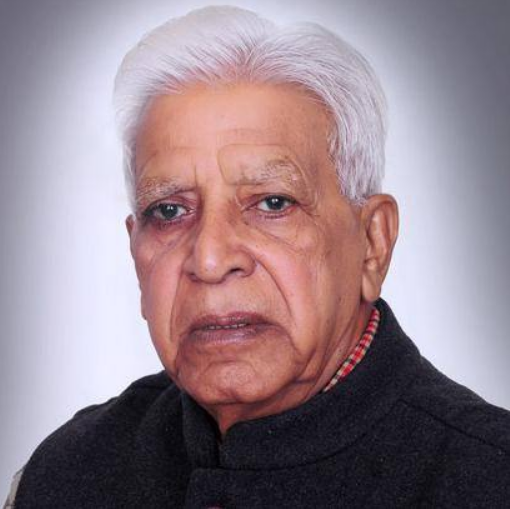
Dr. Ramji Lal, Social Scientist,
Former Principal, Dyal Singh College,
Karnal, (Haryana, India)
Email: d[email protected]
Background :
In India, Gopal Krishna Gokhale forcefully advocated for “free and compulsory primary education” in the Legislative Council on March 18, 1910, but this vital proposal was unjustly rejected. It took a hundred years for India to acknowledge the importance of universal education, culminating in the 86th Amendment Act of 2002, which incorporated Article 21(A) into the Constitution, mandating free and compulsory education for children aged 6 to 14. The Right of Children to Free and Compulsory Education Act (2009) was then implemented on April 1, 2010. This decisive step underscores the nation’s commitment to ensuring that every child has access to education.
Government Schools: 14,338:
As of 2023, Haryana is home to a total of 23,924 schools, which include 14,338 government schools, 8,499 private schools, and 707 other types of educational institutions. Government schools are categorised into three specific types: primary schools, secondary schools, and secondary/senior secondary schools. In a recent statement, Dr. Subhash Kumar, Minister of State for Higher Education in the Government of India, confirmed that the state currently has 139 CBSE-pattern English-medium schools, 1,418 English-medium bag-free primary schools, and 36 Aarohi Model Schools strategically located in the underserved blocks of Haryana. Additionally, the state includes Kasturba Gandhi Balika Vidyalayas, Kendriya Vidyalayas, Navodaya Vidyalayas, and Sainik Schools, each playing an integral role in the region’s diverse educational framework.
Under the central government’s PM-Shri scheme, Haryana features 299 Prime Minister’s Schools for Rising India (PM-Shri), contributing to a national total of 13,070 such institutions. These schools are equipped with advanced resources, including state-of-the-art smart classrooms, modern digital labs, robust ICT infrastructure, extensive libraries, well-equipped science laboratories, and programs designed to impart values-based education.
Private Schools: 8,499:
Haryana boasts 8,499 private schools, clearly divided into three categories. The first category comprises recognised schools that meet necessary standards. The second includes recognised schools that receive government aid, totalling four. The third category consists of unrecognised schools, which number 1,032. These unrecognised schools have received government authorisation, allowing their students to sit for the 2025 examinations. Alternatively, they can choose to enrol their students in recognised private schools for exam participation. This convoluted and inefficient system imposes a significant financial burden on unrecognised schools, often compelling them to charge steep fees, which can hinder access to quality education.
The Right to Education Act and Private Schools:
The government has recently introduced grants aimed at bolstering private schools that serve economically disadvantaged children, specifically targeting those from nursery to first grade, as well as students in classes 2 to 12, as per the provisions of the Right to Education Act. However, a troubling trend has emerged within the Higher Education Department, characterised by a combination of negligence and inaction from various officials. This situation is not only disappointing but also unacceptable.
A delegation representing the Haryana Private Schools Association has vocalised its grievances to the Director of Secondary Education. They have demanded the immediate release of ₹600 crore in outstanding dues accumulated during the academic years from 2015 to 2026. This urgent request highlights the pressing financial concerns that have remained unaddressed.
The flourishing sphere of private education, the alarming decline of government high schools: A distressing picture.
In stark contrast to the flourishing sphere of private education, the alarming decline of government high schools paints a distressing picture. Data obtained through a Right to Information (RTI) request in 2025 from the Directorate of Senior Secondary Education reveals a dramatic drop in the number of government high schools—plummeting from 1,207 in 2018 to just 858 in 2025, reflecting a staggering 29 percent decrease. Meanwhile, private high schools have been thriving, experiencing a robust growth spurt from 1,877 to 2,096 during the same period. This increase translates to a healthy 12 percent rise, indicative of a significant shift in educational preferences among families seeking better opportunities for their children.
Single-Teacher Schools 1,066 accommodating 43,400 students:
A striking report from 2024 highlights a deeply concerning trend in India: approximately 104,125 primary schools are currently operating with just one teacher each, a significant rise from 92,275 in the 2016-17 academic year. According to the Unified District Information System for Education (UDISE+) report for the 2024-2025 academic year, around 3.386 million students are being instructed by a single teacher per school. In Haryana alone, the number of single-teacher schools surged from 867 in the 2023-24 academic year—serving 40,828 students—to 1,066 schools in the 2024-25 academic year, now accommodating 43,400 students.
The Mounting Pressure : Academic and Non-Academic Responsibilities.
Furthermore, teachers are becoming increasingly overwhelmed by the mounting pressure of both academic and non-academic responsibilities. With the government introducing an array of 36 apps and portals, educators now face upwards of 100 separate tasks. Attempting to manage these myriad demands during school hours is proving detrimental, as it forces teachers to sacrifice precious time that could otherwise be spent with their families. The situation worsens when teachers are absent or occupied with official duties, often leaving schools closed and 43,400 children in Haryana—currently enrolled in single-teacher schools—deprived of their fundamental right to education. This situation constitutes a blatant violation of their constitutional rights.
Severe Shortage of Teaching and Non-Teaching Staff:
The shortage of teachers in government schools often leads to outrage among village children, parents, and representatives of school education committees, leading them to lock the school gates. Such incidents often make headlines. A prime example is the Government Model Sanskriti Primary School, Badalgarh (Ratia), where the main gate was locked on November 19, 2025, due to the shortage. (Dainik Tribune, Chandigarh, November 20, 2025, P. 3)
Zero Teacher and Zero Admission Schools: 487 and 294
As of March 6, 2025, the current academic year (2025-26) reveals a concerning reality: there are 487 government primary schools in Haryana without a single teacher. This situation represents a serious violation of educational access. The distribution of schools lacking teachers is alarming, with 79 in Yamunanagar, 46 in Bhiwani, 45 in Panchkula, 41 in Ambala, and 38 in Sirsa. Additionally, 294 schools are reporting zero student admissions this year, indicating a catastrophic failure in the education system. In Yamunanagar alone, there are 32 schools with no enrolled students, along with 23 in Sirsa, 22 each in Bhiwani and Ambala, and 9 in Panchkula (The Tribune, Chandigarh, March 4, 2025).
In 2022, the Haryana government announced plans to close 292 government schools with fewer than 25 students. This approach is shortsighted; instead of shutting down schools, we must prioritise comprehensive reforms to uphold children’s constitutional right to education.
Variation in Average Teacher-Student Ratio
The teacher-student ratio in single-teacher schools is shockingly disproportionate, with some ratios reaching as high as one teacher for every 96 students. Bihar has the highest ratio in the country at an alarming 96:1, followed closely by Uttar Pradesh at 70:1. In stark contrast, states like Kerala and Himachal Pradesh maintain commendable ratios of 10 to 15 students per teacher. The Right to Education (RTE) Act clearly defines an ideal teacher-student ratio of 1:22, and this standard must be rigorously enforced.
The RTE Act mandates that the teacher-student ratio in primary schools should be 1:30, and for upper primary schools, it should be 1:35. An overall ratio of 1:28 is unacceptable given the educational disparities we observe. Specifically, the ratios stand at 1:26 for primary schools, 1:19 for upper primary (grades 6-8), 1:17 for secondary (grades 9-10), and 1:27 for higher secondary (grades 11-12). It is essential to recognize that the teacher-student ratio is disproportionately higher in rural areas and single-teacher schools, creating a significant equity issue that demands immediate action.
Suggestions for Transforming School Education in Haryana
The following are the main suggestions for transforming school education in Haryana :
1. Implement Uniform Education Standards: All government and non-government schools must provide equal quality education. Schools should use the same medium of instruction, adhere to uniform examinations, and follow a standardised curriculum. All schools must be affiliated with the Haryana Board of School Education (Bhiwani).
2. Regulate Private School Practices: The commercialisation of education must be curtailed. Private schools should be held accountable for regulating their fees. Currently, many private school operators run coaching centres, which is unacceptable. This dual system places a burden on families with both school fees and coaching fees, exploiting students labelled as “dummy students.” We must ban the enrolment of “dummy students” to protect our youth and ensure that education is prioritised over profit.
4. Modernise Government Schools: All government schools should adopt modern teaching methods and infrastructure, including smart classrooms, digital labs, ICT resources, libraries, and science labs. Currently, some government schools have modern facilities while many do not. This disparity widens the digital divide between private and government schools, affecting children from poor and marginalised families in both rural and urban areas. It is the government’s primary responsibility to ensure equitable access to quality education and facilities.
5. Address Teacher Vacancies: To balance the teacher-student ratio, the approximately 15,659 teacher vacancies should be filled immediately. This will ensure the fair implementation of the Right to Education Act, enhance the credibility of government schools, and provide quality education while preventing the exodus of students from government to private schools.
6. Combat Cheating in Examinations: Cheating in examinations should be completely prohibited to enhance the transparency and credibility of the examination process.
7. Support Teacher Professional Development: Teachers in both private and government schools should be granted paid leave to further their qualifications and pursue higher degrees. Adopting a teacher-centred approach to education can significantly enhance the quality of learning
8. Address Corruption in Education: Allegations of corruption continue to surface within the education department, from schools to the Ministry of Education. To restore credibility, employees involved in corruption should face legal consequences.
9. Prevent the Politicisation of Education: It has been observed that individuals associated with the ruling party submit applications for events to the Directorate of Education. The Directorate of Education in Panchkula often forwards these applications with orders to organise programs in schools and colleges. District Education Officers issue instructions to principals to encourage student participation in district-level padayatras. Educators believe this practice politicises education and distracts teachers and students from their core responsibilities. This practice must be stopped.
11. Learn from the Japanese Education System: We should draw inspiration from the Japanese primary education system, which prioritises shaping children into responsible future citizens rather than solely training them for rigorous examinations. Japanese schools teach values such as emotional awareness, cleanliness, teamwork, empathy, cooperation, kindness, discipline, hard work, honesty, truthfulness, sociability, and togetherness. Despite the devastation suffered during World War II, Japan’s education system has significantly contributed to the country’s status as a leader in industrial, technological, and economic development.
12. Examine the Kerala Model of Education: The Haryana government should study the Kerala model of education and implement beneficial practices that can enhance the quality of education in state schools.
13.Address the Teacher-Student Ratio: It is essential to recognise that the teacher-student ratio is disproportionately higher in rural areas and single-teacher schools, creating a significant equity issue that demands immediate action.
14. The increasing prevalence of drug abuse, indiscipline, fights, and inappropriate behaviour towards female students is alarming. Educational institutions must not become “institutions of scandal,” as female students need to receive an education in a safe environment. Ensuring this safety will help parents feel secure about sending their children to school. The slogan “Save the girl child, educate the girl child” should be taken seriously.
In summary, policies that promote the commercialisation of education need to be reformed to guarantee that all children have access to equal and universal education. It is the government’s responsibility to provide modern facilities in all schools. Our guiding principle should be, “Equal education for all; India can become a world leader.” This vision can only be achieved with support from parents, social organisations, and local governance institutions.