
THE ASIAN INDEPENDENT UK

Bal Ram Sampla
Geopolitics
With just ten days until Rachel Reeves delivers her crucial Budget on November 26th, the Labour Party finds itself in a state of chaos that is already causing real damage to the British economy. At the very moment when the government needs to project stability and competence, ambitious politicians are busy plotting against their own Prime Minister, leaking stories to newspapers, and creating the worst possible conditions for economic confidence.
The Leadership Plot
Reports in today’s Sunday Telegraph claim that Angela Rayner, the former Deputy Prime Minister, is mobilising support for a leadership challenge against Keir Starmer. Her allies are said to be speaking to MPs and trade unions, promising cabinet positions to potential supporters. Meanwhile, Clive Lewis has become the first Labour MP to publicly call for Starmer to resign, urging the party to turn to Andy Burnham instead.
This internal warfare is not happening in a vacuum. Every briefing, every anonymous quote, and every public criticism sends a message to financial markets that the government is unstable and unable to focus on the serious economic challenges facing the country.
The Market Reaction
The markets have already begun to punish Britain for this political chaos. Government borrowing costs have risen sharply, with gilt yields climbing to their highest levels this century. The pound has weakened against the dollar. Investors are losing confidence in the government’s ability to manage the economy effectively.
Andrew Wishart, a senior economist at Berenberg bank, has pointed out that this turmoil demonstrates a worrying lack of political competence. Market analysts at Fidelity International have highlighted the renewed policy and leadership uncertainty as a key factor in their decisions. When investors see a government tearing itself apart from within, they demand higher interest rates to compensate for the increased risk of lending to Britain.
Rachel Reeves’ Impossible Position
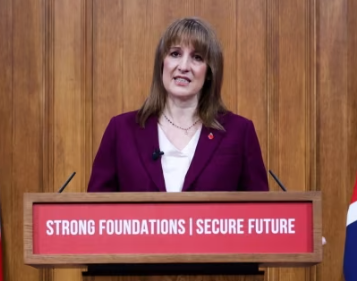
The Chancellor faces an extraordinarily difficult task. She must find ways to fill a massive hole in the public finances, estimated at up to £51 billion by some economists. Rising borrowing costs make this challenge even harder, as the government must spend more money just to service its existing debts.
Reeves has ruled out raising income tax, national insurance, and VAT. This commitment was made to reassure voters and businesses, but it severely limits her options. She is now caught between the need to restore fiscal credibility with the markets and the political constraints placed on her by election promises.
A Self-Defeating Strategy
The politicians plotting against Starmer may think they are positioning themselves to take over a struggling government. In reality, they are destroying the very thing they hope to inherit. If their briefings and manoeuvres cause a market panic or a Budget disaster, they will simply be taking charge of an even worse economic crisis.
This is political ambition at its most short-sighted. Rather than allowing the government to focus on fixing the economy, potential leadership candidates are actively sabotaging their own party’s chances of success. They seem more concerned with positioning themselves for the top job than with the actual job of governing the country.
The Cost of Chaos
The British people are already struggling with the cost of living. Public services are under enormous pressure. The last thing the country needs is a government distracted by internal feuding while markets lose confidence and borrowing costs spiral upward.
Political instability has real economic consequences. Every percentage point increase in borrowing costs means billions of pounds less available for schools, hospitals, and other public services. Every drop in the value of the pound makes imports more expensive and pushes up inflation. Every loss of market confidence makes businesses less likely to invest and create jobs.
Time for Unity
With the Budget just days away, Labour’s warring factions need to ask themselves a simple question: is their personal ambition worth damaging the country’s economic prospects? Can they really justify creating uncertainty and instability at such a critical moment?
Rachel Reeves needs space to deliver a credible Budget that can restore market confidence and set Britain on a path to economic stability. The constant briefings, plots, and public criticisms must stop. There will be time for political arguments after the immediate crisis has passed.
The markets are watching. The country is watching. And history will judge these politicians not by their ambitions, but by whether they put the national interest ahead of their personal careers at a moment when it truly mattered.
References
1.https://www.tomorrowspapers.co.uk/sunday-telegraph-front-page-2025-11-16/
2.https://www.gbnews.com/money/budget-2025-rachel-reeves-economists-slam-labour
3.https://www.cnbc.com/2025/11/04/uks-reeves-to-address-speculation-over-tax-rises-in-surprise-speech.html
4.https://www.swgroup.com/insights-events/insights/budget-predictions-and-speculation/
5. https://www.itv.com/news/2025-11-04/reeves-budget-speech