THE ASIAN INDEPENDENT UK

Dr. Ramjilal, Social Scientist and Former Principal,
Dyal Singh College, Karnal (Haryana, India)
[email protected]
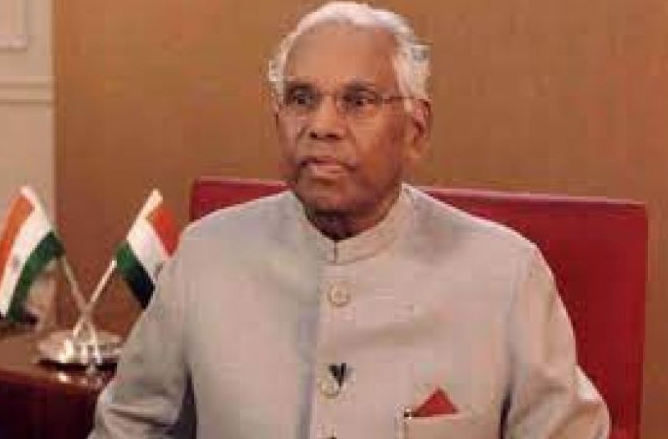
Kocheril Raman Narayanan (Dr. K.R. Narayanan – October 27, 1920 – November 9, 2005) was the first President of the Democratic Republic of India belonging to the Dalit community (Paravar caste). He was a brilliant student, a student leader at the London School of Economics, an educationist as Vice Chancellor, India’s best-known diplomat, administrator, journalist, politician, Member of Parliament (1984, 1989, and 1991), Vice President (1992–1997), and President (July 25, 1997–July 25, 2002). He was a rational, scientific thinker, and a proponent of secular and humanist ideology.
Birth and Education
K.R. Narayanan was born on October 27, 1920, in a domed hut in Perumthanam, Uzhavoor village, in the princely state of Travancore (present-day Kottayam district, Kerala), into a Dalit family. He was the fourth of seven children of his father, Kocheril Raman Vaidya (physician) and mother, Punnathurveetil Pappiyamma. Due to his large family, livelihoods were difficult, and poverty hindered his education. However, Narayanan received his primary education in village schools. After passing matriculation, Narayanan received a scholarship from the royal family of Travancore Cochin ,and then passed intermediate. Narayanan received a BA (Hons.) and MA in English Literature from Travancore University (1940-1943) (now the University of Kerala ) .He secured first place in the university, becoming the first Dalit student from Kerala to receive a first-class degree.
As a Journalist
Despite financial difficulties, he remained courageous and moved to Delhi to pursue journalism. He worked as a journalist for The Hindu and The Times of India in 1944 and 1945, and on April 10, 1945, he successfully interviewed Mahatma Gandhi in Mumbai. This was truly a milestone in his journalistic career.
In 1944, Narayanan, recognising his talent, was awarded a scholarship of 16,000 rupees by the then-renowned industrialist JRD Tata, which enabled him to gain admission to the world-renowned London School of Economics. Narayanan continued his education in England from 1945 to 1948, and while there, due to his talent, he was elected President of the London School of Economics’ Student Union. He was the second Dalit and Indian student to hold the position. Prior to this, Dr. Bhimrao Ambedkar, the architect of India’s Constitution, had become the first non-European Indian Dalit Student Union President in 1912. At that time, the President of the London School of Economics, Harold Laski, a world-renowned scholar, was very fond of Narayanan.
Narayanan’s Return to India: Laski’s Letter to Jawaharlal Nehru
In 1948, when Narayanan was returning to India, Harold Laski, President of the London School of Economics, wrote a letter to India’s first Prime Minister, Jawaharlal Nehru. He met Jawaharlal Nehru to present the letter. He himself described this experience, writing, “When I finished my studies, Laski gave me a letter of introduction to Panditji (Jawaharlal Nehru). Upon arriving in Delhi, I asked for an appointment with the Prime Minister. I think, because I was an Indian student returning home from London, I was given an appointment. He met me right here in Sansad Bhavan [the old Parliament House]. We talked for a few minutes about London and such things, and soon I realised it was time for me to leave. So, I said goodbye and, as I left the room, handed Laski’s letter to him and went out into the large circular corridor. When I was halfway there, I heard someone clapping in the direction I had just come from. I turned and saw Panditji [Jawaharlal Nehru] gesturing for me to come back. When I left his room, he opened the letter and read it. [Jawaharlal Nehru asked:] “Why didn’t you give it to me earlier?” [Narayanan replied:] “Well, Sir, I’m sorry. I thought it would be enough if I handed it over on my way out… After a few more questions, he asked me to meet him again, and very soon, I found myself joining the Indian Foreign Service.” This meeting was a turning point in Narayan’s life.
Best Diplomat
At the request of Jawaharlal Nehru, Narayanan passed the Indian Foreign Service examination. Passing the Indian Foreign Service Examination was another important step in his life. Jawaharlal Nehru was India’s Prime Minister, as well as its Foreign Minister at the time. Narayanan joined the Indian Foreign Service at Jawaharlal Nehru’s request and was appointed Attaché to the Ministry of External Affairs on April 10, 1949. In addition to the Ministry of External Affairs, Jawaharlal Nehru also appointed him to several embassies. In recognition of his work and success, Jawaharlal Nehru referred to him as the country’s “best diplomat”
As a diplomat,
He successfully served in Japan, England, Australia, North Vietnam, Thailand, China (1976), Turkey, and the United States (1980–1983), safeguarding Indian interests. His diplomatic talent and ability improved India’s relations with China and the United States.
As a Distinguished Politician
K.R. Narayanan, a distinguished politician, made his mark in Indian politics as a Congress candidate, winning three consecutive general elections to the Lok Sabha in 1984, 1989, and 1991. He represented the Ottapalam constituency in the picturesque Palakkad district of Kerala, where his commitment and dedication earned him the trust of the electorate. Under the leadership of Prime Minister Rajiv Gandhi, he was entrusted with various important portfolios, including his role as Minister of State in the Ministry of External Affairs, where he demonstrated remarkable diligence, integrity, and a steadfast sense of duty.
Tenth President of India
On August 21, 1992, K.R. Narayanan ascended to the prestigious role of Vice President of India, a position that further enhanced his political stature. Five years later, on July 14, 1997, he achieved a remarkable feat by securing 95% of the votes in the Presidential Electoral College, decisively defeating his opponent, T.N. Seshan. He was sworn in as the tenth President of India on July 25, 1997, in a ceremony presided over by J.S. Sharma, the Chief Justice of the Supreme Court, marking the beginning of a significant chapter in Indian governance.
Narayanan’s presidency was marked by its significant challenges, particularly during a tumultuous period characterised by a series of minority governments. His role became pivotal as he faced the daunting responsibility of dissolving the Lok Sabha on two occasions, utilising his discretionary powers with prudence and foresight. The first dissolution occurred on December 4, 1997, following the advice of Prime Minister I.K. Gujral, and the second on April 26, 1999, at the request of Atal Bihari Vajpayee, highlighting the complexities of Indian coalition politics.
In the wake of the Lok Sabha elections during his tenure, the National Democratic Alliance emerged victorious, leading to the appointment of Atal Bihari Vajpayee as Prime Minister on October 11, 1999. Narayanan’s approach to the appointment of the Prime Minister was ground breaking; he established a practice that required any Prime Ministerial candidate from a hung Parliament to convincingly demonstrate their majority to him, providing tangible evidence of their support. This was a significant shift from the traditional practice followed by previous Presidents—Neelam Sanjiva Reddy, R. Venkataraman, and Shankar Dyal Sharma—who typically invited the leader of the largest party or pre-election coalition to form the government without demanding such verification.
Judicious use of discretionary powers: Article 356
Narayanan was also noted for his judicious use of discretionary powers as outlined in Article 356 of the Constitution. He made the unprecedented decision to refuse the dismissal of the Uttar Pradesh government at the behest of Prime Minister Inder Kumar Gujral ,and similarly declined to dissolve the Bihar government led by Rabri Devi when urged by Vajpayee’s administration. However, he ultimately approved the dissolution of the Bihar government in 1999, exemplifying the nuanced nature of his decision-making.
As a proponent of scientific temper and secularism
A proponent of scientific temper and secularism, Narayanan’s values were evident throughout his presidency. He eschewed visits to places of worship, avoided interactions with religious leaders, and shunned celebrations like Holi, reflecting his commitment to secular governance. As a Member of Parliament, he boldly voiced his disapproval of the demolition of the Babri Masjid, labelling, it as the second most dangerous incident in India’s history, following the assassination of Mahatma Gandhi. He also condemned the Gujarat riots, describing them as the “tragedy of Gujarat” in 2005, highlighting his sensitivity to communal tensions.
K.R. Narayanan passed away on November 9, 2005, at the age of 85, due to pneumonia and kidney disease, leaving behind a legacy that resonated with many.
The nation honours this remarkable personality, who embodied the ideals of secularism and scientific inquiry. His journey from a humble upbringing to the exalted halls of the Rashtrapati Bhavan serves as an inspiring narrative for both current and future generations, reminding us of the enduring importance of integrity, dedication, and the pursuit of knowledge in public life.