THE ASIAN INDEPENDENT UK

Bal Ram Sampla
Geopolitics
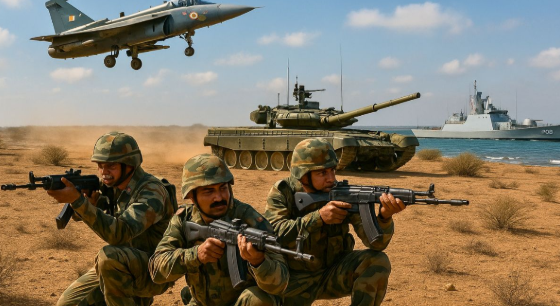
India has announced a major military exercise called “Ex Trishul” scheduled for October 30 to November 10, 2025. This exercise involves all three branches of India’s military – the Army, Air Force, and Navy – operating together along the border with Pakistan in Rajasthan and Gujarat.
The NOTAM (Notice to Airmen) was issued to alert aircraft that large areas of airspace will be restricted during this exercise. The timing of this exercise is important. Earlier in 2025, India launched Operation Sindoor in May, which targeted terrorist camps inside Pakistan after a terrorist attack killed Indian citizens in Pahalgam. While a ceasefire has been in place since then, India wants to show it remains ready and capable of joint military operations.
Pakistan’s Difficult Position
Pakistan now finds itself in a very challenging strategic situation – dealing with serious military threats on both its eastern and western borders at the same time.
On the eastern border with India, Pakistan has responded to India’s exercise by putting its military on high alert. The Southern Commands in Sindh and South Punjab have been mobilized, and both the Air Force and Navy are on standby. Pakistan has also issued its own NOTAM restricting certain flight routes. All of this requires significant military resources, personnel, and constant vigilance.
These clashes have been deadly – dozens of soldiers and civilians have died on both sides. Pakistan closed its two main border crossings with Afghanistan. Even after a ceasefire was announced on October 15, the situation remains tense and unstable.
The Two-Front Squeeze
The timing of India’s military exercise creates enormous pressure on Pakistan’s military. Pakistan must now keep forces ready on two fronts simultaneously:
1. Eastern Front
Troops must remain on high alert to monitor India’s large-scale military exercise and be prepared for any potential escalation.
2.Western Front
Active combat operations continue against both the Afghan Taliban and the Pakistani Taliban insurgents operating from Afghan territory.
Pakistan’s economy is also struggling, which makes maintaining such extensive military deployments even harder. Keeping forces on high alert is expensive – it requires fuel, ammunition, food, and paying soldiers overtime.
The Strategic Impact
India’s timing appears calculated. By conducting a major exercise while Pakistan is already engaged in border clashes with Afghanistan, India maximizes the strategic pressure on its rival. Pakistan cannot afford to ignore either threat, but addressing both simultaneously strains its capabilities.
This situation also shows Pakistan’s complicated regional position. Pakistan has historically supported Taliban forces in Afghanistan as a strategic counterweight to India’s influence there. But now those same Taliban forces are in conflict with Pakistan. Meanwhile, India has been building diplomatic relationships with the Afghan Taliban government, which adds another layer of pressure on Pakistan.
For India, this exercise achieves military objectives while Pakistan is distracted and stretched thin. It demonstrates India’s military strength at a moment when Pakistan is least able to respond effectively.
Conclusion
India’s NOTAM and the “Ex Trishul” exercise represent more than just routine military training. They are timed to maximize strategic advantage while Pakistan faces its most serious border crisis with Afghanistan in years.
Pakistan must now juggle active combat on one border while maintaining high military readiness on another border against a much larger opponent. This two-front challenge tests Pakistan’s military capacity, drains its limited resources, and leaves it in a vulnerable strategic position.
References
1.https://www.siliconindia.com/news/general/india-to-hold-triservices-drill-ex-trishul-near-pakistan-border-from-oct-30-nid-238150-cid-1.html
2.https://www.indiatvnews.com/news/india/india-issues-notam-for-large-scale-military-exercise-in-rajasthan-and-gujarat-2025-10-24-1014280
3.https://www.india.com/news/world/bankrupt-pakistan-imposes-airspace-restrictions-ahead-of-indias-trishul-exercise-along-border-issues-notam-for-october-28-and-29-8148480/