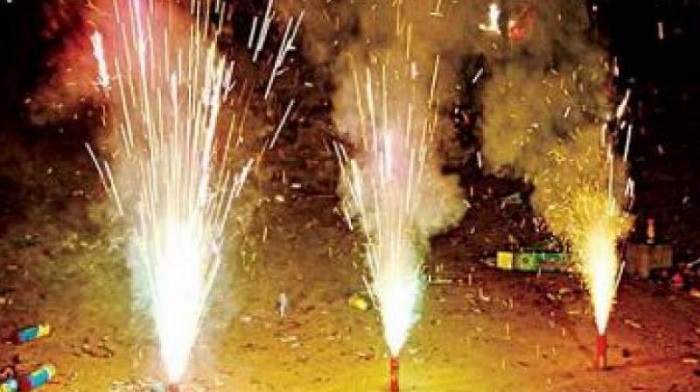
(Asian independent) Globally the use of firecrackers and fireworks is very common during festivals religious events and public celebrations. They create dazzling and colorful displays but the process of igniting them releases hazardous particles, gases and toxic elements into the air, water and soil leading to pollution and health problems. Firecrackers are chemical products that produce light, sound and smoke through a combustion reaction. They release explosive energy, resulting in colorful flashes and explosions. However, alongside this visual beauty, they become a source of air pollution, noise pollution, fire accidents and chemical residues. Particularly during festivals the burning of large quantities of firecrackers in a short time has serious impacts on the environment and public health.
COMPOSITION AND EMISSION OF FIRECRACKERS
Firecrackers generally contain the following components:
• Oxidizers: Potassium perchlorate, nitrate or chlorate.
• Fuels: Organic substances like sulfur, coal or dextrin.
3. Heavy Metals: Lead, barium, copper, antimony, etc.
4. Chemical Residues: Perchlorates and other long-lasting compounds that contaminate water and soil.
5. Noise Pollution: Many firecrackers can exceed 150 decibels, which is harmful to human hearing.
ENVIRONMENTAL PATHWAYS OF POLLUTION
• Air Pollution:
During festivals, the concentration of fine particulate matter can increase hundreds of times within a few hours. In cold weather, reduced air movement can keep these pollutants suspended in the air for several hours.
• Water and Soil Pollution:
Perchlorates and metal residues can enter soil and rivers through rainfall, reducing the quality of drinking water.
• Solid Waste: Paper, plastic, and metal fragments from firecrackers contribute to solid waste.
• Impact on Wildlife: Noise and bright lights can affect the directional sensitivity and reproduction of birds and animals.
HEALTH IMPACTS AND CAUSES OF MORTALITY
DIRECT IMPACTS
• Burns and Explosions: Improper use or defective firecrackers can lead to burn incidents and serious injuries.
• Heart Attacks and Stress: Increased noise and light can raise the risk of heart attacks in patients with heart conditions.
• Smoke Inhalation: Fires in enclosed spaces can lead to fatal outcomes.
INDIRECT IMPACTS
• Respiratory and Cardiovascular Diseases: Pollutants like PM2.5 and NO₂ increase the risk of asthma, heart attacks, and strokes.
• Heavy Metal Poisoning and Perchlorates: These elements can damage neurological and hormonal systems over time.
• Burden on Emergency Services: An increase in accidents during festivals can delay assistance for other patients.
In summary, while firecrackers are a traditional part of celebrations, their environmental and health impacts pose significant risks that need to be addressed through awareness and regulation.
SENSITIVE GROUPS
Elderly individuals, children, pregnant women and patients with asthma or heart conditions are the most affected.
SCIENTIFIC EVIDENCE
Air quality agencies around the world have found that on days of fireworks, the levels of PM2.5 increase 5–10 times compared to normal days. There is a rise in cases of asthma, respiratory issues and injuries in hospitals. This provides clear evidence that firecrackers have a direct and immediate impact on public health.
WAYS TO MAKE FIRECRACKERS ENVIRONMENT-FRIENDLY
1. Low-Smoke Formulation:
By changing the composition of fuels and oxidizers, the amount of smoke produced can be reduced.
2. Perchlorate-Free Oxidizers:
Using nitrate or nitrogen-based alternatives can decrease toxic components.
3. Metal-Free Coloring Techniques:
Organic compounds or nano-technology can be used for coloring without releasing metals into the air.
4. Biodegradable Packaging:
Reducing plastic by using paper or natural fibers.
5. Compressed Air or Electric Firecrackers: These are free from smoke and noise.
6. Drone and Laser Shows:
Modern drones and LED lights can create colorful displays without explosions.
ETHICAL AND SOCIAL MEASURES
1. Setting Chemical Limits:
Governments should establish standards for perchlorates and metal content.
2. Certification for Environment-Friendly Firecrackers:
A certification system should be created for green fireworks.
3. Public Awareness:
Education about safe and clean alternatives should be provided through schools and media.
4. Centralized Displays:
Instead of private use of firecrackers, regulated displays should be organized by municipal authorities.
5. Air Quality Monitoring:
Issuing safety advisories regarding air quality on festival days.
CHALLENGES AND THE WAY FORWARD
The performance, color, and cost of environment-friendly firecrackers still pose challenges. Public psychological and cultural acceptance is also essential. New infrastructural investments will be needed for preparing drone and laser shows.
Firecrackers are a part of entertainment and expressing joy, but they pose serious threats to both the environment and human health. With the right policies, scientific techniques, and public awareness, we can reduce pollution without diminishing happiness. The future festival will be one where light, safety, and clean air shine together — this is the true “Green Festival.”