THE ASIAN INDEPENDENT UK

Bal Ram Sampla
Geopolitics
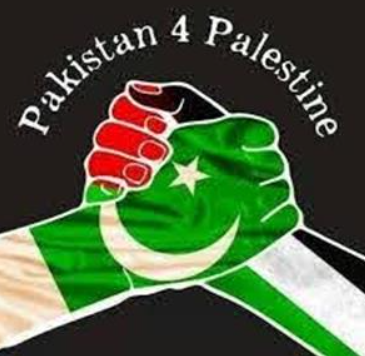
For decades, Pakistan has positioned itself as one of Palestine’s most vocal supporters on the global stage. Pakistani politicians routinely condemn Israeli actions, citizens hold passionate rallies, and the national narrative portrays unwavering Islamic solidarity with the Palestinian cause. Yet beneath this theatrical display of support lies a troubling pattern of hypocrisy, historical betrayal, and performative activism that raises serious questions about the authenticity of Pakistan’s commitment.
The Black September Betrayal
The most damning evidence of Pakistan’s duplicity dates back to September 1970, during the Jordanian civil war known as Black September. While Pakistan was publicly championing the Palestinian cause, it was simultaneously providing military support to Jordan’s King Hussein as he brutally cracked down on Palestinian fighters and refugee camps. General Zia-ul-Haq, who would later rule Pakistan as a self-proclaimed champion of Islamic causes, was present in Jordan during this period as head of a military training mission. His exact role remains disputed, but Pakistan’s support for the Jordanian monarchy against Palestinian militants is documented.
The death toll from Black September is estimated between 3,000 to 5,000 Palestinians, with some estimates much higher as 25,000. Pakistan’s involvement in supporting the forces that killed fellow Muslims it claimed to stand with represents a profound contradiction that has been conveniently erased from national memory. This historical episode reveals that when state interests conflicted with ideological solidarity, Pakistan chose realpolitik over principles.
Most tellingly, this chapter has been systematically suppressed in Pakistani historical narratives. It is absent from textbooks, rarely discussed in media, and unknown to most Pakistanis today. This deliberate amnesia allows the country to maintain its self-image as Palestine’s steadfast ally while burying evidence of its complicity in Palestinian deaths.
Rhetoric Without Sacrifice
The gap between Pakistan’s words and actions becomes even more glaring when examining individual behavior. Pakistan is a country where millions risk everything for economic migration. Pakistanis undertake dangerous illegal journeys to Europe, the Middle East, and beyond, often paying smugglers thousands of dollars and crossing treacherous terrain. They demonstrate extraordinary courage and determination when pursuing economic opportunities for their families.
Yet for all the passionate street protests about Palestine, for all the fiery speeches and social media posts, not a single significant contingent of Pakistanis has traveled to Palestine to fight or provide meaningful support. This is not because Pakistanis are inherently unwilling to fight for causes they believe in. History shows otherwise. Thousands of Pakistanis traveled to Afghanistan in the 1980s and 1990s for jihad. Militants have crossed into Kashmir for decades. Some even joined conflicts in Bosnia and Syria.
Palestine, however, remains conspicuously absent from this list. The reason is simple: supporting Palestine costs nothing in Pakistan. It requires no sacrifice, no risk, no personal investment. Attending a rally, burning an Israeli flag, or posting online provides all the emotional satisfaction of moral righteousness without any of the actual commitment. It is solidarity tourism at its finest, allowing people to feel they are part of a noble cause while doing absolutely nothing substantive about it.
State-Sponsored Theatre
Pakistan’s official support for Palestine functions primarily as diplomatic theatre. The government maintains this position to assert leadership in the Muslim world, maintain relationships with Arab states, and appeal to domestic religious sentiment. Supporting Palestine is politically popular and costs nothing in real terms.
However, the Pakistani state has never genuinely support for Palestine the way it once facilitated jihad in Afghanistan. There are no training camps, no recruitment drives, no infrastructure to channel committed individuals toward the Palestinian cause. This is because Pakistan’s support is strategic posturing, not authentic commitment. The state benefits from the rhetoric but has no interest in the complications that would arise from actually sending fighters to Palestine or significantly antagonizing Western powers and Israel.
Pakistan draws rhetorical parallels between Kashmir and Palestine, claiming both are occupied Muslim territories deserving self-determination. Yet this comparison itself reveals the fraud. Kashmir directly affects Pakistan’s territorial claims and national security. Palestine does not. The passion for Kashmir is rooted in tangible national interest; the passion for Palestine is rooted in abstract religious solidarity that evaporates when tested by reality.
The Economic Migrant vs. The Holy Warrior
Perhaps nothing exposes the hollowness of Pakistan’s Palestine support more clearly than this contrast: the same communities that produce illegal economic migrants by the thousands produce exactly zero volunteers for Palestine. This is not a criticism of economic migration, which is driven by genuine desperation and the need to survive. Rather, it reveals what people actually prioritize when making life-altering decisions.
When faced with real choices requiring real sacrifice, Pakistais choose economic survival over ideological commitment every single time. And this is entirely rational human behavior. The problem is not the choice itself but the dishonesty of maintaining passionate rhetoric about a cause that nobody is willing to personally sacrifice for.
Supporting Palestine has become embedded in Pakistani identity not because of any historical, cultural, or strategic connection, but because it allows the country to position itself as a defender of Muslims worldwide. It provides moral authority without requiring moral action. It offers a sense of purpose and righteousness in a country facing enormous internal challenges.
This activism serves multiple functions. It unites a fractured society around a common external cause. It deflects attention from domestic failures. It allows citizens to feel they are part of something larger than themselves. But it is ultimately fraudulent because it demands nothing and achieves nothing beyond the emotional satisfaction of those performing it.
Conclusion
Pakistan’s support for Palestine is a case study in how nations and societies construct convenient narratives that serve political and psychological needs rather than reflecting genuine commitment. The historical betrayal during Black September, systematically erased from collective memory, demonstrates that Pakistan will abandon Palestinian lives when it serves state interests. The complete absence of meaningful individual action despite passionate rhetoric reveals that popular support is performative rather than substantive.
This is not to say that individual Pakistanis cannot genuinely care about Palestinian suffering. Many undoubtedly do. But at both state and societal levels, Pakistan’s support for Palestine is hollow, duplicitous, and ultimately fraudulent. It is solidarity without sacrifice, passion without action, and rhetoric without consequence. Until Pakistanis and their government are willing to match their words with meaningful actions and acknowledge their historical betrayals, their support for Palestine remains what it has always been: an elaborate performance signifying nothing.
References
1.https://en.m.wikipedia.org/wiki/Black_September
2.https://en.m.wikipedia.org/wiki/Zia-ul-Haq
3.Fifty Years after ‘Black September’ in Jordan”, cia.gov/resources/csi/static/Black-September-Jordan.pdf
4. https://ctc.westpoint.edu/pakistani-fighters-joining-the-war-in-syria/
5.https://en.m.wikipedia.org/wiki/Foreign_fighters_in_the_Syrian_civil_war_and_War_in_Iraq
6.https://voxpol.eu/how-the-internet-has-enabled-pakistani-militants-to-explore-new-avenues-for-foreign-jihad/
7.https://dissenttoday.net/featured/when-pakistans-brigadier-zia-ul-haq-led-military-offensive-killing-more-than-3000-palestinians/
8.https://organiser.org/2025/04/18/288100/world/is-gen-asim-a-liar-or-ignorant-pakistan-armys-record-is-of-killing-25000-palestinians-in-black-september-massacre/
9.https://www.eurasiantimes.com/25000-killed-how-pakistan-army-led-jordan/?amp