

THE ASIAN INDEPENDENT UK
 Dr. Ramji Lal, Social Scientist,
Former Principal, Dyal Singh College,
Karnal (Haryana, India)
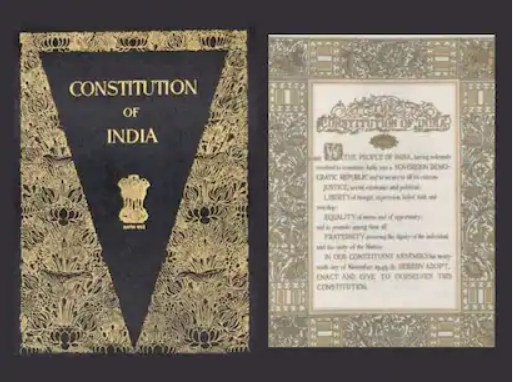
The progress of every nation depends on the quality of education. Good teachers and quality education in schools play a vital role in developing academic skills, creativity, social awareness, and the lives of future citizens, building character, enhancing self-confidence and emotional well-being, balancing social and family responsibilities, and inspiring lifelong self-learning and responsible citizens, and nation-building. The makers of the Indian Constitution were well aware that education is the foundation of any nation’s progress. That is why they included provisions related to education in the Constitution of India.
The Constitution of India came into force on 26 January 1950. The right to education was not initially included in the Constitution, although the provisions of Chapter 3 of the Fundamental Rights and Chapter 4 of the Directive Principles of State Policy describe the provisions related to education. The right to education and the responsibilities of parents, guardians and the state(the Central and State Governments) have been described over time by the decisions of the Supreme Court and constitutional amendments. Denying the right to education is a violation of the Indian Constitution.
Key points
.Right to Education: Directive Principles of State, The Constitution of India
.Right to Education and Secular Policy
.Protection of the interests of socially and educationally backward classes
.Fundamental Right to Education and Judicial Decisions:
A. First, Mohini Jain v/s State of Karnataka 1992.
B. Second, Krishna v/s Andhra Pradesh 1993
.Fundamental Right to Education and Constitutional Amendment Acts
.Expansion
Right to Education: Directive Principles of State, The Constitution of India
Originally, in the fourth chapter of the Directive Principles of State in Article 45 of the Indian Constitution, the Central and State Governments will make arrangements for education up to the age of 6 -14 years. In the same sequence, in Article 46, it was provided that along with the enhancement of the educational interests of the Scheduled Castes, Scheduled Tribes and the weaker sections of the society. Additionally, the state has been directed to provide them protection from exploitation and social injustice.
It is up to the state to implement the provisions of the Directive Principles of State Policy. In case of non-implementation, these cannot be challenged in the court.
Right to Education and Secular Policy
India is a multi-religious and multi-lingual country. Secularism is the main basis of national unity and integrity in diversity in a multi-religious country. This is the reason why provisions related to secularism are present in the Constitution of India. ‘Secularism’ was added to the Preamble in 1976 by the 42nd Amendment, but before this, Articles 29 and 30 were very important in the Constitution to promote secularism. According to Article 29 of the Indian Constitution, admission in government and government-aided educational institutions cannot be denied based on religion, caste, or origin. According to the Government of India Ministry of Minority Affairs, Muslims, Sikhs, Christians, Buddhists, Jains and Zoroastrians (Parsis) have been notified as minority communities under Section 2 (c) of the National Commission for Minorities Act, 1992. As per the Census 2011, the percentage of minorities in the country is about 19.3% of the total population of the country. The population of Muslims are 14.2%; Christians 2.3%; Sikhs 1.7%, Buddhists 0.7%, Jains 0.4% and Parsis 0.006%. The minority groups have the right to establish and run educational institutions based on their language or religion. But under Article 30 Part 2, the state (central and state governments) will not discriminate while providing government financial assistance to educational institutions run based on religion or language. According to Article 350 of the Constitution, there is a provision for providing education to minorities in their own language. Children cannot be forced to participate in religious worship in educational institutions run by the state or that receive government financial aid. The medium of education can be in 22 mother tongues recognised as of national importance.
Protection of the interests of socially and educationally backward classes
The Indian Constitution provides for the protection of the interests of socially and educationally backward classes. Provisions for their welfare exist in Articles 14, 15, 17, 29 and 46 of the Constitution. According to Article 14, every citizen is equal before the law and every citizen has the right to legal protection law, that is, there is a rule of law in India and everyone has legal protection. The basis of governance will not be as per the wishes of any person or those in power, but on the basis of the rule of law. In this context, in Article 15 of the Indian Constitution, the state will protect the interests of the backward classes from a social and educational point of view. Untouchability has been abolished through Article 17. It was a blot on Indian society for centuries. Therefore, untouchability has been abolished in all educational institutions, and the interests of students of the scheduled castes have been protected.
Fundamental Right to Education and Judicial Decisions
Under Article 21 of the Indian Constitution, a person has the right to life and personal liberty. For the enhancement of the dignity of life of a person, two judicial decisions of the Supreme Court are like milestones. Their description is as follows.
A. First, Mohini Jain v/s State of Karnataka 1992.
In this case, the right to education has been described in Article 21 in the historical decision of the Supreme Court. Education has been considered an integral part of the freedom of the person by linking it with the dignity of life and the right to freedom. No person can be deprived of this right.
B. Second, Krishna v/s Andhra Pradesh 1993
In the case of Krishna vs Andhra Pradesh 1993, the Supreme Court said that every child has the right to education till the age of 14 years. This decision proved to be a fundamental milestone in the field of education.
Fundamental Right to Education and Constitutional Amendment Acts
According to the 42nd Constitutional Amendment Act (1976), education was included in the Concurrent List. Both the central and state governments can make laws on the Concurrent List. However, in the event of a deadlock, the central government’s law prevails. In 1990, the Ramamurti Committee documented the right to education. In 1993, the Supreme Court linked Article 21 to the right to life. The Tapas Majumdar Committee of 1999 recommended adding it as Article 21A.
Following the Supreme Court’s judicial decisions on education, the demand for declaring universal education a fundamental right began to rise. The 86th Amendment Act, 2002, was enacted by Parliament in the 53rd year since the Constitution of India came into effect on 26 January 1950. It was approved by the President of India on 12 December 2002, and a notification was issued by the Ministry of Law and Justice, Government of India, through publication in the Gazette.
According to Article 21 of the Constitution, the state will provide free education from the age of 6 to 14 years by the Constitutional Amendment Act of 2002, and it is the duty of parents or guardians to help their children or dependents in getting an education. This Sanskrit verse comes to mind that those parents are enemies who do not teach their children, i.e. deprive them of education. This right was also amended in the Act of 2009, and sections 51(A and K) were added. According to these sections, education was made compulsory and free for children up to 14 years of age. This Act came into force on 1 April 2010. As a result of its implementation, the Central Government, State Governments, and local bodies are obligated to provide compulsory and free education. It can be emphasised that India became the 135th country in the world to make the right to education compulsory. To implement this Act, the Central Government allocated Rs. 2310 billion to the states in 2010.
The growing number of private schools has raised concerns about the government’s commitment to public education. This increase in private institutions suggests that the government may not be prioritising access and equity in education. By consistently promoting privatisation and liberalisation, the Indian government sends a clear message about its approach to public welfare in education. These policies appear to favour privatisation at the expense of public interests.
India’s Education Minister has revealed a staggering fact: approximately 1.06 million teaching positions remain vacant across the nation due to a lack of recruitment since 2019. This alarming gap has led to a rise in private schools while the number of government schools continues to dwindle. As a result, student enrolment is significantly impacted, and countless children—particularly those from Scheduled Castes, Scheduled Tribes, and low-income families—are abandoning their education.
In the 2019-20 academic year, nearly one-fourth of Adivasi students and one-fifth of Dalit students dropped out in Classes 9 and 10, while only one in nine children from the “general” category faced the same fate. The economic struggles faced by children from tribal, Scheduled Caste, and other disadvantaged groups force them to leave school to support their families.
This loss of educational opportunity not only robs these children of their future but is also a violation of their rights, contravening Articles 21(e), 45, 46, 14, and 15(4) of the Constitution of India. We must recognise and address this crisis to ensure every child receives the education they deserve.
Our slogan should be that ‘if even one child is left out of education, the education system will break down’.