THE ASIAN INDEPENDENT UK

Bal Ram Sampla
Geopolitics
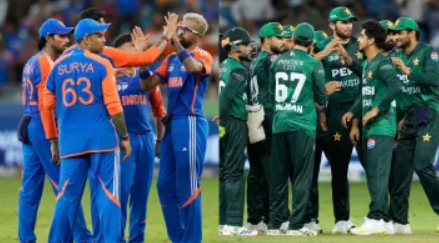
The recent Asia Cup 2025 match between India and Pakistan has reignited debates about mixing of politics and sport, something as simple yet symbolic as a handshake. What unfolded was not just a cricket match, but a complex drama that exposed the impossible positions players find themselves in when geopolitical tensions seep into sporting arenas.
The Incident: More Than Just a Missed Handshake
The controversy began even before the match started, with the captains forgoing the customary handshake during the toss ceremony. More significantly, as witnessed by television viewers, the traditional post-match handshakes between the teams were conspicuously absent. The Indian team retreated to their dressing rooms immediately after their victory, leaving the defeated Pakistani side without the conventional gesture of mutual respect that has been cricket’s hallmark for over a century.
This breach of cricket etiquette was met with mixed reactions. While some Indians defended the team’s actions, others, including neutral observers of the sport, viewed it as a disappointing departure from cricket’s cherished traditions. The Pakistani team’s subsequent boycott of the presentation ceremony and post-match interviews served as their proportionate response to what they perceived as unsporting behaviour.
The Impossible Position of Modern Players
To understand this incident fully, one must examine the broader context that placed the Indian cricket team in an unenviable position. The BCCI and the Indian government had maintained a comprehensive ban on bilateral cricket series with Pakistan, with exceptions only for mandatory ICC tournaments. However, this policy was lifted against the backdrop of widespread public opposition and calls for a complete sporting boycott.
The result was a perfect storm of conflicting pressures. The players were officially required to participate by their cricket board and government, yet faced intense public pressure to avoid any gestures that might be interpreted as normalizing relations with Pakistan. In this environment, even basic sporting courtesies became politically charged acts that could invite severe criticism back home.
The players found themselves damned if they played and damned if they showed respect. They chose to honour their professional obligations by playing the match, but felt compelled to withhold the traditional expressions of sportsmanship that cricket holds dear. It was, as observers noted, a truly no-win situation.
Beyond Current Politics
Perhaps most telling was the about depth of feelings the players was expressed earlier in the Legends of Cricket tournament held in Birmingham during the summer. This private tournament, where South Africa emerged victorious, witnessed Indian retired players forfeit their match against Pakistan entirely. Crucially, this was a private tournament over which the BCCI exercised no control or influence.
The fact that retired cricketers, free from official constraints and administrative directives, chose not to engage with their Pakistani counterparts reveals how deeply the current tensions have penetrated cricket culture. These are players who competed against each other throughout their careers, who understand cricket’s traditions intimately, and who typically have the freedom to make independent choices.
The Erosion of Cricket’s Spirit
Cricket has always prided itself on maintaining certain gentlemanly traditions that distinguish it from other sports. The post-match handshake represents more than mere courtesy; it embodies the sport’s fundamental principle that fierce competition should be accompanied by mutual respect. When this breaks down, cricket loses something essential to its identity.
The “Spirit of Cricket” is not merely a notion but a core principle that has allowed the sport to maintain its dignity even in the most heated contests. The current situation represents a troubling erosion of this spirit.
The Real Casualties
While it’s tempting to blame various parties, the real casualties of this saga are multiple. The players themselves, caught between competing loyalties and impossible expectations, bear criticism for decisions largely beyond their control. The sport of cricket suffers when its fundamental traditions are abandoned. The fans, who tune in to watch sport transcend political divisions, are left disappointed by the intrusion of geopolitics into their passion.
Most tragically, the incident becomes another casualty of political tension, reducing opportunities for the kind of human connections that sport can uniquely provide.
Looking Forward
The handshake saga raises fundamental questions about the role of sport in society. Should athletes be expected to serve as diplomatic representatives, or should they be allowed to focus purely on their sporting endeavours? Can sport truly remain separate from politics, or is such separation merely an idealistic notion?
What’s clear is that when BCCI and political leaders make decisions that place in impossible positions, everyone loses. The players become scapegoats for policies they didn’t create, the sport’s integrity is compromised.
The incident serves as a stark reminder that while sport has the power to unite, it can also become a battlefield where larger conflicts are fought through seemingly simple gestures like handshakes. Until the underlying tensions are addressed at political levels, cricket and its players will likely continue to find themselves caught in the crossfire.
The handshake saga, ultimately, is not really about handshakes at all. It’s about the price paid when sport becomes hostage to politics, and everyone involved – players, fans, and the game itself – ends up diminished in the process.