SR Darapuri, National President, All India Peoples Front
(This write up has been prepared for International Democracy Day with the help of Grok.com)
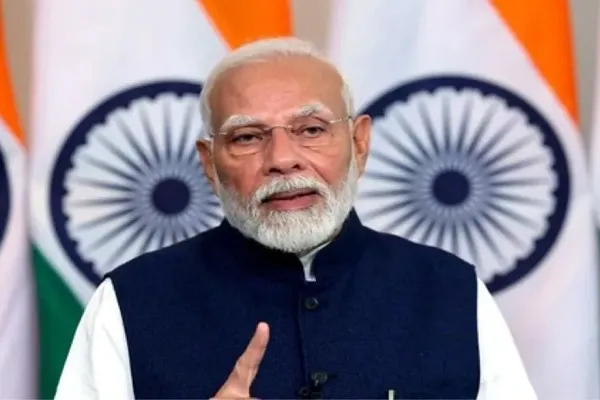
(Asian independent) The status of democracy in India under Prime Minister Narendra Modi’s rule, as of September 2025, is a subject of significant debate among international observers, indices, and domestic stakeholders. While India continues to hold regular elections and maintains core democratic institutions, multiple global assessments highlight backsliding in areas like civil liberties, media freedom, and minority rights since Modi and the Bharatiya Janata Party (BJP) came to power in 2014. These concerns are often attributed to policies and practices that critics argue centralize power, suppress dissent, and promote Hindu nationalism. However, supporters point to electoral stability, high voter turnout, economic growth, and public satisfaction surveys as evidence of a robust democracy. Below, I’ll outline key findings from major indices, strengths, criticisms, and broader context, drawing from a range of sources including pro-government, critical, and neutral perspectives.
Key Democracy Indices and Rankings
Several independent organizations track India’s democratic health using quantitative and qualitative metrics. Here is a comparison based on their 2025 reports (or the most recent available data reflecting 2024-2025 trends):
- According to Freedom House report on Freedom in the World 2025) India has been marked as Partly Free with score 63/100 (Political Rights: 31/40; Civil Liberties: 32/60); Rank not provided
Indian Democracy has been downgraded due to perceived Election Commission bias favoring the BJP, use of agencies like the CBI and ED to target opposition (e.g., arrest of Delhi CM Arvind Kejriwal in March 2024), restrictions on expression via spyware like Pegasus, and communal violence in Manipur. |
- Accordind to V-Dem Institute’s Democracy Report 2025, Insia has been classified as Electoral Autocracy (undergoing autocratization) |with Liberal Democracy Index (LDI): 0.29; Rank: 100/179 |
Decline began in 2008 but accelerated under Modi, with deteriorations in freedom of expression, media independence, journalist harassment, and civil society attacks using sedition and counterterrorism laws. No further decline in 2024 after BJP lost single-party majority in elections, but remains in “grey zone” autocracy. |
- According to Economist Intelligence Unit report (Democracy Index 2024, published 2025) has classified Indian Democracy as Flawed Democracy with 7.29/10; Rank: 41/167
Score reflects strong electoral processes but weaknesses in civil liberties and political culture; Asia’s regional score declined partly due to India’s trends, including media self-censorship and opposition intimidation. |
- According to International IDEA (Global State of Democracy 2024, with 2025 updates) assessed Indian Democracy as Mid-Range Performer | Representation: 73/173; Rights: 112/173; Rule of Law: 76/173; Participation: 99/173 |
Strengths in elected officials and judicial oversight (e.g., Supreme Court rulings against arbitrary demolitions in 2024); weaknesses in rights, including expulsions of ethnic Bengali Muslims in 2025 and the Waqf Amendment Act increasing government control over Muslim properties.
These indices generally agree on India’s hybrid status—neither fully democratic nor autocratic—but note a downward trajectory since 2014, with V-Dem labeling it one of the “worst autocratizers” globally. The Indian government has pushed back, redefining democracy in official narratives to emphasize cultural and electoral aspects over Western liberal metrics, and dismissing rankings as biased.
Strengths and Positive Aspects
– Electoral Integrity and Stability: India conducted the world’s largest elections in 2024, with 66% voter turnout and over 900 million participants. The BJP-led NDA secured 293 seats, allowing Modi a third term, though the party lost its outright majority (240 seats) to a resurgent opposition (e.g., Congress won 99 seats). This outcome demonstrates competitive pluralism, with no major violence or rigging reported, contrasting with instability in neighbors like Bangladesh, Nepal, and Sri Lanka. Pro-Modi voices argue that sustained mandates (2014, 2019, 2024) reflect genuine public support, and India’s democracy has endured since 1947 without military coups, unlike many peers.
– Public Satisfaction and Global Role: A 2025 Pew Research survey found 74% of Indians satisfied with democracy’s functioning, one of the highest rates globally. Modi’s government highlights economic growth (e.g., GDP at 6.5% in 2024/25), infrastructure, and India’s rising international stature (e.g., G20 presidency, lunar missions) as democratic dividends. Critics of rankings, like academic Salvatore Babones, question V-Dem’s claims of media crackdowns and minority suppression, arguing they overlook India’s unique “Dharma Democracy” rooted in cultural pluralism.
– Institutional Resilience: The Supreme Court has checked executive overreach, such as rulings against “bulldozer justice” (demolitions without due process) in 2024 and clarifying gubernatorial powers in 2025. Federalism persists, with coalition dynamics post-2024 forcing Modi to negotiate with allies.
Criticisms and Areas of Concern
– Erosion of Civil Liberties and Dissent: Under Modi, laws like the Unlawful Activities Prevention Act (UAPA, amended 2019) and sedition provisions have been used to detain critics, with UAPA arrests up 72% from 2015-2019 and 98% denied bail. Opposition leaders face targeted investigations (e.g., Congress funds frozen in 2024), and protests are curbed via internet shutdowns (84 in 2022) and force. CIVICUS rates India as “repressed” since 2019, akin to Pakistan.
– Media and Expression Freedom: India ranks 151/180 in the 2025 World Press Freedom Index, down from higher pre-2014 positions. Journalists face harassment, threats, and raids (e.g., BBC in 2023), with media ownership concentrated among Modi allies like Gautam Adani. Social media crackdowns and spyware use have stifled academia and NGOs, with FCRA licenses revoked for human rights groups in 2024.
– Minority Rights and Communal Tensions: Policies like the Citizenship Amendment Act (implemented 2024) exclude Muslims from fast-track citizenship, seen as eroding secularism. Anti-Muslim violence, including lynchings (97% post-2014) and riots, has risen, with ongoing Manipur clashes displacing 60,000 by late 2024. Expulsions of Bengali Muslims in 2025 and the Waqf Act highlight marginalization of minorities. Opposition and activists describe this as “fascism in saffron,” with undeclared “emergency” tactics like Pegasus spying and electoral bonds favoring the BJP.
– Broader Risks: Some analyses warn of fragility from separatist movements (e.g., Kashmir, Khalistan, Northeast) and North-South divides, exacerbated by centralization. Genocide Watch has issued alerts on potential anti-minority violence.
Overall Assessment
India under Modi is a stable but imperfect democracy, with strong electoral mechanics offset by declining liberties and institutional capture. The 2024 elections checked BJP dominance, potentially slowing autocratization, but entrenched issues persist. Pro-government narratives emphasize resilience and growth, while critics see a slide toward authoritarianism. Public discourse on X reflects this polarization, with some hailing stability amid regional turmoil and others decrying autocracy. Future trends may depend on coalition politics and judicial interventions.