THE ASIAN INDEPENDENT UK

Bal Ram Sampla
Geopolitics
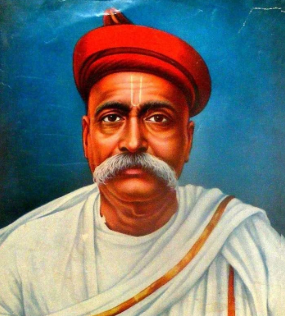
Bal Gangadhar Tilak is often celebrated as the “Father of Indian Unrest” and praised for transforming Ganesh-Utsav (a Hindu festival) into a powerful tool of nationalist resistance against British rule. His clever use of religious festivals to bring together large crowds and avoid colonial restrictions on political meetings was undeniably brilliant.
However, this heroic story hides a troubling truth: Tilak’s vision of freedom was deeply exclusionary. It was rooted in Brahmin supremacy and social conservatism that actively harmed India’s most vulnerable populations.
The Nationalist Who Opposed Social Justice
While Tilak demanded swaraj (self-rule) from the British, his idea of independence was not liberation for all Indians. Instead, he wanted to restore traditional Hindu hierarchy with Brahmins (the highest caste) at the top. He openly stated that non-Brahmins need not take education and they do not have to take part in politics. This was not accidental but a deliberate plan to maintain caste-based exclusion even in an independent India.
Tilak’s newspapers, Kesari and Mahratta, were very effective at criticizing British policies. But they were equally strong in opposing social reforms that would have helped untouchables (India’s most oppressed caste group) and women. He was strongly opposed to liberal trends emerging in Pune such as “women’s rights and social reforms against untouchability”.This shows the selective nature of his opposition to oppression – he fought British domination while defending Hindu patriarchy and caste discrimination.
Child Marriage: Defending the Indefensible
Perhaps nothing shows Tilak’s moral blindness more clearly than his stance on child marriage. At a time when progressive Indians were recognizing the horror of this practice and working to raise the minimum age for marriage, Tilak actively opposed such reforms. His defence of child marriage was not based on ignorance. It was a calculated decision to prioritize orthodox Hindu practices over the welfare of young girls.
This position becomes even more damning when we consider that the British government, despite its colonial exploitation, was trying to implement the Age of Consent Act to protect children. Tilak’s opposition to this reform meant he was literally defending the sexual abuse of children in the name of Hindu tradition. No amount of nationalist passion can justify such a stance.
The Brahmin’s Vision of Freedom
Tilak’s ultimate goal was not a modern, equal India but a return to “Peshwa rule” – the Brahmin-dominated Maratha empire where caste hierarchy was rigidly enforced. His only “progressive” caste reform was encouraging different Brahmin sub-groups to intermarry. This essentially promoted unity among the privileged while maintaining the exclusion of lower castes.
When confronted with demands for social reform, Tilak argued that such changes “should not be a top priority of the Indian struggle.” This was a convenient way to indefinitely postpone justice for untouchables, women, and other marginalized groups. Freedom could wait for the British to leave, but it could wait forever for dalits (untouchables) and women.
The Bitter Legacy
The tragedy of Tilak’s legacy is not just what he opposed, but what he prevented. His influence in the nationalist movement meant that India’s independence struggle became separated from social justice. While he successfully brought together Hindu sentiment against the British, he also reinforced the very social hierarchies that would continue to oppress millions of Indians long after 1947.
Today, when we celebrate Tilak’s contributions to Indian nationalism, we must also face this darker legacy. His story serves as a stark reminder that the fight for political freedom means little if it does not include the fight for social justice. A nationalism that preserves inequality and defends oppression is not liberation – it is merely a change of oppressors.
True swaraj, as later envisioned by leaders like B.R. Ambedkar, required not just driving out the British but dismantling all forms of domination and hierarchy. Tilak’s selective resistance to oppression shows us what happens when nationalism becomes separated from human rights – it becomes a tool for maintaining the very injustices it claims to oppose.
References
1.Chirol, Valentine. Indian Unrest
2.https://vedkabhed.com/index.php/2013/11/19/bal-gangadhar-tilak-the-misogynist-casteist-xenophobic-communal-pro-british-hindu-leader/
3.Tilak’s Nationalism — https://www.forwardpress.in/2022/09/tilaks-nationalism/
4.https://www.insightsonindia.com/2016/11/04/1-national-leaders-especially-bal-gangadhar-tilak-react-age-consent-bill-1891-government-anything-regulating-social-customs-ways-living-criti/
5.https://indianhistorycollective.com/the-great-debaters-tilak-vs-agarkar/
6.https://india.fandom.com/wiki/Bal_Gangadhar_Tilak