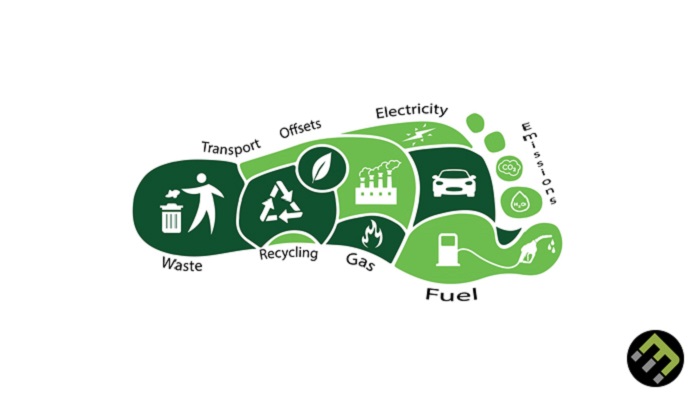

(Samajweekly) The term carbon footprints has emerged as one of the most hottest concepts in modern environmental science. It refers to the total amount of greenhouse gases (GHGs) especially carbon dioxide (CO₂) emitted directly or indirectly by the human activities. These emissions are typically measured in terms of carbon dioxide equivalents (CO₂e) to account for other potent gases such as methane (CH₄) and nitrous oxide (N₂O). With the advances in the field of science and technology the climatic changes continues to threaten ecosystems, economies and human health worldwide.Keeping in view the grave circumstances it is essential to understand and reduce the carbon footprints for the better cause of humanity.
DEFINING CARBON FOOTPRINTS
A carbon footprint is essentially the climate cost of an activity, product, organization and even it contains lifestyle. It is calculated across the lifecycle of goods and services, from raw material extraction and manufacturing to usage and disposal. For individuals, it includes household energy use, transportation choices, diets and the consumption patterns of the food items. For industries and nations it includes the energy production, agricultural practices, industrial outputs and waste management.
FACTORS INCREASING CARBON FOOTPRINTS
Although there are several factors contributing to the escalation of carbon footprints.These factors includes activities at individual and collective levels:
1. Fossil Fuel Dependence
Even in ultra modern world Coal, oil and natural gas remains the dominant sources of global energy but with the cost of releasing massive amounts of CO₂ during their consumption.
2. Transportation
The frequent use of private vehicles, air travel and poorly maintained public transport systems is contributing significantly in raising the carbon footprints.
3. Industrialization
The manufacturing units producing different articles for human consumption, cement production unit, pharmaceutical industries and other heavy industries are energy-intensive and major emitters of green house gases.
4. Agriculture and Food Systems
Even the livestock farming releases the green house gases like methane and carbon dioxide while synthetic fertilizers emit nitrous oxide. Nowadays the highly processed and imported food items are contributing significantly in increasing the carbon footprints emissions through their production units and transportation.
5. Urbanization and Lifestyle Choices
The rising consumerism combined with the use of non-renewable resources and the ever growing demands for luxury goods are some other factors responsible for carbon footprints.
6. Deforestation
Cutting down of large number of trees, forests fires and deforestation also reduces the natural carbon sinks.This situation is worsening the net emission balance.
CONSEQUENCES OF LARGE CARBON FOOTPRINTS
An unchecked rise in carbon footprints would contributes directly and indirectly in intensive climatic changes.
Some of the major key impacts include:
1.Global warming and extreme weather events (heatwaves, floods, cyclones).
2.Melting of glaciers and rising sea levels threatening coastal regions with cyclones and floods.
3.Loss of biodiversity due to habitat destruction.
4.Health hazards from air pollution and spread of a large number of diseases.
5.The economic disruptions in agriculture, energy systems and infrastructure would be the after results of carbon footprints.
STRATEGIES TO REDUCE CARBON FOOTPRINTS
Mitigating climate change requires conscious efforts at personal, community, industrial and policy levels.
The major strategies should include:
1. Energy Transition
It is the need of the hour to shifting from fossil fuels to renewable energy sources such as solar, wind and hydroelectric power.
Steps should be taken for improving energy efficiencies in homes, industries and transportation.
2. Sustainable Transportation
Seminars and community meetings should be frequently organised for promoting public transport, carpooling, cycling and walking.Subsidies should be introduced for encouraging electric vehicles and finances should be saved for expansion of charging infrastructure.
3. Sustainable Food Choices
Strategies should be inculcated for reduction in meat consumption and opting plant-based diets should be advertised globally.Supporting local and seasonal food to cut transportation emissions is also a small but major step to counter the emission of green house gases.Strict rules and laws should be framed for minimizing food wastages with better planning and storage.
4. Reforestation and Conservation
Protection of existing forests and plantation of new trees should be the essential part and parcel of the life to enhance carbon sequestration. Restoration of the degraded ecosystems and wetlands is the utmost necessity of the hour.
5. Technological Innovations
Legal frameworks should be framed for adoption of the carbon capture and storage (CCS) techniques in industries.Development of low-carbon materials and green building designs should be subsequently boosted with financial rewards.
6. Policy and Governance
Enforcing strict carbon taxes are a better tools to discourage high carbon footprints emissions.Setting stricter emission standards for industries and vehicles should be the global goals for all government’s.Efforts should be done globally for International cooperation of different governances.
7. Individual and Community Action
Conserving electricity and water at household levels should be taught academically to the students.Reducing single-use plastics and promoting recycling should be labelled as compulsory tools for reducing green house gases emission.
Raising awareness and participating in climate-friendly initiatives.
The challenge of climatic changes are inseparably linked with the carbon footprints. By identifying the major and minor sources of emissions and adopting comprehensive mitigation strategies, humanity can slow the pace of global warming. Reducing carbon footprints is not only an environmental imperative but also a moral obligation to safeguard the planet for the future generations.Through collective responsibility of the governments, industries and individuals alike—sustainable living can shift from aspiration to reality.
SURINDERPAL SINGH
FACULTY IN SCIENCE DEPARTMENT
SRI AMRITSAR SAHIB
PUNJAB.