
THE ASIAN INDEPENDENT UK
Vidya Bhushan Rawat
The issue of ecology and environment can not be left to the urban ‘experts’ bullying the local practices and cultural value system. The food culture and other practices are normally born out of the living in harmony with nature. Unlike the plain regions of India, Himalayan regions are more liberal both in cultural practices and food habits.
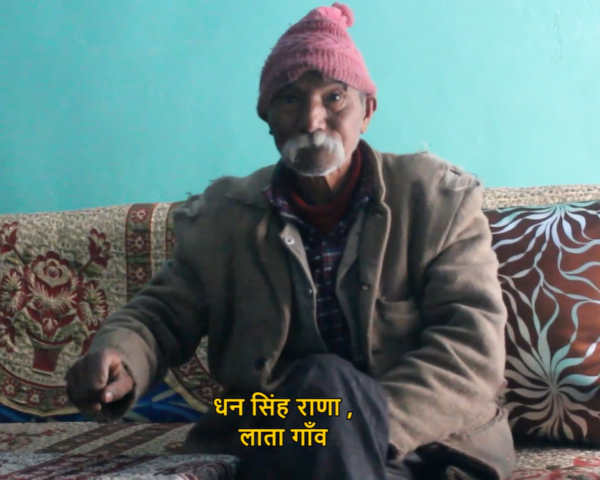
Dhan Singh Rana ji was from village Lata Raini in district of Chamoli, Uttarakhand. This village was actually the hub of Chipko Movement. Dhan Singh Rana had seen it closely and was part of the movement.
In the HimalayakiGanga series, I am presenting this short video recorded with him a few years back at his home in Lata. Though the interview is longer, I was amazed to hear his worldly wisdom.
I spoke about environment and organic farming and look at his reaction. He spoke about millions of rupees invested despite the known facts that glaciers were melting. Now the projects are there, money is being spent but nobody verify the outcome of these projects.
He was a man of great wisdom and humour. Very few people know that Chipko movement was not just love for ‘environment’ but it was the issue of the ‘access to forest produce’ by the native communities, mostly known as scheduled Tribes. This aspect has rarely been reflected in when analysing about the Chipko movement. The romanticisation is of the movement is basically in treating it like an ‘urban’ environmental campaign in which people ‘cling’ to the threes but the facts is that it was not that simple.
Dhan Singh ji speak about the ‘environmental activism’. When we had cattles and land, you came from Delhi and ‘guided’ us to use ‘fertilisers’ and other chemical products to increase our yields. Now, after many years, you are back promoting, ‘organic’ when we have lost everything. And his last point is most important. Whether it is organic or inorganic, you mint the profit and common person is exploited by all.
He then explain why the ‘animal lover’ campaign against ‘animal sacrifice’ actually hurt the local communities. Now, they had cattle and also male buffalo for the purpose of transportation and other things. Basically, every cattle was useful for certain purposes. Once the cattle is old and unuseful then what do we do ? Should we continue to feed him or throw him. Then he informs us that the animal sacrifice was a practical way of doing away with the old ‘Medha’. He said, our native Gods would not ‘accept’ goat or sheep or lamb as sacrifice but only Medha, buffalo. Then he says, this was a practical way of doing away with the older animals who were unuseful. Today, where can we keep them.
Frankly speaking, animal sacrifice was part of the traditional culture in many of the temples in Uttarakhand. After the ‘animal lovers’ started the campaign, it hurt the local people but they could not speak anything. New stories were created to justify that.
Interestingly, Uttarakhand High Court has just allowed that the animal sacrifice for the Nanda Devi festivities in Nainital though not inside the temple premises but in a designated slaughterhouse.
I know the so called ‘environmentalists’ and ‘animal lovers’ would jump in and file the cases but it is time we allow local communities to remain with their traditional practices. They have been living their lives in harmony with nature and we try to imposes our alien values on them that disturb the equilibrium.
Himalayan States including Uttarakhand have been land of extremely liberal values both in life style and food habits. Efforts are being made to convert into a hate zone, bring non issues and leave the real challenges of the Pahad aside.
There is a cultural onslaught in Uttarakhand. Many practices are being imported here in the name of Hindutva. We never had the Kanwar Yatra. Most of the Kanwar Yatra that come to Haridwar are from Haryana, Western Uttar Pradesh and Delhi. The Pahadi people had no such thing as Kanwar as each river is Ganga there. Even communal bathing was not part of the hills and it is because of the climatic and geographical conditions. You wont be able to bath in the rivers because of extreme cold and heavy current in the water. Most of the Ganga Snan and its other customs are basically from the plains of the Himalayas namely Haridwar onward. Now, a new trend is visible which again does not have native tradition. The immersion of the Ganesha idols in the river. Uttarakhand does not have traditionally the system as idol worshipping is part of the culture but not to throw that in the rivers.
Look at the beautiful Nanda Devi Raj jat yatra festivities. They are classic. One can also see the different festivities in the Yamuna and Kali valley too. People enjoy their festivities in complete harmony with nature. They celebrate things together.
Dhan Singh Rana ji’s words of wisdom are important for all of us to listen and respect.