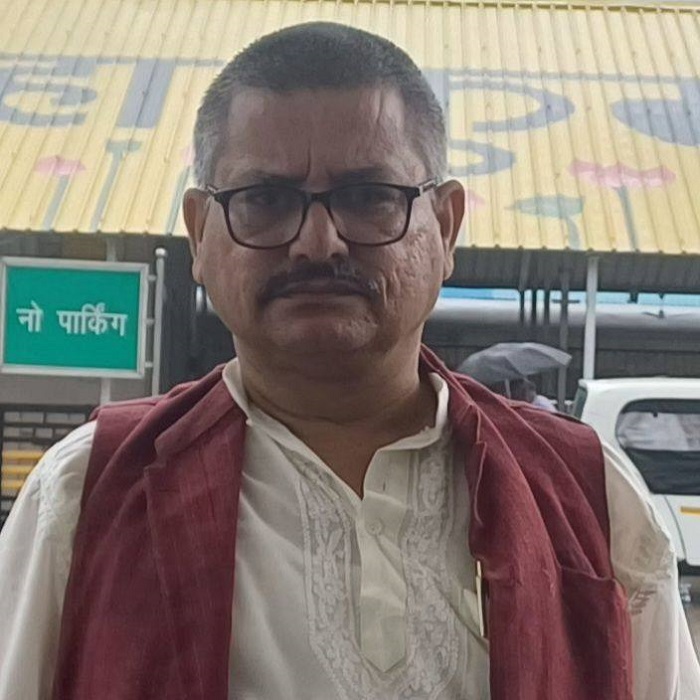
Dinkar Kapoor, State General Secretary, All India People’s Front, Uttar Pradesh
(Asian independent) All India People’s Front has been making efforts in national politics for a long time to establish mass politics on a national scale. In this direction, the National Convention of AIPF is being organized on 7-8 December 2025 at Surjit Bhawan, New Delhi. In preparation for the convention, visits have been made to states like Odisha, Jharkhand, Maharashtra, Haryana etc. and people from various organizations and movements going on there have been contacted. In Delhi too, a team has interacted with JNU, Delhi University colleges, enlightened citizens, journalists, advocates and socially concerned people in the context of the convention. People are showing keen interest in the main questions of the convention – protection of the Constitution, livelihood and social rights, inclusive nationalism and people’s democracy. In fact, this question is present as the most central topic in Indian politics today.
People are deeply feeling the threat to the Constitution in the country. This question played an important role in keeping the Bharatiya Janata Party away from the majority in the Lok Sabha elections. The principles of justice, fraternity, democracy, secularism, socialism, sovereignty, federalism, unity and integrity, freedom of expression, belief, religion and worship, equality, dignity of the individual etc. mentioned in the preamble of the constitution have been continuously attacked by the RSS-BJP government in the last 11 years. Their entire effort is to change the constitution, which their leaders have also said many times. In fact, the BJP-RSS has been against the original preamble of the constitution from the very beginning and has been opposing the concept of federalism and a welfare state. Therefore, the question of protecting the constitution has been made the first question in the conference.
As far as livelihood is concerned, the whole country knows that the way inflation is increasing, unemployment, agriculture is getting ruined and demonetization and GST have attacked small and medium scale industries, it has created a deep crisis in front of the livelihood of the common man. It has been mentioned in various reports that 100 crore population of India is out of the consumer market and their purchasing power has been continuously declining. Inequality in the country has become more than in pre-independence India. 1 percent of the country’s big capital houses have more than 40 percent of the country’s wealth.
The agreement made with the UK has also created a big threat for farming, animal husbandry society and industries. America is also putting pressure through tariffs to interfere in the fields of pharmaceutical, textile, leather, dairy, agriculture, computer, steel, aluminium etc. The way the Indian government has made a strategic agreement with America and has connected itself with the American centre, people have doubts that it will surrender to America in these fields too. This will only increase the already existing crisis of employment and livelihood in the coming times. Also, it will prove to be very dangerous for our economic sovereignty.
After the Covid pandemic, many state governments have brought in laws to make the working hours 12 and the wage rate is being continuously reduced. The central government had revised the minimum wages in 2017, which should have been revised in 2022 after 5 years as per law, but it has not been done yet. Due to the reduction in the wage rate, it is becoming very difficult for the common man to run his family in this high inflation. There are one crore vacant posts in government departments in the country. Despite repeated protests by students and youth, the governments are not paying attention to filling them. Rather, what is happening is that in the name of downsizing, the vacant posts in government departments have been abolished on a large scale. It has become a practice to get work done on contract at very low wages. Now in the new Labour Code, an even worse category of fixed term employment has been introduced, in which workers will not get any social security. There are also reports of appointing people from corporate houses to higher positions through lateral entry etc. The announcement of the Eighth Pay Commission made by the Central Government during the Delhi elections has not been implemented even after 7 months.
Violation of rights of sections like Scheduled Castes, Scheduled Tribes, Most Backward Classes, Pasmanda Muslims and women, who are still victims of identity-based discrimination in the society, continues. Sub plans are brought in the budget for Scheduled Castes and Tribes. But a large part of it is being spent on schemes run for corporate houses. A very small part of the total budget is spent on an extremely important item like education. In that too, the budget has been reduced on items like higher education and research. If we look at the context of women, the legal protections they had like the ban on working in night shifts have also been taken away from them. Every day they become victims of physical and social attacks. The extremely backward classes are deprived of representation, for which the report of Justice Rohini Commission formed in 2017, which reached the Central Government in 2023, has also not been tabled in the Parliament by the Modi government. If this report comes out, then the democratic demand of separating the reservation quota of the extremely backward classes from the Other Backward Classes can be fulfilled. If we look at Uttar Pradesh, many sections of the tribals like Kol, Dhangar etc. have still not been included in the list of scheduled tribes. For the development of all these sections, special sub-plans in the budget and their social rights like representation in education, judiciary, media, government jobs and all administrative systems and private sectors have been strongly raised in the proposed policy goals of AIPF.
The people of the Bharatiya Janata Party and the Sangh call themselves the biggest nationalists. Whereas their nationalism is based on the foreign concept of Europe which became the foundation of the concept of two nations in India. They are trying to impose a communal nationalism in the country by following the concept of anti-minority and anti-Pakistan. Whereas on the contrary, India’s nationalism was formed against imperialism in the national movement for independence. This nationalism is inclusive, every section of the society has dignity and participation in it and friendship, not animosity and hatred, is its basic principle. Only inclusive nationalism can protect India’s sovereignty against the kind of attack that American imperialism is making on India. It is the need of the hour for every citizen who loves this country to build friendship with the people of the country and all the neighbouring countries against the corporate-Hindutva nexus.
After independence, we got political democracy. At that time, Dr. Ambedkar had said that if we cannot provide social and economic democracy, then it is very difficult to protect political democracy as well. At present, the era of authoritarianism is going on in the country. Efforts are being made by hook or crook to snatch away the right of even one vote that every citizen had through SIR and various processes. The autonomy of all the democratic institutions that were created after independence has been attacked, due to which their credibility has come under question. Therefore, only people’s democracy, which includes the protection of political democracy as well as ensuring social and economic democracy, can guarantee the dignified life of every citizen of the country. That is why in the convention, AIPF has also declared people’s democracy, livelihood, and inclusive nationalism as its ideological basis as the political concept proposed in its constitution.
AIPF has also done an innovative experiment in Indian politics at the organizational level. For the first time, a political party has, in its constitution, agreed with the basic principle of the party and allowed the formation of an opposition party within the organization. Not only this, the lower committee has been given organizational autonomy and the role of the upper committee has been kept as suggestive as possible. To deal with the tendencies of bureaucracy and individualism, AIPF has organized the organizational structure from the higher committee to the lower committee in such a way that it is horizontal and the minority has also been given freedom of behavior. It has been said that this organizational arrangement is also expected in the context of regional, linguistic and other social diversities of Indian society. In the AIPF constitution, there is a provision for organizations and groups working for people’s politics in various ways to become a part of AIPF while maintaining their autonomy. It is expected that the fourth national convention of AIPF will prove to be a milestone in Indian politics.