From the window of Haryana’s history
The role of Karnal district in the Indian Independence Movement from 1857 to 1947: A Review
THE ASIAN INDEPENDENT UK
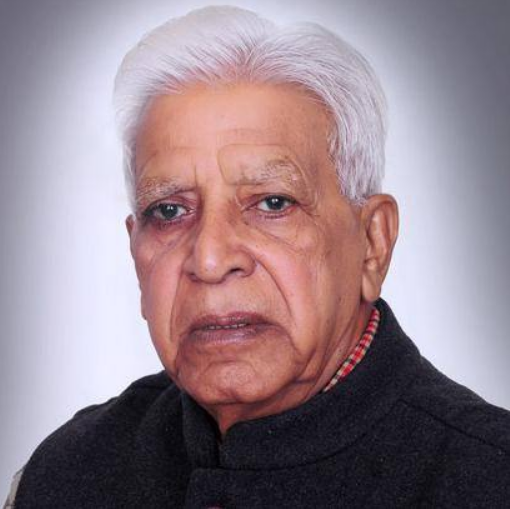
Dr. Ramjilal, Social Scientist, Former Principal, Dyal Singh College, Karnal, (Haryana, India)
[email protected]
Key Pionts:
.Military Head quarter
.Malaria epidemic in 1841-1842
.Military head shifted from Karnal to Ambala: A historical blunder
Before the 1857 People’s Revolution: Farmers’ Movement
.Kisan movements in Haryana before 1857
.Nana Fadnavis and Azim Ullah: Mobilization of the Revolutionary Movement
.Maharaja Naresh Sarup Singh of Jind, Maharaja Patiala, Nawab of Kunjpura and Nawab Ahmed Ali of Karnal (grandfather of Pakistan’s first Prime Minister Liaquat Ali Khan) gave military support in suppressing the people’s revolution in Karnal district.
Chuhan of Naradak: Cavalry support
.Nawab of Kunjpura and Nawab Ahmed Ali Khan of Karnal: Military support in suppressing the people’s revolution in Karnal district
The spine-chilling story of sacrifices made by Haryana’s famous revolutionary village Balla during the 1857 people’s revolution
Two legends related to the people’s revolution of 1857 in Bailla village are still popular:
The guerrilla strategy
The World War I (1914 – 1918) : 6553 soldiers of Karnal district
. The feeling of discontent reached its peak
. Anarchical and Revolutionary Criminals Act 1919 (Rowlatt Act): Wave of rebellion
. Jallianwala Bagh (13 April 1919): A planned bloody massacre
The Civil Disobedience Movement 1930 – 1934:
. The second world war :Individual Satyagraha: 17 October 1940.
Revolutionary group in Karnal district : Plan to bomb the Governor of Punjab
. Quit India Movement 8 August 1942 – February 1943: 31 persons arrested in Karnal district
Azad Hind Fauj: 119 soldiers and 14 officers from Karnal district
Mahatma Gandhi’s Movements: Role of Haryanavi Women:
Expansion:
According to historical legends, Karnal was founded by the King Danveer Karna. From the Mahabharata to the modern era, Karnal has experienced unprecedented social, economic, political and cultural changes. After the British East India Company established its rule in Karnal in 1805, a prison, cavalry, military headquarters and administrative headquarters were established on the fort built by King Ganpat Singh of Jind in 1764. There were two main reasons for this, based on military and administrative strategy. First, the British army could monitor North-West India (Haryana region, Punjab, Jammu and Kashmir, present Himachal Pradesh and the border of Afghanistan). Secondly, Delhi is also close to Karnal, and due to the presence of the GT Road, the entire area could be controlled by the military.
Malaria epidemic in 1841-1842
But due to the malaria epidemic in 1841-1842, thousands of people started dying in rural areas, and there was chaos everywhere. The malaria epidemic also entered the British army in a terrible form. About 500 soldiers, military and administrative officers, and family members died. Even today, the graveyard and church in front of NDRI in the city are as evidence. I went to see this graveyard in Karnal on 12 May 2020 with the team of Amar Ujala. I have visited this cemetery many times to study it with the team of Amar Ujala, and later to give interviews on other YouTube channels and mainstream channels. In this graveyard of Karnal, there are graves of soldiers, administrative officers, their family members, wives and children. There is even a grave of a one-year-old child.
If any of those, whose ancestors’ graves are here, come to India, they also visit this place to pay tribute to their ancestors.
Military head shifted from Karnal to Ambala: A historical mistake
 This epidemic shook the British rule. It frightened the British soldiers so much that Lord Allen Brown immediately made a decision, and ordered to shift the military headquarters from Karnal to Ambala, and Ambala Cantt. was established. Four years later, in 1847, Ambala was made a district. On 22 February 1847, Mrs. Colin Mackenzie wrote in her diary:
“Karnal was formerly a very large station and very healthy, but as everywhere in India, there were occasional epidemics, Lord Allen Brown was here during a week of rains ,when fever was rife, he quickly decided that it was an unhealthy station and moved to Ambala, leaving the barracks, warehouses, stores and other buildings (including a church) built at enormous expense to fall into ruin. Only three families are now stationed here.”
(Cited in C.H. Buck, The Annals of Karnal History, 1913)
Shifting the military headquarters from Karnal to Ambala was a historic blunder by Lord Allen Brown based on administrative and military strategy. As a result, the administration of the British East India Company in the Karnal area became weak, and the flames of the people’s revolution gradually began to blaze
Before the 1857 People’s Revolution: Farmers’ Movement
In fact, before 1857, the flames of movement were flaring due to anger and discontent among the people against the rule of the British East India Company. From 1760 to 1857, tribal peasants and agricultural labourers, as well as peasants and farm labourers living in the plains, staged numerous violent armed and nonviolent revolts against the British East India Company, British imperialism, and the Indian nawabs, kings, Landlords, princely states, and principalities they protected.
Kisan movements in Haryana before 1857
Before the People’s Revolution of 1857, there were numerous Kisan movements throughout Haryana. These include Jind (June 1814-January 1815), Chhachhrauli (1818), Rania (1818), Kisan Andolan (1824), Kaithal (March-April 1843), Ladwa (1845-1846), and the Kisan Revolt in Karnal (1846-1847). Rising poverty, hunger, and revenue rates were the primary drivers behind these Kisan movements.
In June 1857, the British official Andrews wrote to the Government of India, ‘I find the country considerably disorganised; the revenue and police officers are in a state of fight, and many Zamindars and big villages are quite refractory. ’In fact, before 1857, the flames of people’s revolution were raging due to popular anger and discontent with the British East India Company’s rule.
Nana Fadnavis and Azim Ullah: Mobilisation of the Revolutionary Movement
On 10 May 1857, the spark of the First War of Indian Independence erupted in Meerut Cantonment when soldier Mangal Pandey protested. Whereas, according to the renowned scholar of Haryana history, Dr. K.C. Yadav, 9 hours before Meerut (10 May 1857), the trumpet of revolution was blown by forces based in Ambala. According to Harish Chandra Mittal and Ramjilal Kamboj (now Dr. Ramjilal), Haryana: Then and Now, Kurukshetra, 1967), to mobilize the revolutionary movement, Nana Fadnavis and his associate friend Azim Ullah (Panipat), after successful talks with the revolutionaries of Karnal from Panipat, secretly went to Thaneshwar on 6 April 1857 and mobilized the revolutionary movement. After this, Nana Fadnavis secretly went to Meerut via Kunjpura.
Maharaja Naresh Sarup Singh of Jind, Maharaja Patiala, Nawab of Kunjpura, and Nawab Ahmed Ali of Karnal (grandfather of Pakistan’s first Prime Minister Liaquat Ali Khan) extended military support in suppressing the people’s revolution in Karnal district.
When the people’s revolution of 1857 broke out, the magistrate of Karnal district, Macwhirter, was in Delhi, and he was murdered. In his place, Richards was handed over the charge of Deputy Collector, and later, he was promoted to Deputy Commissioner permanently. The army had to be sent from Delhi under the leadership of Captain Hughes. But Hughes had to escape and save his life in Balla village. After the initial success of Balla, the movement spread to the Salwan, Kaithal, and Assandh areas. At that time, Panipat, Kurukshetra and Kaithal were in the Karnal district. People participated enthusiastically in the revolution.
To suppress this revolution, Naresh Sarup Singh reached Karnal with 400 soldiers on 18 May 1857. The Maharaja of Patiala sent 1,500 soldiers from Nabha, who arrived in Karnal on 21 May 1857. These soldiers. were used to suppress the people’s revolution in Karnal, Samalkha, Delhi and Meerut.
.( Jind.govt.in?about-district – history)
C.H. Buck has also supported this view. According to Buck, ‘Maharaja Sarup Singh of Jind restored order in the city and its surrounding area and marched on the GT Road and kept the road open between Karnal and Delhi before the British column (army).’ Restored order in its surrounding area and marched on the Grand Trunk Road and kept the road open between Karnal and Delhi before the British column (army).
Chauhan of Naradak: Cavalry support
Buck further wrote that the Chauhans of Naradak of Karnal helped in preparing the cavalry and also prepared 250 chowkidars. They guarded the city and civil lines where the ordinance magazines were kept.
Nawab of Kunjpura and Nawab Ahmed Ali Khan of Karnal: Military support in suppressing the people’s revolution in Karnal district
The Nawab of Kunjpura supported the British government by giving 350 soldiers, and Nawab Ahmed Ali Khan of Karnal (grandfather of Pakistan’s first Prime Minister Liaquat Ali Khan) helped in suppressing the revolution by giving 150 soldiers. Nawab Ahmed Ali Khan was ready from the beginning to surrender all his resources to the British. The horses given by him were used for sending messages from Karnal to Meerut and from Meerut to Karnal. When the news of the massacre reached Delhi during the people’s revolution. The Commander-in-Chief of Shimla from Delhi ordered that European soldiers should be sent from Kasauli, Daghshai, Subathu to suppress the rebels under the leadership of Hudson. On 15 May 1857, the British army reached Ambala. Hudson was also ordered to prepare 1000 horses. Hudson and Brigadier Hailey Fox were given the leadership of the European forces so that the movement could be crushed. But Hudson died on 27 May 1857 due to the malaria epidemic, and after this, Brigadier Hailey Fox succeeded in capturing Balla with the help of Maharaja Patiala’s cavalry. After the initial success of Balla, the rebellion spread to small villages around Jalmana and Assandh.
But Lieutenant Pearson succeeded in suppressing the rebellion. The spark of revolution spread in the Thana area of Kaithal during this time, which was much more widespread than Balla and Jalmana. It is also important to mention here that the spark of the movement also flared up in Kurukshetra, Amin, Pundri, Kaul and Ladwa and Indri areas. The then Deputy Commissioner of Thanesar, MacNeil, launched a massive attack on Thanesar, Amin, Ladwa and Indri areas. People were killed, houses were burnt, inhuman and indescribable atrocities were committed, and the army kept on marching forward, crushing the common people.
In this people’s revolution, the Jats in Gharaunda and Balla areas of the old Karnal district, Muslims in Jalmana, Asandh Jundla areas, Jats in Kalsaura (Kunjpura) areas, Rodons in Kaithal, Pundri, Kaul, Pipli and Amin areas, Sainis, Jats and Dalits in Kurukshetra area, Sikhs in Ladwa, Kambojs in Indri area and Gujjars and Hindu and Muslim labour castes in the areas adjoining both sides of Yamuna river made unprecedented sacrifices in the movement. In this series, it is necessary to briefly describe the people’s revolution of revolutionary village Balla.
The spine-chilling story of sacrifices made by Haryana’s famous revolutionary village Balla during the 1857 people’s revolution
 The huge Peepal tree: An eyewitness to inhuman atrocities
Balla (Jat dominated) village is 25 miles away from Karnal. Balla village has a special role in this people’s revolution. After Hudson’s death, the army from Delhi had to be sent to Balla village under the leadership of Captain Hughes. In Balla village, Captain Hughes had to escape to save his life. After the initial success of Balla, Brigadier Hailey Fox succeeded in capturing Balla with the help of Maharaja Patiala’s cavalry. After the initial success, the army contingent of Maharaja Patiala went back on 9 June 1857. After the army went back, the people revolted again.
Two legends related to the people’s revolution of 1857 in Bailla village are still popular:
First, according to the legend, the people’s army of Bailla harnessed English women to the ploughs instead of oxen.
Second, according to the legend told to me by my former student Advocate Narendra Sukhan (son of Bhagat Singh’s friend Comrade Tikaram Sukhan), a relative of a resident of Balla, that after the initial victory, the residents of Balla forced the English women to pull the bulls to extract wheat grains in the hot afternoon. A similar legend is also famous in Kalsaura (Jat dominated) village of Indri Khanda (Area). But no misbehaviour was done against the honor and respect of the white women. Because the revolutionary culture is based on the honor and respect of women.
To suppress the people’s revolution, on 13 July 1857, 250 soldiers of the First Cavalry of Punjab were sent from Karnal under the captaincy of Captain Hughes. The British had a fierce encounter with 900 Hindustani people’s soldiers of Balla village and Captain Hughes ran away. In this way, the morale of the people was boosted. 300 soldiers of the English army joined the contingent of the Indian people’s army.
The guerrilla strategy
Following the guerrilla strategy, the Indian people’s soldiers used to attack during the night, but hid in the forests in the day. On 14 July 1857, when Captain Hughes was completely defeated, at that very time the Maharaja Patiala’s army came again for help. A fierce battle took place between the people of Balla and the adjacent area, and the British soldiers and the soldiers of Maharaja Patiala. Due to the lack of modern weapons, adequate military training, proper organisation and leadership, the people’s revolutionary army could not stand for long against the collective and well-organised military power of the Maharaja’s army and the British army. .
After the defeat of the revolutionary people’s army, inhuman atrocities were committed on the people of Balla. Balla village was completely destroyed. People were blown up with cannons in Balla village. Men, women, young girls and children were repeatedly given such inhuman tortures that my pen cannot describe them. The huge Peepal tree still exists near the Johad (pond) in Balla village, and is a witness to the inhumane atrocities committed on the people by the British and the armies of Maharaja Patiala. Countless people were hanged on this huge Peepal tree. According to legend, men, youths, women and girls were forced to lie down on the ground and trampled down by the rollers, the houses and properties were looted and burnt, and crops were burnt and destroyed. There was mourning all around
After the end of this revolutionary movement, a high rate of land revenue was imposed on the people of Balla village. When a moneylender paid the tax of the entire village, the British government withdrew the army ,and not the increased land revenue. The most unfortunate aspect is that the increased land revenue continued for 30 years even after independence (15 August 1947). When this matter was brought to the notice of the leader of the people, Tau Devi Lal, he abolished it during his tenure as Chief Minister in 1977.
In summary, the revolutionaries of Karnal district were crushed under the leadership of Pearson and Captain McLean and the revolution failed. The main reasons for the failure of the revolution were – the revolution was leaderless, the revolutionaries lacked modern weapons as compared with the Europeans and the armies of Maharaja Jind, Maharaja Patiala, Nawab Kunjpura and Nawab Karnal, lack of trained soldiers ,etc. The movement was suppressed most brutally. Inhumane atrocities were committed against the people and unlimited massacres were carried out by the armies of European and Indian Nawabs and Kings. Thousands of men, young men, women, girls and children were killed and butchered. In the revolutionary areas, whole villages were burnt and property was destroyed. In many villages, houses were burnt, and land revenue was increased in number of villages. The main objective was to dishearten and demoralise people by such heinous atrocities, so that they could not dare to participate in future movements. The people’s revolution was crushed, but the wounds remained fresh, the pain and flame continued to beat in the hearts of the people.
At the time of World War I (1914 – 1918), the British government said that the war was being fought for freedom. In the First World War, Indians provided unprecedented help to the British government. From 1914 to 1916, out of 1,92,000 Indian soldiers, the number of soldiers from Punjab was 1,10,000. The public not only provided soldiers but also donated Rs 2 crore as war donation and Rs 10 crore as interest. In the First World War (January 1915 – November 1918), 84001 soldiers were recruited from Haryana region. Among these, 6553 soldiers were from Karnal district. Haryana region donated Rs 84 lakh 33 thousand 666 as war fund. In this, Karnal district’s contribution was Rs 24,45,226.
The feeling of discontent reached its peak
During the First World War, the British imperialist government took donations from the Indian public voluntarily as well as forcibly. Due to the death of 43,000 soldiers in the World War, the economic condition of the soldiers’ families became very deplorable and terrible. During the war, the forceful collection of war donations from the public, unprecedented inflation, unemployment, hunger, debt on the public, epidemic, unbalanced monsoon, period of economic recession, the ever-increasing influence of the revolutionary movement of the Gadar Party on the Punjabi youth and the Pan Islamic Movement in Turkey caused the feeling of discontent among the Indian public to be at its peak.
Anarchical and Revolutionary Criminals Act 1919 (Rowlatt Act): Wave of rebellion
The government implemented the Anarchical and Revolutionary Criminals Act 1919 (Rowlatt Act) to suppress discontent. Under this Act, the government was given rights to control the press, stop the independent movement, put leaders in jail without trial, arrest without warrant and conduct prosecution in special tribunals and closed rooms, etc. The slogan of ‘No appeal, no argument, no lawyer’ spread through out India against these black laws.
Jallianwala Bagh (13 April 1919): A planned bloody massacre
From 6 April 1919 to 10 April 1919, a wave of rebellion spread in India. In the Karnal region, strikes were also held in Panipat, Thanesar, Kaithal, Ladwa, etc. On 13 April 1919, about 20,000 people were holding a peaceful assembly in Jallianwala Bagh to celebrate Vaisakhi and protest against the Rowlatt Act. Based on a well-planned plan, Brigadier General Reginald Dyer ordered firing at 5:15 (evening) without warning to teach a lesson to the Indians and suppress them. The army fired about 1650 bullets, and the firing continued till the bullets were over. According to Dr. Smith, Civil Surgeon of Amritsar, 1800 people were killed in about 15 minutes. Among those who died were 41 boys and a 6-week-old girl. 1200 people were injured in this massacre. 581 people were tried by the British Government, and 108 were sentenced to death, 265 were given life imprisonment, 85 were sentenced to 7 years’ imprisonment, and the rest were humiliated. The Jallianwala Bagh massacre was the first example of bloody barbarism, cruelty, and inhumane massacre in the 20th century after the people’s revolution of 1857. As a result, the well-planned massacre of Jallianwala Bagh, the anger of the people, was at its peak in the whole country. And after this, a new turn came in the people’s movement, the struggles of farmers and workers, and the national movement. In other words, British imperialism headed towards decline.
The Non-cooperation movement (1920-1921)
The Non-cooperation movement (1920-1921) was launched under the leadership of Mahatma Gandhi. In this movement, leaders like Lala Ganpat Rai, Lala Hukam Chand, Lala Deshbandhu Gupta, Maulana Ullah, Iqbal Mohammad, Maulvi Mohammad Din, etc., from Karnal were arrested. In Karnal too, women used to spin the spinning wheel. The popular song of women was ‘Charkha mera chalta rahe, mere Charkha k na tute taar'(May my spinning wheel keep moving, may its wires not break’). These women were not divided based on religion and caste.
Second World War: Individual Satyagraha 17 October 1940
The Civil Disobedience Movement 1930 – 1934:
The Civil Disobedience Movement was launched under the leadership of Mahatma Gandhi on 12th March 1930 from Sabarmati Ashram in the form of the Dandi March. From 1930 to 1934, 20,000 people were imprisoned in this movement all over India. About 1,000 people from the Karnal district were imprisoned. As a result of the movement, the fear of jail was gone from the minds of the people forever and going to jail was just like going to a temple to worship.
The Second World War: Individual Satyagraha: 17 October 1940.
The Second World War began in 1939. Freedom lovers in India had two views. First, war is a golden opportunity for India’s independence, and second, the view was that the British government should not be opposed during the war. But the Governor-General of India, Lord Linlithgow, pushed the Indians into the war without taking them into confidence. As a result, the state governments of the Congress Party resigned.
The Congress Party, under the leadership of Mahatma Gandhi, launched the third movement on 17 October 1940. This movement is called ‘Individual Satyagraha’. In this movement, the Satyagrahi was selected based on a long process, and the Satyagrahi had to go to a certain place and raise the slogan, ‘Don’t give a brother, don’t give a penny, help in the war’. In the individual satyagraha, 251 people from Rohtak, 120 from Ambala, 77 from Hisar and 36 from Karnal were arrested as satyagrahis. Among the main satyagrahis of Karnal district, Mohammad Hussain, Dr. Radhakrishnan, Mansingh, Madhavram, Mohammad Hussain (General Secretary of District Congress Party), Chandgi Ram, Vishnu Dutt, Banarasi Das, Sadhuram, Shugan Chand Azad, Bhanu Ram Gupta, etc., are notable.
Revolutionary group in Karnal district: Plan to bomb the Governor of Punjab
Like other socialists and revolutionaries of India, the revolutionary group in Karnal district, too, was not satisfied with individual Satyagraha. On 11 January 1941, Sadhu Ram Kamboj (Kheda), Atmaram Kamboj (Nanheda), Ramprasad (Alahar), Vishnu Dutt Sharma (Ladwa), Pandit Moolchand (Muradgarh), Mamaraj (Dhanora), Ramdia (Patedha), Krishna Lal, etc. prepared a plan to bomb the then Governor of Punjab between Tarawadi railway station and the present Nilokheri, but before the implementation of this plan, these revolutionaries were arrested. But it is a matter of regret that in the book entitled ‘Haryana Ke Swatantrata Senani”, published by Haryana Public Relations Department on the 50th anniversary of Independence, only two names of Indri Block are included, namely Atmaram son of Hiralal (Naheda) and Santokh Singh son of Mewa Singh (Andhgarh–Page 6). The names of Vishnu Dutt Sharma (Ladwa page 64) and Ramprasad Alahar (Block Jagadhari – page 6-7) are also not included in this book.
Quit India Movement 8 August 1942 – February 1943: 31 persons arrested in Karnal district
On 8 August 1942, the ‘Quit India’ resolution was passed in the Congress Party convention in Mumbai under the leadership of Mahatma Gandhi. On a predetermined plan, more than 5,000 Congress leaders were arrested on the night of 9 August. As a result, the Quit India Movement became leaderless. In the Quit India Movement, from October 1942 to February 1943, 31 people were arrested in Karnal District and 20 people were punished. While, till 31 December 1943, 2501 people were arrested in the Punjab, and 91,836 people were arrested in India. This movement shook the roots of the British Empire.
Azad Hind Fauj: 119 soldiers and 14 officers from Karnal district
After this, the Azad Hind Fauj (INA), led by Subhash Chandra Bose, attacked the eastern region of India. There were 398 officers and 2,317 soldiers from Haryana in the Azad Hind Fauj. According to another source, there were 2,847 soldiers from Haryana, out of which 346 brave soldiers sacrificed their lives and made an unprecedented contribution to the freedom of the country.
Among these, there were 119 soldiers and 14 officers from Karnal district. 5 soldiers and officers from Karnal district were martyred. (My City Reporter Interview, Karnal’s sons were at the forefront of the freedom movement (My City, Amar Ujala, Karnal)
17,000 cases were filed by the British government against the soldiers of the Azad Hind Fauj. The most famous case was filed in the Red Fort. In this, Colonel Prem Sehgal (Hindu), Colonel Gurbakhsh Singh Dhillon (Sikh) and Major General Shahnawaz Khan (Muslim) were the accused.
Public meetings were organised all over India to get the soldiers of the Azad Hind Fauj released from jails. A tsunami of public opinion against the British government spread all over India. The main slogan of the public was, ‘Azad Hind Fauj sepoys should be freed from jail. Leave or demolish the Red Fort. There was another slogan also, ”Voice came from Red Fort, Dhillon, Sehgal, and Shahnawaz. During the Quit India Movement and the INA trials, communal harmony was at its peak in the whole country.
We also get a description of the effects of these demonstrations from the files of the Home Ministry kept in the National Archives of India, New Delhi. The Chief Commissioner of Delhi wrote to the Secretary of India on 14 November 1945, “I am concerned about the effect of the loyal elements in the services on the people, especially on the police and the army.” The Intelligence Bureau of the Home Department of the Government of India wrote in December 1945, “The sentiments of the people of India are with the people of the Azad Hind Fauj from cities to villages, and the government propaganda has no effect. Due to the influence of the Azad Hind Fauj, even the Indian soldiers and Indian officers in the Indian Army who were still with the British began to consider themselves as ‘traitors’, and ‘traitors of the nation’.
R. F. Mudie, then Home Member of the Viceroy’s Executive Council, opined:
“Bengal’s influence over the INA was substantial… It affected all races, castes, and communities. Men admired him (Bose) for organising India’s First ‘National Army’ and for so conducting himself… the Japanese were forced to treat Indians as allies. In the eyes of many, he stood on a level with Gandhi.”
After this, there were revolts in the Navy, the Army’s Eastern Command in Kolkata, the Air Force and the Indian Police. In such a situation, the British government had only two options. First, leave India; second, the officers were to be killed by the revolutionaries.
When such a report was sent to the Cabinet of England by the Governor of India, they had only one option, and they had to leave India as a divided nation. India got freedom from British imperialism, control and exploitation by the Indian princes, kings and nawabs on 15 August 1947 as a divided nation.
Mahatma Gandhi’s Movements: Role of Haryanavi Women:
Haryana’s role in India’s freedom movement has been unique. The freedom movement of 1857 was fought under the leadership of Delhi’s Emperor Bahadur Shah Zafar, and the kings and nawabs and the public of Haryana made an unprecedented contribution to this movement. To crush the movement of 1857, the British imperialist government tortured men, women and children.
After 1857, the role of Haryanavi women in the national movement was very limited until the movements of Mahatma Gandhi. Women of Haryana contributed to every movement led by Mahatma Gandhi. Among the women who participated in Mahatma Gandhi’s movements were Manni Devi (Rohtak), Dhapa Devi (Rohtak), Chitra Devi (Rohtak), Kasturba Bai (Rohtak), Kamala Devi Bhargava (Gurugram, who actively participated in the Quit India Movement), Sohag Rani (Lahore – political life Haryana – she was sentenced to nine months imprisonment for participating in the protest meeting at the time of Shaheed Bhagat Singh’s hanging and was tortured a lot in jail), Chandbai (Taravati, Hisar), Laxmibai Arya (village Rohana), Gayatri Devi (Sonipat), Somvati, Shanno Devi (Rohat), Shanno Devi (Multan – Kaithal after partition), Sunhari (Jagadhari), Taravati, Somvati Vidyavati, Yamuna Devi, Mahadevi, Prasanni Devi, Shanti Devi, etc. The role of women has been remarkable. The history of the freedom movement in Haryana will remain incomplete if we do not mention the internationally renowned Aruna Asaf Ali (Kalka) and Sucheta Kriplani (Ambala).
In 1857, Jan Kranti, inhumane atrocities were committed against men, women and girls. After that, the role of women in the Karnal district was limited to the home. This is the reason that even in Mahatma Gandhi’s movements in Karnal district, women were limited to spinning the charkha, fasting, distributing the literature of the movement among the public, boycotting foreign goods, burning foreign goods, collecting donations for running the movement and staging dharnas in front of liquor shops.
In short, from 1857 to 1947, Karnal district played an important role in the national freedom movement. But it is a matter of great regret that the young generation does not know about the history of Haryana. Our opinion is that the history of Haryana should be made a compulsory part of the syllabi of universities, colleges and schools, and research papers should be written by research scholors on the role of various freedom fighters districtswise in the national movement . In every village, at public places, panchayat houses or schools, the names of the freedom fighters of the village who have contributed to the national movement from 1857 to 1947 should be written on the honour boards so that the coming generations can be inspired by their supreme sacrifice and patriotism. (लेखक, हरियाणा: तब और अब, कुरुक्षेत्र, 1967, पुस्तक के सह-लेखक हैं)