
THE ASIAN INDEPENDENT UK
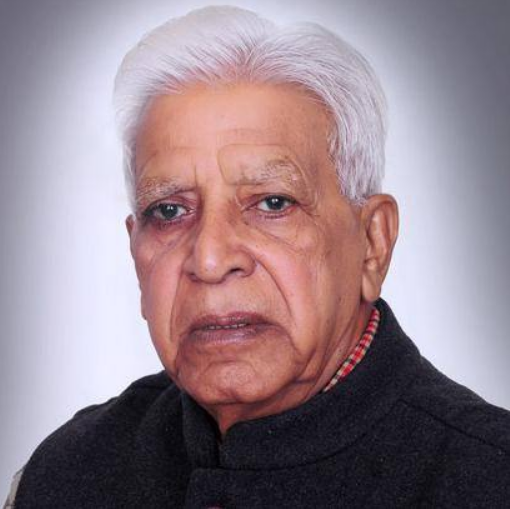
Dr. RamjiLal, Social Scientist, Former Principal, Dyal Singh College, Karnal, (Haryana, India)
Key Points:
 The story of Balla village, Haryana, and its unprecedented bravery and sacrifice during the people’s revolution of 1857, in which Jats, Rods, Gujjars, Sikhs, Muslims, and all communities, including subaltern classes, challenged British rule and its allies. Re-evaluating history
. Peasant Movements in Haryana Before 1857
• Balla village’s participation in the people’s revolution and initial victory.
• Brutal actions by the British and allied forces
• People’s bravery, guerrilla tactics, and the eternal sacrifice
• The peepal tree is a silent witness to genocide.
• The curse of land tax and the irony of post-independence.
The importance of shared heritage and memorial construction
Expansion:
From 1760 to 1857, tribal peasants and agricultural laborers, as well as peasants and agricultural labourers living in the plains, staged numerous violent armed and nonviolent revolts against the British East India Company, British imperialism, and the Indian nawabs, kings, lords, princely states, and principalities they protected.
Kisan movements in Haryana before 1857
 Before the People’s Revolution of 1857, there were numerous Kisan movements throughout Haryana. These include Jind (June 1814-January 1815), Chhachhrauli (1818), Rania (1818), Kisan Andolan (1824), Kaithal (March-April 1843), Ladwa (1845-1846), and the Kisan Revolt in Karnal (1846-1847). Rising poverty, hunger, and revenue rates were the primary drivers behind these Kisan movements.
In June 1857, the British official Andrews wrote to the Government of India, ‘I find the country considerably disorganised; the revenue and police officers are in the state fight, and many Zamindars and big villages are quite refractory. ’In fact, before 1857, the flames of people’s revolution were raging due to popular anger and discontent with the British East India Company’s rule.
In these people’s revolutionary areas of the old Karnal district–the Jats in the dominated Gharaunda and Balla areas ,in the Muslims dominated Jundla, Jalmana and Asandh areas, and in the Jats dominated Kalsaura (Kunjpura) areas, in the Rods dominated Kaithal, Pundri, Kaul, Pipli, and Amin areas, the Sainis, Jats, and subaltern castes in Kurukshetra areas, the Sikhs in Ladwa, the Kambojs in the Indri area, and the Gujjars , Hindus and Muslims subaltern classes on both sides of the Yamuna river made unprecedented sacrifices in the movement.
Inderjit Singh, National Vice President of All India Kisan Sabha, and an active member of Kisan Morcha, Haryana, commented on one of my articles on WhatsApp, saying, “There is evidence of unparalleled sacrifices in the region of Haryana during the first war of independence in 1857 and before and after that.” The way all castes and religious communities participated in these wars, unity is an unparalleled and valuable heritage, even to this day, in the form of shared martyrdom—shared heritage. He further wrote that “to Assimilate our history, we will have to be aware of the incidents of local mass resistance in every village.”.
In addition, the spine-chilling story of sacrifices made by Haryana’s famous revolutionary village Balla during the 1857 people’s revolution is presented here.
 Balla (a Jat-dominated village) is located 25 miles from Karnal. Balla village played a unique role in the people’s revolution. Following Hudson’s death, the army was sent from Delhi to Balla village under Captain Hughes’ command. Captain Hughes escaped Balla village to save his life. After Balla’s initial success, Brigadier Hailey Fox captured Balla village with the help of Maharaja Patiala’s cavalry. After their initial success, Maharaja Patiala’s army contingent returned on June 9, 1857. When the army returned, the people rebelled again
Two legends about the 1857 People’s Revolutions in Balla village are still popular:
First, according to legend, the Balla people’s army pulled the plough with English women rather than oxen.
Second, according to a legend told to me by my former student Advocate Narendra Sukhan (son of Bhagat Singh’s friend Comrade Tikaram Sukhan), based on information provided to him by his brother-in-law, a Balla resident, after the initial victory, English women were forced to drive oxen to thresh wheat grains in the middle of the afternoon. A similar story is well known in the Kalsaura (Jat-dominated) village of Indri Khand. However, no crimes were committed against the honour of white women. Because women’s honour is central to revolutionary culture
On July 13, 1857, 250 soldiers from Punjab’s First Cavalry, led by Captain Hughes, were dispatched from Karnal to quell the people’s revolution. The British encountered 900 Hindustani soldiers in Balla village, and Captain Hughes fled. In this way, people’s morale was boosted. 300 British soldiers joined the Indian People’s Army. Following the guerrilla strategy, Indian soldiers would attack at night and hide in the forests during the day. On July 14, 1857, when Captain Hughes was completely defeated, Maharaja Patiala’s army contingent returned for assistance. Balla Village was completely destroyed. People were blown away by cannons in Balla village. Men, women, girls, and children were repeatedly subjected to inhumane tortures that my words cannot express. The massive Peepal tree that still stands near the Johad (pond) in Balla village testifies to the inhumane atrocities committed against the people by the British and Maharaja Patiala’s armies. Countless people were hanged from the massive peepal tree. According to legend, men, youths, women, and girls were forced to lie down on the ground and trampled by rollers, while homes, property, and crops were looted and burned. There was devastation all around.
Following the end of the revolutionary movement, the people of Balla village were subjected to a very high land revenue. When a moneylender paid the entire village’s tax, the British government withdrew its army. But not in terms of increased land revenue. Unfortunately, the increased land revenue continued for 30 years after independence (15 August 1947). When Tau Devi Lal, the people’s leader, was made aware of the situation, he abolished it in 1977 while serving as Chief Minister.
Litoralists, poets, writers, Journalists, and other intellectuals, we believe, should write about local historical events to help preserve our shared heritage. We further emphasise that the Haryana government should erect memorials to all freedom fighters in each village and raise awareness about their lives and sacrifices. The pond in Balla village, on the banks of which men, women, and young boys and girls were hanged from a peepal tree or killed by hanging upside down, should be designated as a national monument so that future generations can remember their common heritage and martyrdom.
We honour great martyrs, men and women who have given their lives for the country.