
THE ASIAN INDEPENDENT UK

Bal Ram Sampla
I first came cross the name Palwankar Baloo in Dhananjay Keer’s book , “Dr. Babasaheb Ambedkar :Life and Mission”. His name would often crop up whenever I read about Poona Pact. It wasn’t till I came across 2 pages dedicated to Palwankar Baloo in “Cricket” by Jonathan Agnew.
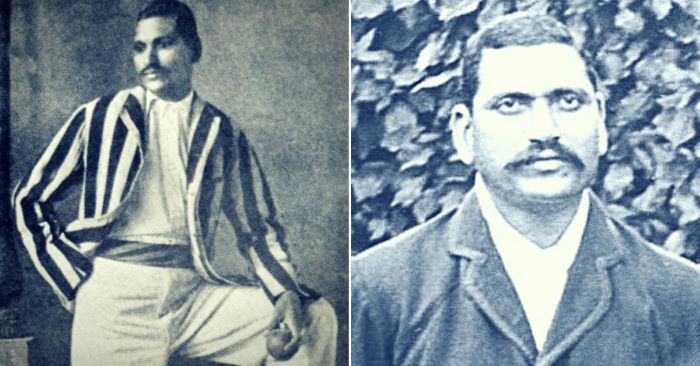
I realised that I have uncovered a finest slow arm dalit bowler that challenged caste discrimination. He was one of India’s first cricket stars, very few people today know his name. His story is one of talent, courage, and injustice.
1. Who Was Palwankar Baloo?
 Baloo was born in 1876 in Pune into a Dalit family of Chamar caste, a community that faced severe caste discrimination. Back then, Dalits were often treated as “untouchables” and denied many basic rights. Baloo loved cricket and worked hard to become a brilliant left-arm spinner. Baloo and his younger brother Shivram learned to play cricket using discarded cricket equipment from army officers. Baloo’s first job was cricket club run by Parsis. He looked after the ground and would bowl to the members in the nets. He eventually played for top teams like the Hindus in the Bombay Quadrangular tournament.
As his frame grew he was praised from nationalist like Mahadev Govind Ranade and Bal Gangadhar Tilak.
Even though he was one of the best bowlers of his time, Baloo wasn’t treated equally. He wasn’t allowed to eat or sit with his teammates, and he was denied the captaincy—just because of his caste.
2. India’s First Cricket Tour
In 1911, India sent its first cricket team to tour England. Baloo was the star bowler, taking 114 wickets in 23 matches! English newspapers praised his skill, calling him the best Indian bowler. But back home, he didn’t get the recognition he deserved—again, because of his Dalit identity.
3. More Than a Cricketer
Famous historian Ramachandra Guha once said:
“To forget Palwankar Baloo is to forget the very fight that shaped modern India—a fight not just for independence, but for dignity.”
Ramachandra Guha, in his seminal book A Corner of a Foreign Field (2002), likens Baloo to Jackie Robinson, the African American baseball player who broke the race barrier in the U.S.:
“In social terms Baloo’s achievement can be likened to that of Jackie Robinson in American baseball, the first black to break through a previously impenetrable social barrier by playing in the major leagues.”
Baloo wasn’t just a cricketer. He stood up for equality and social justice.
4. Baloo and Dr. B.R. Ambedkar
Palwankar Baloo’s political journey intersected with that of Dr. B.R. Ambedkar during the turbulent 1930s.
Baloo was once a associate of Dr. Ambedkar.
Infect he was Dr. Ambedkar’s hero. It was at Ambedkar’s request to felicite Baloo and also drafted an honorary address on his return from the tour. Dr. Ambedkar prepared a memorandum for his nomination as a member of the Bombay Municipal Corporation (Gopal, 2023).
When the British government’s 1932 Communal Award proposed separate electorates for Dalits (Depressed Classes), Ambedkar supported the move to ensure political representation. Gandhi, however, opposed it, fearing it would fracture Hindu society.
It has to be noted that during the Round Table Conference, October 1931. Baloo cabled the British Prime Minister opposing the demand for separate electorates. Thus undermining Dr. Ambedkar’s efforts.
Baloo sided with Gandhi and played a mediating role in the negotiations that led to the Poona Pact. Alongside Tamil leader M.C. Rajah, Baloo urged Ambedkar to compromise, which resulted in reserved seats for Dalits within joint electorates, rather than separate ones.
However, the rift deepened as Baloo, aligned with Gandhi’s gradualist approach, began opposing Ambedkar’s more radical strategies—including his call for Dalits to leave Hinduism altogether.
The political divergence came to a head during the 1937 Bombay Legislative Assembly elections, when Baloo contested against Ambedkar with backing from the Indian National Congress. Ambedkar won decisively, securing 13,245 votes to Baloo’s 11,225. The episode reflects contrasting ideologies: Baloo believed in reform from within; Ambedkar saw the need for a complete break from a system founded on caste hierarchy.
5. No Recognition from the BCCI
Over the years, the Board of Control for Cricket in India (BCCI) has named several tournaments and trophies after famous cricketers:

Ranji Trophy – Named after K.S. Ranjitsinhji
Duleep Trophy – Named after Duleepsinhji
C.K. Nayudu Trophy – For India’s first Test captain
Vinoo Mankad Trophy – For a legendary all-rounder
Deodhar Trophy – For a respected cricket official
Anthony de Mello Trophy – Linked to England-India Tests
Yet, Palwankar Baloo—India’s first cricketing icon from a marginalized community—has no tournament, stadium, or trophy named in his honour. Given his historical importance, this absence raises troubling questions.
Curious case of naming Ranji Trophy after a man who regarded himself as ‘Englishman’. He played 15 Tests for England and not a single match for India! Does it reflect the caste biases that Baloo fought against throughout his life?
6. Why Was He Forgotten?
 Palwankar Baloo’s story reminds us that sports are not just about winning—they’re about fairness. He broke barriers so others could follow. Recognizing him is about more than cricket—it’s about valuing every Indian, no matter their background.
Palwankar Baloo broke barriers, but he has never been officially honoured by the Board of Control for Cricket in India (BCCI). This is because caste prejudice still affects how we remember history—even in sports.
Baloo’s story is inspiring. He proved that talent has no caste and stood up for dignity when the odds were against him. It’s time we honour his legacy—not just for what he did on the cricket field, but for the way he challenged injustice.
References
Ramachandra Guha, A Corner of a Foreign Field (2002)
Jonathan Agnew, Cricket, a modern anthology (2013)
Gail Omvedt, Dalits and the Democratic Revolution (1994)
Ashok Gopal, A part Apart (2023)