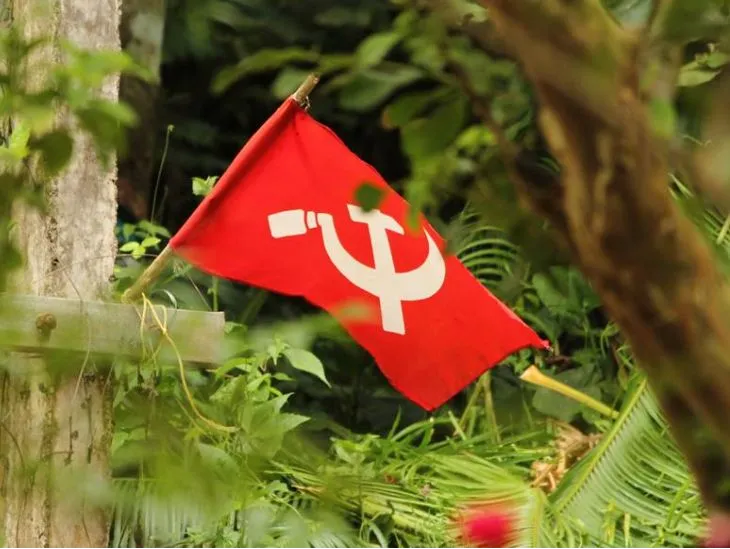

(Asian independent) Formed in the 1920s, the Communist Party has completed one hundred years of its political life. The history of the Indian Communist movement is long and complex; providing a comprehensive historical evaluation is not the purpose here. This article seeks to understand the internal contradictions of the Communist movement in the present period. There is no doubt that from its inception the Communist Party sustained a tradition of struggle and sacrifice. Yet, in the contemporary period, a clear erosion of its social and political influence is visible. It is commonly argued that the Communist Party failed to adequately understand class, caste, gender, and the concerns of a new generation. This may indeed be one contributing factor, but it is not the central cause. Within the Marxist tradition, substantial theoretical work has been carried out on caste, gender, culture, and ideology.
Communist literature has not treated class as separate from caste, but rather as a socially constructed and historically changing process. Party programmes and organizational documents have repeatedly acknowledged that class politics must engage with caste, gender, culture, and generational questions. Class exists simultaneously as an economic and a social category. At the economic level, class appears as workers, peasants, the lower middle class, the elite, and capitalists. At the social level, the same class is expressed through Dalits, backward classes, women, and other oppressed castes and communities. At one level, class appears as a unified structural entity; at another, it exists as fragmented social groupings. Thinkers such as B.R. Ambedkar and Ram Manohar Lohia also understood class, caste, and gender not as separate domains but as interrelated forms of social differentiation and domination. It is therefore necessary to examine the difficulties involved in understanding class and developing it as a political agent.
In Marxist theory, class exists at two levels: first, as an objective position within relations of production; and second, as a potential political subject. The transformation between these two levels does not occur automatically; it is mediated through party organization, movements, and ideological practice. In India, class exists objectively, but it has not been transformed into a “class for itself.” Caste hierarchy, patriarchal oppression, generational divisions, and cultural identities shape the lived experience and consciousness of class. The Communist Party has failed to develop class as a self-conscious political subject. Instead, the party increasingly substituted itself for the class. By contrast, other political forces succeeded in constructing political categories from social reality. Hindutva transformed caste and religious identity into an organized political force, while neoliberalism produced the aspirational individual as a dominant political and social subject.
The central reason for this failure lies in the party’s organizational structure, which has remained largely unchanged since the colonial and wartime period. The party structure is based on rationalist planning, strict discipline, hierarchy, and centralized decision-making. While the party failed to develop class as a political agent, authority became increasingly concentrated in a small group within the central committee. Serious problems are also evident at the level of political practice. Due to the absence of praxis—the dialectical unity of theory and practice—the party has been unable to align theory with practice or to develop practice theoretically. The claim that the party represents class, caste, and various movements remains meaningless as long as the organizational structure does not allow real autonomy to these forces. Although mass organizations are formally described as independent, in practice they operate under party command. Certain fundamental lessons emerge for the reconstruction of the Indian Left. Class must be politically constructed, and actively shaped as a political category capable of internally incorporating caste, gender, culture, and generational differences. If the Left is to remain relevant and transformative, it must rethink its organizational strategies, translate the interrelations of social categories into practice, and establish direct engagement with the people. The party must abandon the claim of being the sole leadership force and move toward a broader political platform in which diverse social forces can participate without subordination. Only the establishment of collective leadership within such a platform can make possible an effective political resistance within India’s complex social structure. Only then can the Communist Party once again become a carrier of transformative politics.